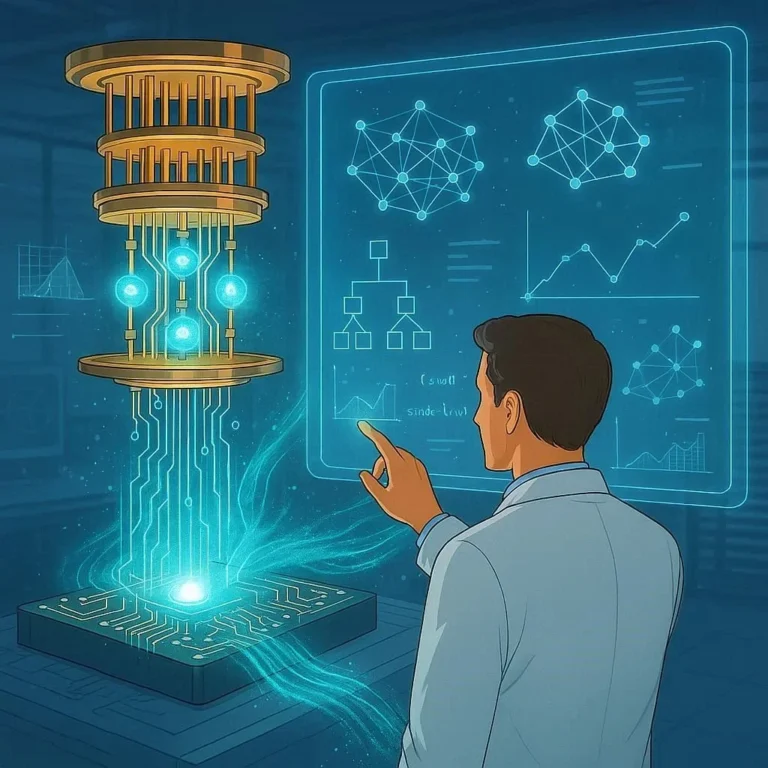
AI in Space Traffic Predictions and Collision Avoidance
Space has always felt like an open frontier, but the rapid rise of satellite constellations, high‑frequency launch schedules, and an expanding debris environment has turned the orbital environment into a complex traffic system.
Today, artificial intelligence (AI) is stepping into the driver’s seat, providing predictive insights, real‑time decision support, and automated collision avoidance capabilities that outperform traditional analytical models. In this article we dissect how AI powers space traffic predictions, the science behind orbital collision avoidance, and what this means for satellite operators, regulators, and the future of space sustainability.
Why Space Traffic Management Has Become Critical
- Proliferation of Small Satellites: Projects like SpaceX Starlink, OneWeb, and Amazon Kuiper are planning thousands of satellites.
- Long‑Lived Debris: Objects launched decades ago still occupy valuable orbits, creating a graveyard that can trigger cascading collisions.
- Regulatory Pressure: ESA and NASA’s Space Sustainability Guidelines now require active debris mitigation and collision avoidance measures.
Traditional approaches rely on deterministic physics models and manual operator review—a process that can be slow and error‑prone when dealing with hundreds of orbiters.
The AI Advantage: From Data to Decision-Making
AI transforms raw telemetry data (positions, velocities, and sensor logs) into actionable intelligence:
- Machine Learning (ML) Models: Trained on centuries of orbital data, ML algorithms predict future trajectories with higher accuracy than analytical two‑body models.
- Deep Learning for Pattern Recognition: Convolutional networks identify complex debris clustering patterns in real time.
- Reinforcement Learning for Maneuver Planning: Agents learn optimal propulsive strategies to minimize fuel consumption while keeping satellites out of collision risk zones.
These techniques offer:
- Speed – real‑time calculation of hundreds of futures.
- Scalability – handling thousands of satellites without manual oversight.
- Precision – reducing false positives in collision alerts, enabling operators to focus on real threats.
Key AI Components in Space Traffic Prediction
1. Data Aggregation Layer
- Sources: TLE (Two‑Line Element) sets from NORAD, ground‑based radar, optical telescope imagery, and onboard AIS (Automatic Identification System) for spacecraft.
- Fusion: Combining heterogeneous data reduces uncertainty.
- External Reference: Space Debris provides historical context.
2. Orbital Propagation Engine
- Physics‑Based Models: High‑fidelity numerical integration using JPL’s DE series.
- AI‑Enhanced Corrections: Neural residual models account for unmodeled perturbations like atmospheric drag anomalies.
- Output: Probabilistic trajectory ensembles for the next 180 days.
3. Collision Probability Estimator
- Probabilistic Algorithms: Monte‑Carlo simulations generate close‑approach statistics.
- Deep‑Learning Surrogates: Reduce computational load while maintaining accuracy.
- Integration with AIS: Operators receive alerts with confidence intervals directly in their mission control dashboards.
4. Maneuver Optimization Module
- Reinforcement Learning Agent: Trains on simulated flight environments to choose burn parameters.
- Cost Function: Balances fuel use, mission impact, and safety margin.
- Automated Mission Planning: Generates executable commands for propulsion‐controlled satellites.
Case Study: AI‑Assisted Collision Avoidance in the LEO Regime
On 15 June 2024, an untracked debris fragment was predicted by an AI‑based forecasting model to intersect the trajectory of a newly launched commercial satellite at 02:43 UTC. The alert was received 18 hours before the predicted encounter.
- Detection: A deep‑learning classifier flagged the fragment from optical telescope data.
- Propagation: ML residual correction refined the fragment’s orbit.
- Risk Assessment: Probability of collision returned 99.7% due to the fragment’s size estimate.
- Maneuver: Reinforcement‑learning‑driven optimization suggested a 0.8 m/s burn 5 minutes before the conjunction, diverting the satellite by 1,200 meters.
- Outcome: The satellite maintained full operation, avoiding potential catastrophic damage.
This real‑world success demonstrates how AI can turn an impending hazard into a manageable event.
Challenges and Mitigation Strategies
| Challenge | AI Mitigation | Practical Steps |
|—|—|—|
| Data Scarcity | Transfer learning from similar orbital regimes | Incorporate simulated training data and federated learning across operators |
| Model Explainability | Attention mechanisms in neural nets | Visualize feature importance to satisfy regulator audits |
| Regulatory Acceptance | Compliance‑aligned evidence | Publish whitepapers and test‑bench results, engage with ESA’s Space Sustainability Portal |
| Adversarial Bias | Robustness testing with synthetic outliers | Continuous model validation and decay monitoring |
Integrating AI Into Existing Space Traffic Management (STM) Systems
- API Gateways: Expose AI predictions via RESTful endpoints.
- Dashboard Integration: Embed probability heat maps in flight‑management consoles.
- Simulation Loops: Use AI to generate scenarios for offline “classroom” training of mission controllers.
- Data Pipelines: Automate ingestion from satellites, radar stations, and telescope arrays.
The Role of International Collaboration
The orbital environment belongs to everyone; thus AI solutions must be open and interoperable. Key initiatives include:
- ESA’s Space Surveillance Network (SSN): Offers shared datasets that can be fused with AI pipelines.
- NASA’s ExoMars Framework: A joint effort to publish standardized debris catalogs for AI training.
- Space Data Delivery Protocol (SDDP): Promotes harmonized data exchange between agencies.
Outlook: AI‑Powered Autonomous Space Traffic Management
Looking ahead, AI is expected to evolve from support tools into fully autonomous decision engines:
- Hybrid Autonomy: Operators retain veto rights for high‑impact decisions while AI handles routine deviations.
- Edge Computing: On‑board AI capable of self‑optimizing trajectory in real time, reducing latency to ground control.
- Global AI‑Federation: Decentralized learning models that respect data sovereignty while sharing insights across the constellation ecosystem.
Such advancements promise a safer, more efficient orbital ecosystem where humans and machines collaborate to keep the sky clear.
Call to Action
Innovation in AI for space traffic predictions is not just a technological shift—it’s a responsibility. Whether you’re a satellite operator, a regulator, or an aerospace enthusiast, engaging with AI‑enabled STM platforms can help safeguard our shared orbital commons.
- Operators: Evaluate pre‑trained collision avoidance models and integrate them into your flight‑management software.
- Regulators: Review AI‑based risk assessment frameworks to ensure compliance with sustainability guidelines.
- Researchers: Contribute open‑source datasets to fuel the next generation of AI tools.
Join the conversation on sustainable space operations. Together, we can turn the sky into a responsibly managed highway for the next generation of explorers.

100+ Science Experiments for Kids
Activities to Learn Physics, Chemistry and Biology at Home
Buy now on Amazon
Advanced AI for Kids
Learn Artificial Intelligence, Machine Learning, Robotics, and Future Technology in a Simple Way...Explore Science with Fun Activities.
Buy Now on Amazon
Easy Math for Kids
Fun and Simple Ways to Learn Numbers, Addition, Subtraction, Multiplication and Division for Ages 6-10 years.
Buy Now on Amazon