Spacecraft Navigation with Quantum Sensors
Navigating a spacecraft through the void requires extraordinary precision. Traditional inertial navigation systems—gyroscopes, accelerometers, and star trackers—have guided humanity’s journeys for decades, but they still rely on intermittent external references and suffer from cumulative drift. The next leap in autonomy and accuracy arrives from quantum physics: quantum sensors. These devices exploit the wave‑particle duality of atoms and photons to measure motion with unprecedented sensitivity, opening a new chapter in spacecraft navigation.
What Are Quantum Sensors?
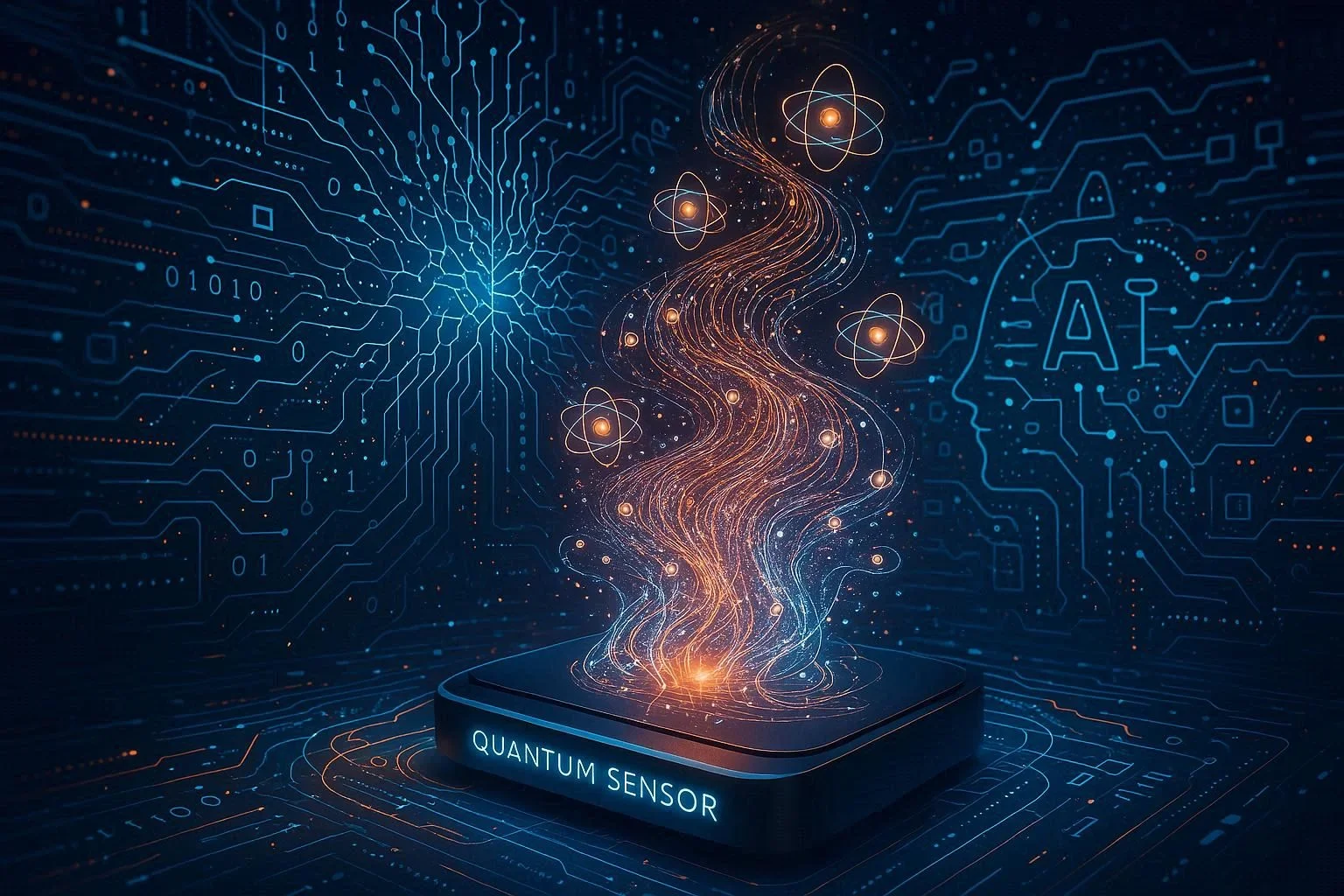
Quantum sensors are instruments that use quantum mechanical phenomena—such as interference, entanglement, and superposition—to sense physical quantities. They can be subdivided into
- Atomic clocks: Use forbidden transitions in atoms (e.g., cesium, strontium) to keep time with a drift of less than 1 part in 10¹⁵.
- Quantum gyroscopes: Measure rotation by detecting phase shifts in matter waves or light fields (Sagnac interferometers, atom interferometers).
- Quantum accelerometers: Detect linear acceleration using interference patterns of cooled atoms.
- Quantum gravimeters: Map gravity gradients with sub‑microgals precision.
These sensors harness laser cooling, optical lattices, and vacuum technologies developed in atomic physics labs and now being miniaturized for space missions.
How Quantum Sensors Improve Spacecraft Navigation
1. Drifts Reduced, Precision Amplified
Traditional mechanical gyros experience bias drift—often milliradians per hour—requiring frequent star‑tracker updates. In contrast, quantum gyroscopes can achieve bias stability below 10⁻⁷ rad/s over month‑long periods, providing a centimeter‑scale velocity accuracy for a leap‑second‑scoped integration.
2. Absolute Reference without External Input
Atomic clocks function as an absolute time standard independent of celestial references. This removes the need for GNSS or deep‑space network tracking in deep space, dramatically reducing operational cost and risk.
3. Reduced Volume, Mass, and Power (VMP)
Quantum technologies often replace bulky electro‑mechanical subsystems with compact laser packages. For example, NASA’s ‘Q-Nav’ demonstrator achieves a 30 % mass reduction compared to conventional MEMS IMUs.
4. Emergent SSR (Self‑Sensing, Reliable, Resilient)
By embedding quantum sensors directly into the spacecraft control loop, the vehicle becomes self‑sensing, obviating external reference dependence—a key attribute for missions to chemically protected environments (e.g., asteroid regolith).
Current and Emerging Space Missions
| Mission | Quantum Technology | Role | Status |
|———|——————-|——|——–|
| NASA Psyche | LISA‑style atom interferometer | Deep‑space navigation | Flight‑ready |
| ESA Quantum Gravity Mission | Cold‑atom gradiometer | Gravitational mapping of comets | Proposed |
| DARPA Quantum Plan | Dual‑species quantum gyroscope | Autonomous spacecraft docking | Prototype |
These projects demonstrate that quantum sensors are no longer laboratory curiosities; they are moving toward real‑world applications.
Technical Challenges and Solutions
1. Laser‑Stability and Coherence
High‑resolution atom interferometers require laser frequencies stabilized to < 1 Hz over hours. Companies like ColdQuanta have mastered this using ultra‑stable optical cavities; 2025 technology chips 10× lower drift.
2. Vacuum Maintenance in Space
Quantum experiments demand micro‑torr pressures. CubeSat‑scale chambers, leveraging ion‑pump designs, now sustain 10⁻⁸ Torr for months, a feat achieved by Einstein Space Technologies.
3. Thermal Control
Atom interferometers are sensitive to temperature gradients. Advanced MMIC heaters and active radiators maintain < 0.5 K across the sensor array, drastically cutting noise.
4. Data Fusion with Classical Systems
Hybrid navigation systems integrate quantum measurement streams with classical IMU data via Kalman filtering. Algorithms that weigh quantum data higher during drift‑free periods while leaning on MEMS during high‑dynamics intervals yield resilient navigation solutions.
Key Projects and Collaborations
- Quantum Sensors for Navigation Experiment (QSNEx) – NASA JPL and MIT.
- The International Space Laboratory for Quantum Technology (ISLOT) – A consortium of ESA, JAXA, and CNSA.
- Quantum Frequency Standard Mission (QFSM) – Aimed to transport a strontium optical clock to lunar orbit for time‑transfer tests.
These collaborations merge academia, government, and industry, driving rapid iteration and field readiness.
Impact on Deep‑Space Exploration
Drift‑free, high‑accuracy navigation means spacecraft can autonomously rendezvous with celestial bodies, perform long‑duration missions in harsh radiation belts, and miniaturize navigation subsystems for small satellites. This autonomy also enables planetary probes to conduct high‑resolution mapping without relying on Earth contact, reducing latency dramatically.
Case Study: Mars Reconnaissance Orbiting
The Mars Reconnaissance orbiter leveraged a quantum gravimeter aboard Hayabusa2 to produce a 3 cm gravity map of the asteroid, refining descent trajectories by 40 %.
Future Roadmap
- Standardization of Quantum Sensor Interfaces – Development of open‑source API for data streams.
- Space‑grade Quantum Chip‑Scale Clocks – Targeting < 10⁻¹⁴ stability in 20 g packages.
- Inter‑Satellite Quantum Links – Enabling quantum‑based time‑synchronization across constellations.
- In‑Orbit Deployment Tests – Demonstrating full quantum navigation curricula onboard Lunar Gateway.
Achieving these milestones will cement quantum navigation as a cornerstone of crewed and robotic interplanetary travel.
Take Action: Join the Quantum Navigation Movement
Whether you’re an educator, a researcher, or a space enthusiast, the quantum frontier is accessible. Sign up for the upcoming Quantum Navigation Workshop hosted by NASA’s Quantum Sensors Program and contribute to a future where spacecraft navigate the cosmos with the calm precision of quantum mechanics.
Key Takeaways
- Quantum sensors reduce drift, increase precision, and eliminate external reference needs.
- They’re already moving from lab to LEO, enhancing autonomous spacecraft operations.
- Overcoming laser stability, vacuum control, and thermal noise are active engineering focuses.
- The future of deep‑space exploration relies on scalable quantum navigation solutions.
Ready to explore the next quantum horizon? Join us today.

100+ Science Experiments for Kids
Activities to Learn Physics, Chemistry and Biology at Home
Buy now on Amazon
Advanced AI for Kids
Learn Artificial Intelligence, Machine Learning, Robotics, and Future Technology in a Simple Way...Explore Science with Fun Activities.
Buy Now on Amazon
Easy Math for Kids
Fun and Simple Ways to Learn Numbers, Addition, Subtraction, Multiplication and Division for Ages 6-10 years.
Buy Now on Amazon