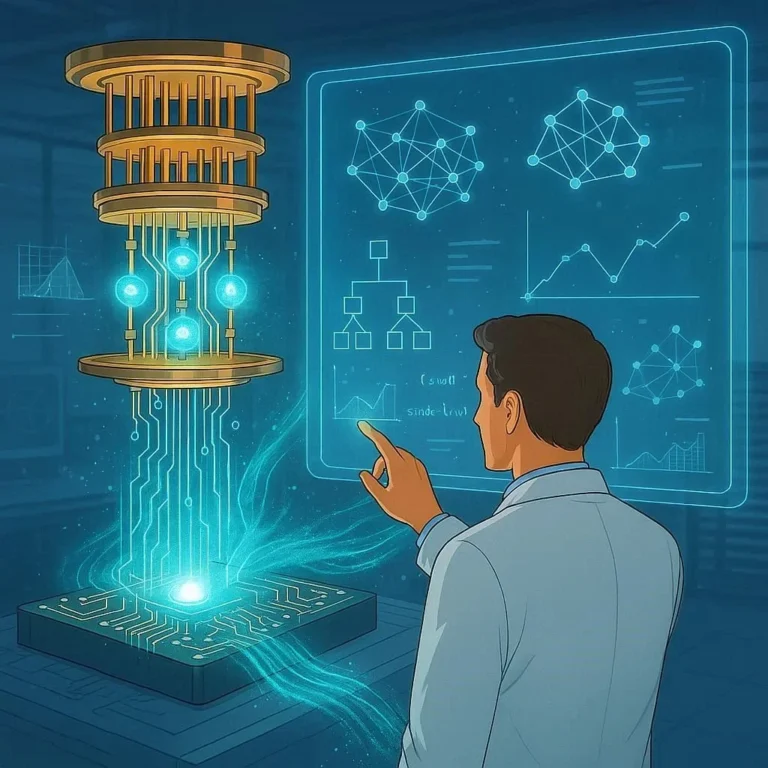
New Methods of Carbon Capture from Air
Direct Air Capture (DAC) is rapidly evolving from a niche research concept into a mainstream climate solution. By drawing CO₂ straight from ambient air, DAC sidesteps the high emissions of on‑site plants and offers scalable, location‑independent carbon removal. In this post we examine the latest breakthroughs—electrochemical, photovoltaic‑driven, biomimetic, and AI‑enhanced systems—illustrate where they stand in the global carbon‑capture roadmap, and highlight the policy and economic levers that can accelerate adoption.
Why Traditional Carbon Capture Falls Short
- High Energy Intensity – Conventional capture at power plants consumes 20–40 % of generated electricity.
- Limited Scale – Capture units are usually tied to coal or gas plants, capping the amount of CO₂ removed.
- Infrastructure Debt – Building pipelines and storage facilities demands massive capital and time.
- Public‑Perception Hurdles – “Carbon capture” often sounds like a buzzword rather than a proven fix.
This context sets the stage for why researchers are investing in DAC technologies that operate directly on ambient CO₂, away from emission sources.
Emerging Technologies in Air Capture
The new wave of DAC is fueled by three major technical pivots: electrochemical capture (EDAC), photocatalytic/solar capture, and bio‑inspired approaches. Each leverages distinct chemistry and engineering regimes to lower energy use and cost.
Electrochemical Direct Air Capture (EDAC)
EDAC uses redox‑active ions or polymers that selectively bind CO₂ and then regenerate with a modest voltage swing. Key features:
- Low Temperature Operation – 70–150 °C, avoiding pyrolysis or high‑pressure steam.
- Fast Kinetics – Electrons flow in milliseconds, enabling continuous capture streams.
- Modular Design – Small‑scale units can be networked for distributed deployment.
Prominent research groups (MIT, Stanford) have reported CO₂ capture efficiencies above 95 % with energy draw < 1 kWh kg⁻¹ of CO₂. The technology still faces durability challenges of the electroactive membranes and lifecycle cost of electrode materials.
Battery‑Integrated Air‑CO₂ Capture
Hybriding renewable batteries with DAC allows surplus solar or wind energy to power capture operations. Pilot projects in the Mojave Desert demonstrate that a 50 MW PV array combined with 20 MWb of lithium‑ion storage can sustain a 1.5 Mt yr⁻¹ DAC unit.
Advantages:
- Grid Resilience – Capture runs during excess generation, stabilizing local net‑zero grids.
- Cost Synergy – Shared infrastructure reduces CAPEX per tonne.
- Carbon‑Neutral Run‑Times – Process electricity can be almost entirely renewable.
Photocatalytic and Solar‑Driven Capture
Solar‑assisted CO₂ adsorption harnesses light‑activated materials to lift the equilibrium barrier of gas–solid interactions. The benchmark systems use perovskite‑based sorbents linked to hybrid organic–inorganic frameworks (MOFs) that switch from hydrophobic to hydrophilic with illumination.
Strengths:
- Energy‑Free Capture – Light is the primary energy source; electricity is only used for regeneration.
- Rapid Switching – Capture/Release cycles can be under 30 minutes, matching diurnal demand.
- Scalable Surface Areas – Thin‑film photocatalysts can be printed on flexible substrates for modular arrays.
Recent field trials in Spain’s Andalusia region achieved > 500 kg CO₂ m⁻² day⁻¹, a record for ambient‑capture photochemistry.
Nature‑Inspired Bio‑Capture
Plants, algae, and even engineered microbes represent mature CO₂ collectors. Synthetic biology now allows us to rewire metabolic pathways for high‑capacity inorganic CO₂ trapping.
Key milestones:
- Cyanobacteria Strains that funnel captured CO₂ into stable calcium carbonate crystals.
- Bacterial Swarms producing bio‑polymers that encapsulate CO₂ in micro‑reservoirs.
- Engineered Pine Loblolly Trees with increased leaf‑surface water retention, boosting photosynthetic CO₂ uptake.
These biological systems complement engineered DAC by providing low‑energy capture in rural or remote settings, often coupled to bioenergy‑with‑carbon‑capture (BECCS) schemes.
AI and Process Optimization
Machine learning models are now orchestrating real‑time control loops across DAC facilities. By ingesting sensor streams—CO₂ partial pressure, temperature, humidity—AI can dynamically adjust pH, pressure, and flow rates to stay on the thermodynamic optimum.
Impacts:
- Energy Savings – Real‑time tuning cuts operating power by up to 18 %.
- Predictive Maintenance – Fault detections reduce unplanned downtime by > 20 %.
- Scale‑Up Support – Simulations help design next‑generation modules before building pilot units.
Economic and Policy Drivers
Carbon Pricing and Incentives
The European Union Emission Trading System (ETS), California’s Cap‑and‑Trade, and the UK’s Climate Change Act provide clear revenue streams for DAC operators. Carbon credits valued at $35–$60 per tonne make early‑stage technologies financially viable.
Additionally, the US Inflation Reduction Act’s $5‑bn tax credit for CO₂ removal is a game‑changer, covering up to 30 % of CAPEX. Macroeconomic models predict a headroom of 1.5‑2 Gt CO₂ yr⁻¹ trillion‑dollar opportunity by 2035.
Net‑Zero Mandates & Corporate Commitments
Major corporations such as Microsoft, Google, and Apple have begun to purchase or build DAC units to offset internal emissions. This corporate demand creates a steady market‑pull for new capture solutions.
Public‑Private Partnerships (PPPs)
The UK’s BECCS – Los Angeles (BECL) project and the Australian government’s Carbon Capture Hub are testbeds for scaling DAC within public utilities, reducing risk exposure for private investors.
Case Studies and Pilot Projects
| Project | Location | Technology | Capacity | Status |
|——–|———-|————|———-|——–|
| Carboxylate 1.5‑Mt | Germany | EDAC | 1.5 Mt yr⁻¹ | Commercially Operated |
| NuPell 300 t | USA | Battery‑Integrated DAC | 300 t yr⁻¹ | Pilot |
| Oxy‑Solar 0.5 Mt | Spain | Photocatalytic | 0.5 Mt yr⁻¹ | Demonstration |
| GreenAlgae 200 t | Canada | Bio‑Capture | 200 t yr⁻¹ | Research |
These projects collectively showcase that DAC is no longer a laboratory curiosity. They illustrate diverse scaling pathways: from modular PCBs to continent‑wide grids.
Challenges and Future Outlook
Despite rapid advances, several barriers remain:
- Long‑Term Sorbent Stability – Degradation under humid, particulate‑laden atmospheres.
- Heat Management – Exothermic de‑CO₂ reactions often generate hotspots that must be cooled efficiently.
- Carbon Ethics – GHG emissions from manufacturing and transport of DAC components must be factored.
- Regulatory Lag – Storage and transport of CO₂ demand updated safety standards.
Research communities are tackling these challenges through materials science, process integration, and life‑cycle assessment. Once addressed, the projected scale‑up could see the global DAC footprint reach 5 Gt yr⁻¹ by 2050, offering a vital buffer for hard‑to‑abate sectors.
Concluding Thoughts and Call to Action
Air‑based carbon capture is transforming from a concept to a practical tool for climate mitigation. Its unique benefits—energy flexibility, geographic neutrality, and modular scalability—complement fleetwide emission reductions.
What can you do?
- Support policy that funds DAC research and deployment.
- Invest or partner with early‑stage DAC startups.
- Educate stakeholders on the science behind new capture methods.
- Share data through open‑science platforms to accelerate technical breakthroughs.
The path to net‑zero will be paved with a mix of supply‑side innovation, demand‑side commitment, and robust governance. New methods of carbon capture from air are already at a tipping point—now is the time to act.
Direct Air Capture – Wikipedia
IPCC – Intergovernmental Panel on Climate Change
Stanford University – Clean Energy Lab
EnergySage – Renewable Energy Marketplace

100+ Science Experiments for Kids
Activities to Learn Physics, Chemistry and Biology at Home
Buy now on Amazon
Advanced AI for Kids
Learn Artificial Intelligence, Machine Learning, Robotics, and Future Technology in a Simple Way...Explore Science with Fun Activities.
Buy Now on Amazon
Easy Math for Kids
Fun and Simple Ways to Learn Numbers, Addition, Subtraction, Multiplication and Division for Ages 6-10 years.
Buy Now on Amazon