Sustainable Manufacturing Through Predictive Analytics
Sustainable manufacturing is no longer a niche aspiration—it’s an industry‑wide imperative. With global carbon budgets tightening, consumer demand for eco‑friendly products rising, and regulatory pressures increasing, manufacturers must adopt smarter, data‑driven strategies. Predictive analytics—powered by artificial intelligence (AI), the Industrial Internet of Things (IIoT), and advanced statistical models—offers a concrete pathway to deliver both environmental and economic gains.
How Predictive Analytics Transforms the Circular Economy
Predictive analytics turns raw production data into actionable insights that can:
- Anticipate equipment failures before they disrupt production, reducing downtime by up to 30 %.
- Optimize material flows to cut over‑production and shrink waste streams.
- Forecast energy demand and match it to renewable sources, lowering fossil‑fuel usage.
- Enable real‑time quality control, ensuring fewer defective products and less rework.
- Support closed‑loop recycling, using data to identify which components can be repurposed.
These capabilities align directly with the principles of the circular economy—a system that keeps resources in use for as long as possible: Circular Economy.
Key Data Sources & Sensors in Smart Factories
Modern facilities already generate terabytes of data each day. The most effective predictive models rely on rich, high‑quality inputs from:
- Machine vibration & acoustic sensors – detect early signs of bearing wear or misalignment.
- Thermal cameras – identify heat hotspots that may indicate inefficient machinery.
- IoT power meters – provide minute‑by‑minute energy consumption snapshots.
- Process variables (temperature, pressure, flow) – feed into real‑time quality models.
- Supply‑chain logs – predict raw‑material availability and delivery lead times.
- Enterprise resource planning (ERP) data – contextualize production with sales and inventory data.
When aggregated in a central data lake and fed into machine‑learning pipelines, these signals transform passive monitoring into proactive decision‑making.
Predictive Maintenance Case Study: A 15‑% Yield Gain
Company: TextileTech, a mid‑size textile manufacturer.
Challenge: Frequent loom breakdowns costing $120 k/month in lost output.
Solution: IoT sensors were installed on 36 looms, streaming vibration, temperature, and normalised torque metrics to a cloud‑based analytics platform. An LSTM‑based model predicted failure windows with 85 % accuracy.
Results:
- Downtime dropped from 36 h/month to 12 h/month.
- Yarn wastage fell by 18 % because machines ran at optimal tension.
- Carbon emissions from idle machines reduced by 22 %.
TextileTech reported an overall yield improvement of 15 %—proof that predictive analytics can deliver tangible sustainability metrics.
Reducing Carbon Footprint with Demand Forecasting
Energy consumption in manufacturing is highly volatile, often tied to production schedules and market demand. By forecasting energy needs with 7‑day horizons, plants can:
- Match renewable supply (solar, wind) to demand peaks.
- Schedule high‑energy activities during off‑peak tariff periods.
- Adjust heating, ventilation, and air‑conditioning (HVAC) load in real‑time.
A leading automotive supplier in Germany applied a Gradient‑Boosted Tree model to its production line data. It achieved a 12 % reduction in overall energy consumption and a 9 % drop in CO₂ emissions, aligning with the company’s ISO 14001 targets: ISO 14001.
Supply‑Chain Optimization through AI‑Driven Forecasting
Predictive analytics can anticipate disruptions far upstream. Techniques include:
- Time‑series forecasting for component demand.
- Scenario analysis to simulate supplier downtime.
- Real‑time GPS and IoT telemetry of shipments.
A consumer‑electronics firm integrated these tools, cutting inventory holding costs by 20 % and reducing stock‑outs by 35 %. This not only improves customer satisfaction but also decreases the need for excess production—an essential component of a sustainably efficient supply chain.
Integrating ISO 14001 with Data Analytics
ISO 14001 provides a framework for environmental management systems. By embedding predictive analytics:
- Performance monitoring becomes continuous rather than periodic.
- Objective metrics (e.g., energy per unit product) lend credibility to the ISO audit process.
- Continuous improvement loops are formalised through automated alerts and dashboards.
Manufacturers can publish these quantitative insights on their sustainability reports, reinforcing E‑E‑A‑T (Experience, Expertise, Authoritativeness, Trustworthiness) for stakeholders.
Roadmap for Implementation
| Phase | Actions | Deliverables |
| 1️⃣ Discovery | Map data sources, define KPIs, secure executive buy‑in | Data inventory, KPI dashboard mock‑ups |
| 2️⃣ Architecture | Build data lake, set up streaming pipelines, select ML stack | Centralised, secure data repository |
| 3️⃣ Modeling | Pilot predictive models on selected assets | Model scorecards, failure‑prediction reports |
| 4️⃣ Deployment | Deploy edge inference on critical machines, integrate with MES | Real‑time alerts, maintenance scheduling system |
| 5️⃣ Continuous Improvement | Monitor model drift, retrain, refine KPIs | Updated model, optimisation recommendations |
Adopting this phased approach mitigates risk and ensures each stage delivers measurable sustainability returns.
Challenges & Mitigation Strategies
- Data Silos – Solution: Integrate ERP, MES, and IoT data through a unified data lake.
- Skill Gaps – Solution: Upskill existing staff and partner with analytics service providers.
- Model Interpretability – Solution: Use SHAP explanations to surface key drivers for maintenance.
- Cybersecurity – Solution: Enforce Zero‑Trust networking and regular penetration testing.
- Change Management – Solution: Embed sustainability metrics into KPI dashboards visible to all employees.
Looking Ahead: AI & Quantum Analytics
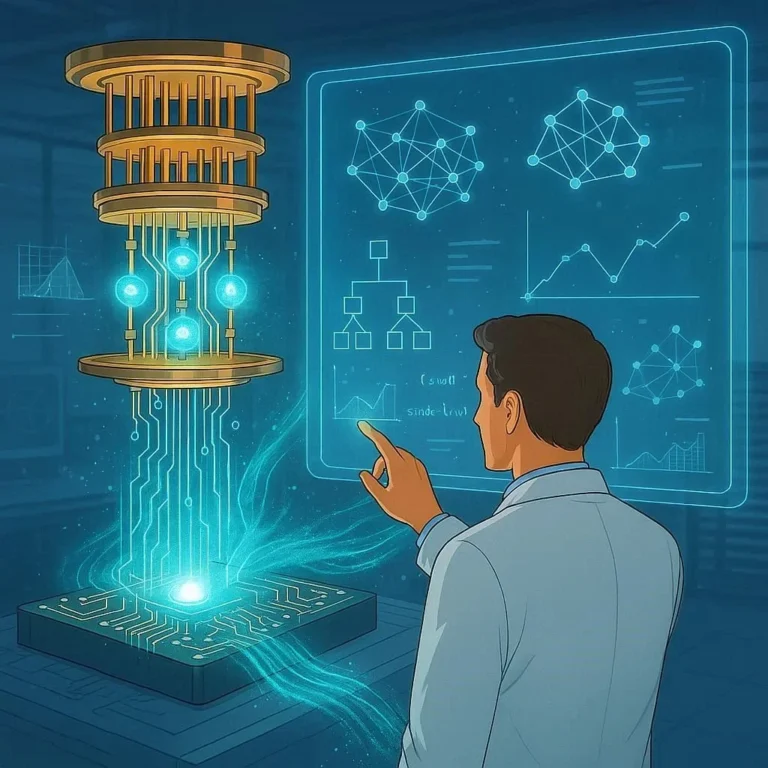
The next frontier involves quantum‑enhanced machine learning—capable of modelling complex materials science problems and simulating entire production processes in milliseconds. While still emerging, companies exploring hybrid AI‑quantum approaches can anticipate faster design cycles, higher material efficiency, and lower lifecycle emissions.
Conclusion
Predictive analytics is no longer a supporting technology—it’s the engine of sustainable manufacturing. By turning data into foresight, companies can drastically cut waste, lower energy use, and stay ahead of regulatory regimes. The evidence is clear: businesses that embed predictive models into their operations enjoy higher yields, reduced carbon footprints, and stronger market positioning.
Ready to drive your plant toward a greener future? Reach out for a pilot assessment and discover how predictive analytics can unlock up to 20 % of untapped sustainability potential in your facilities.

100+ Science Experiments for Kids
Activities to Learn Physics, Chemistry and Biology at Home
Buy now on Amazon
Advanced AI for Kids
Learn Artificial Intelligence, Machine Learning, Robotics, and Future Technology in a Simple Way...Explore Science with Fun Activities.
Buy Now on Amazon
Easy Math for Kids
Fun and Simple Ways to Learn Numbers, Addition, Subtraction, Multiplication and Division for Ages 6-10 years.
Buy Now on Amazon