Bioinformatics Advances Helping Decode the Secrets of Life
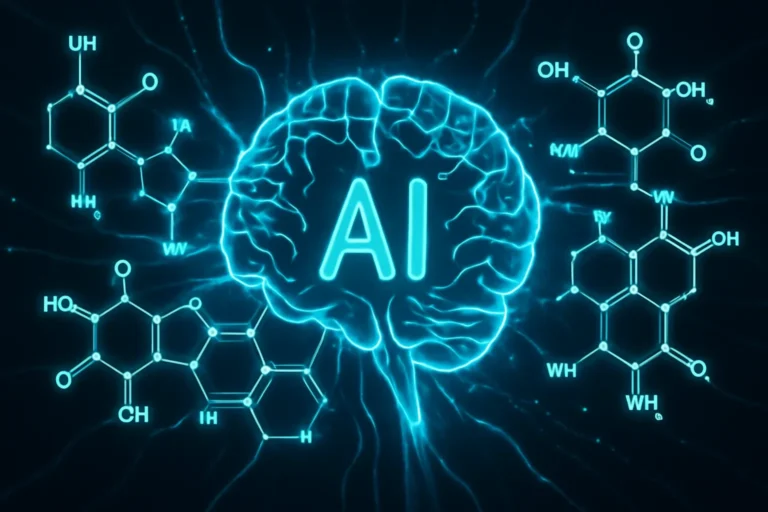
Understanding the blueprint of life has moved from a laboratory dream to a data-driven reality. Today’s researchers harness bioinformatics advances—a convergence of biology, computer science, and statistics—to interpret the deluge of genomic, proteomic, and metabolomic data. This post delves into the latest breakthroughs, showcases real-world applications, and explains how these innovations are reshaping medicine, agriculture, and our basic grasp of biology.
From Raw Sequence to Meaningful Insight
The 2000s marked the Human Genome Project’s completion, but the next decade revealed that access to sequence alone was insufficient. Key questions demanded computational forces:
- How do millions of single‑nucleotide polymorphisms (SNPs) influence disease risk?
- Which non‑coding regions regulate gene expression?
- Can we predict protein structure from amino‑acid sequences?
Modern pipelines now:
- Data acquisition – Leveraging high‑throughput sequencing (NGS) platforms such as Illumina, PacBio, and Oxford Nanopore.
- Pre‑processing – Quality control using tools like FastQC and Trimmomatic.
- Alignment & assembly – Algorithms such as BWA‑MEM, HISAT2, and SPAdes.
- Variant calling & annotation – GATK, SnpEff, and Ensembl VEP.
- Functional inference – Gene set enrichment (GSEA), pathway analysis (Reactome), and machine‑learning classifiers.
These steps collectively turn a pile of raw reads into biologically actionable knowledge.
Machine Learning: A New Lens on Genomic Data
Artificial intelligence has moved from theory to practice in bioinformatics. Deep learning models now interpret complex genomic signals with unprecedented accuracy.
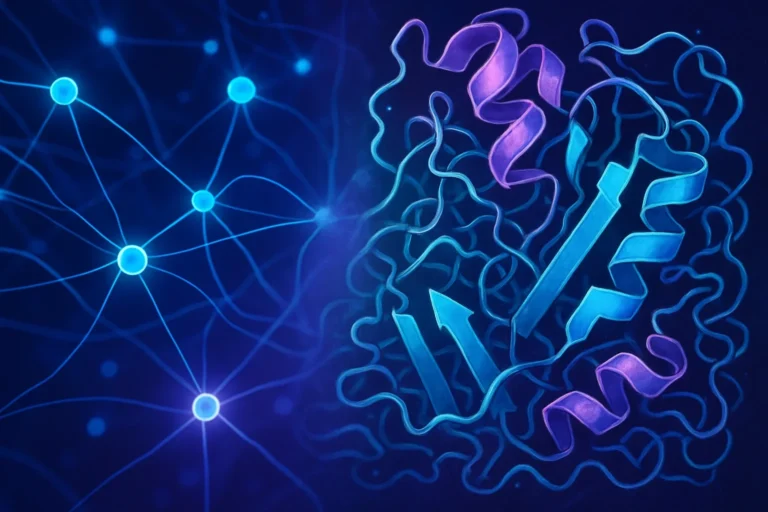
- AlphaFold 2 – Predicts 3D protein structures from sequence alone, with a 92% accuracy on the CASP14 benchmark. The underlying technique uses transformer architecture, originally designed for natural language processing.
- DeepVariant – A convolutional neural network that re‑interprets sequencing data, achieving higher sensitivity in variant detection compared to traditional algorithms.
- Genome‑wide association studies (GWAS) – Machine‑learning ensembles discern subtle genotype‑phenotype associations that linear models miss.
These tools accelerate discovery in precision medicine, whereby treatments are tailored to an individual’s genetic profile.
CRISPR & Bioinformatics: From Gene Editing to Therapeutic Design
The CRISPR-Cas9 system has revolutionized genome editing, but designing safe and efficient guide RNAs (gRNAs) is itself a computational challenge. Bioinformatics pipelines now feature:
- Off‑target prediction – Tools like CRISPR‑off and Cas-OFFinder evaluate potential unintended edits.
- Chromatin accessibility analysis – ATAC‑seq data reveal target sites’ openness, improving editing efficiency.
- High‑throughput gRNA libraries – Designed via gRNA‑Designer to target thousands of loci for functional screens.
Researchers use CRISPR libraries to knock out disease‑associated genes, validate drug targets, and even engineer microbes for biomanufacturing.
Big Data Analytics in Population Genetics
Scale has become the new frontier. Projects such as the 1000 Genomes Project, gnomAD, and the UK Biobank now contain millions of genomes, providing a rich resource for population-level insights.
Key computational innovations:
- Reference‑panel imputation – INFILS and BEAGLE 5.0 infer missing genotypes with high fidelity.
- PCA & t‑SNE visualisation – Reveal population structure and ancestry patterns.
- Rare‑variant burden tests – Aggregate rare mutations to assess disease impact.
These analyses illuminate human evolutionary history, trace migration patterns, and identify ancestral variants that confer disease resilience or susceptibility.
Interdisciplinary Impact: Agriculture, Ecology, and Beyond
While human health is the headline, bioinformatics advances are pivotal in other domains:
- Crop improvement – Genomic selection algorithms predict yield traits; CRISPR edits confer drought resistance.
- Microbiome mapping – 16S rRNA sequencing and shotgun metagenomics reveal microbial dynamics in soil and animal guts.
- Epidemiology – Phylogenetic tools track pathogen evolution, as seen in SARS‑CoV‑2 outbreak analyses.
These applications underscore the circular nature of bioinformatics: insights into one system often translate to others.
Credible Resources for Further Exploration
- The International Gene Editing Research Consortium: International Gene Editing Research Consortium
- National Center for Biotechnology Information (NCBI): NCBI
- European Bioinformatics Institute (EBI): EBI
- Genome.gov: Genome.gov
- Wikipedia on Bioinformatics: Bioinformatics
- Wikipedia on Genomics: Genomics
- Wikipedia on CRISPR: CRISPR
These authoritative sources provide foundational knowledge and the latest updates in the field.
The Future is Now: Emerging Trends
| Emerging Field | What It Means | Example Tool
|—————–|—————|————–
| Quantum Bioinformatics | Leveraging qubits for faster sequence alignment | QiskitBio
| Single‑Cell Multi‑Omics | Simultaneous profiling of RNA, ATAC, proteome | Seurat v4, Scanpy
| Edge Computing for Sequencers | Real‑time data analysis on portable devices | Oxford Nanopore’s MinIT
| Explainable AI in Diagnostics | Transparent models for clinical decisions | SHAP, LIME
These innovations promise to shrink turnaround times, democratize research tools, and enhance interpretability—critical factors for regulatory approval and clinical adoption.
Conclusion: Embrace the Data-Driven Biological Revolution
From the first base pairs sequenced to AlphaFold’s protein cosmos, bioinformatics advances are unmasking life’s deepest riddles. As we continue to generate more data, the synergy between biology and computation will only intensify. Whether you’re a clinician seeking precision treatments, an agronomist breeding resilient crops, or a bioinformatician launching the next breakthrough, the era of data‑driven biology is here.

100+ Science Experiments for Kids
Activities to Learn Physics, Chemistry and Biology at Home
Buy now on Amazon
Advanced AI for Kids
Learn Artificial Intelligence, Machine Learning, Robotics, and Future Technology in a Simple Way...Explore Science with Fun Activities.
Buy Now on Amazon
Easy Math for Kids
Fun and Simple Ways to Learn Numbers, Addition, Subtraction, Multiplication and Division for Ages 6-10 years.
Buy Now on Amazon