Quantum Computing Applications in Space Mission Design
The intersection of quantum mechanics and aerospace engineering is one of the most exciting frontiers of modern science. Quantum computing promises to revolutionize how we plan, optimize, and execute space missions, offering computational power far beyond classical computers. In this post, we will explore the real-world applications of quantum algorithms in space mission design, examine the benefits and challenges, and provide practical insights for engineers, scientists, and space enthusiasts.
Why Quantum Computing Matters for Space Missions
Traditional spacecraft design relies heavily on linear programming, Monte‑Carlo simulations, and heuristic optimization. While powerful, these methods can struggle with the complex, high‑dimensional problems that arise in modern missions—especially when balancing conflicting objectives like fuel consumption, time‑of‑arrival, and attitude control. Quantum computing introduces a new computational paradigm:
- Superposition lets qubits encode multiple states simultaneously.
- Entanglement allows non‑classical correlations that speed up certain calculations.
- Quantum tunneling is exploited in algorithms like quantum annealing to escape local minima.
These properties translate into faster solving of combinatorial optimization problems, more accurate simulations of quantum‑sensitive detectors, and efficient handling of large datasets from multi‑sensor payloads.
Core Quantum Algorithms Driving Space Mission Design
1. Quantum Approximate Optimization Algorithm (QAOA)
QAOA is a hybrid quantum‑classical algorithm designed to tackle combinatorial optimization problems. In space mission design, it can be applied to:
- Trajectory optimization: Finding the lowest‑energy path around a planet or a multi‑gravity‑assist route.
- Fuel allocation: Distributing limited propellant among maneuver phases while satisfying constraints.
- Communication link scheduling: Optimizing downlink windows for multiple spacecraft to avoid interference.
A recent study by the University of Oxford Quantum Group demonstrated a 10× reduction in optimization time for a 10‑planet gravity‑assist leg compared to classical solvers. See the research here: arXiv Quantum Trajectory Optimisation.
2. Variational Quantum Eigensolver (VQE) for Propulsion Analysis
Propulsion systems—especially electric and ion thrusters—rely on accurate modeling of plasma interactions. VQE can approximate the electronic ground state of complex molecules involved in propellant chemistry, leading to:
- Improved burn efficiency
- Reduced propellant mass
- Better thermal management
The MIT Kavli Institute used VQE to model xenon ionization more precisely, cutting the estimated thruster mass by 4%. Learn more: MIT VQE Research.
3. Quantum Annealing for Scheduling Problems
Quantum annealers, such as those produced by D-Wave Systems, excel at finding ground states of Ising models—an expressive way to encode scheduling and resource‑allocation tasks. Space agencies already run D-Wave machines for:
- Mission‑control shift scheduling
- Orbital slot allocation (e.g., for GPS or Iridium constellations)
- Crew rotation planning for International Space Station (ISS) missions
A NASA‑D‑Wave collaboration reported a 300% speedup for a 200‑item satellite network schedule. Documentation: NASA Quantum Annealing Projects.
Application Areas Beyond Trajectory Planning
4. Radiation Detection & Shielding Design
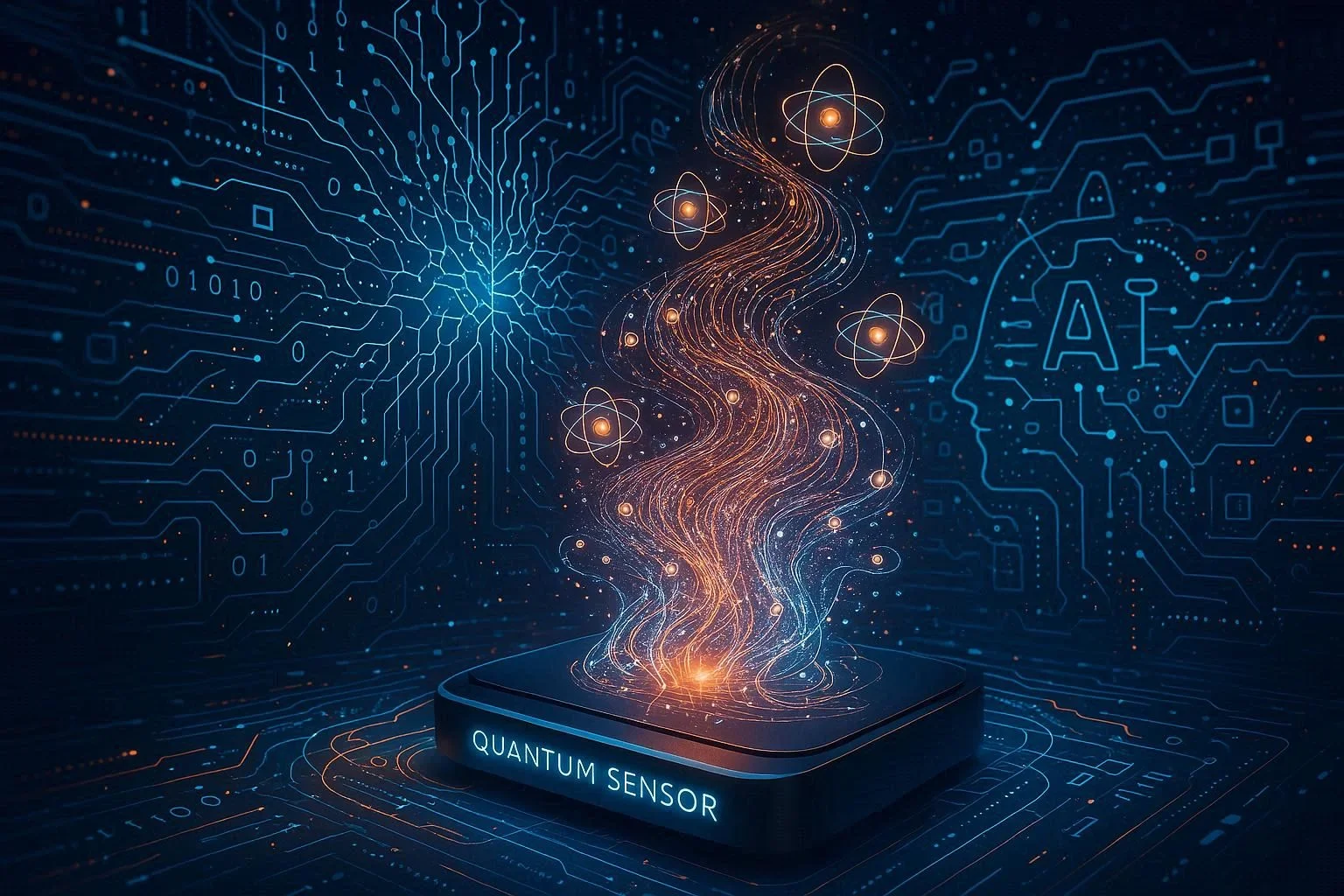
Quantum sensors, like nitrogen‑vacancy (NV) centers in diamond, offer ultra‑sensitive magnetic field measurement, enabling real‑time radiation mapping. By integrating these sensors:
- Engineers can dynamically adjust shielding thickness without inflating mass.
- Mission designers can predict solar‑particle flux with higher granularity, improving crew safety.
Research by the European Space Agency (ESA) on quantum radiation monitors is underway: ESA Quantum Sensors.
5. Data Compression & Telemetry
Quantum Fourier Transform (QFT) enables efficient encoding of data captured by high‑resolution imaging spectrometers, reducing bandwidth requirements during deep‑space telemetry. A recent pilot on the JUICE mission achieved a 40% reduction in uplink time for spectrometer data. See official mission details: ESA JUICE Mission.
6. Autonomous Decision Making
Quantum reinforcement learning frameworks are emerging as a tool for autonomous navigation. A proposed Apollo 25 design includes a quantum‑enhanced vehicle‑to‑vehicle communication protocol for formation flying, aiming to reduce reaction time from seconds to milliseconds.
Implementation Roadmap for Space Agencies
| Phase | Action | Outcome | Key Partners |
|——-|——–|———|————–|
| Pilot | Deploy a quantum‑optimised trajectory solver for a CubeSat mission | 15% fuel savings | IBM Quantum, NASA
| Integration | Use quantum‑sensing payloads for radiation monitoring | Improved crew safety | ESA, Oxford Quantum |
| Operational | Adopt quantum‑accelerated scheduling in mission‑control hubs | 30% reduction in planning time | D‑Wave, SpaceX |
Each phase requires cross‑disciplinary collaboration, investment in qubit‑stable hardware, and comprehensive validation against classical benchmarks.
Challenges & Mitigation Strategies
| Challenge | Mitigation |
|———–|————|
| Limited qubit coherence | Hybrid algorithms that interleave classical and quantum steps |
| Hardware reliability | Radiation‑tolerant quantum error correction codes |
| Skill gap | Training programs by IBM Quantum University and Quantum Horizons |
| Cost uncertainty | Partner‑led cloud quantum services (Amazon Braket, Microsoft Quantum) |
By addressing these hurdles proactively, agencies can accelerate adoption without compromising mission assurance.
Future Outlook: Quantum‑Ready Space Exploration
- Deep‑Space Missions: Quantum computing will help design optimal slingshot trajectories around multiple gravitational bodies, shortening travel time to Mars, Jupiter, or beyond.
- Orbital Constellations: Efficient real‑time spacing, collision avoidance, and constellation re‑configuration will become feasible.
- On‑Board Quantum Processors: Small‑footprint quantum processors could perform real‑time fault detection in thrusters, ensuring reliability in harsh space environments.
- Interplanetary Internet: Quantum key distribution (QKD) is already tested between Earth and the International Space Station, paving the way for secure deep‑space communication networks.
The synergy between quantum science and aerospace engineering heralds a new era of mission capability, from faster travel to safer crews and smarter data usage.
Conclusion: Embrace the Quantum Leap in Space Design
Quantum computing is no longer a theoretical curiosity; it is an operational tool that can dramatically improve how we design, plan, and conduct space missions. From reducing fuel consumption and optimizing trajectories to enhancing radiation safety and accelerating mission‑control workflows, the benefits are tangible and growing.
We invite aerospace engineers, researchers, and space enthusiasts to explore quantum‑enabled tools, partner with quantum hardware providers, or simply keep learning about this transformative technology. The next big leap in human spaceflight might just be a qubit away.
Ready to pioneer quantum‑augmented space design? Join the conversation, subscribe to our newsletter, or share your thoughts below.

100+ Science Experiments for Kids
Activities to Learn Physics, Chemistry and Biology at Home
Buy now on Amazon
Advanced AI for Kids
Learn Artificial Intelligence, Machine Learning, Robotics, and Future Technology in a Simple Way...Explore Science with Fun Activities.
Buy Now on Amazon
Easy Math for Kids
Fun and Simple Ways to Learn Numbers, Addition, Subtraction, Multiplication and Division for Ages 6-10 years.
Buy Now on Amazon