AI-Driven Analysis of Protein-Protein Interactions
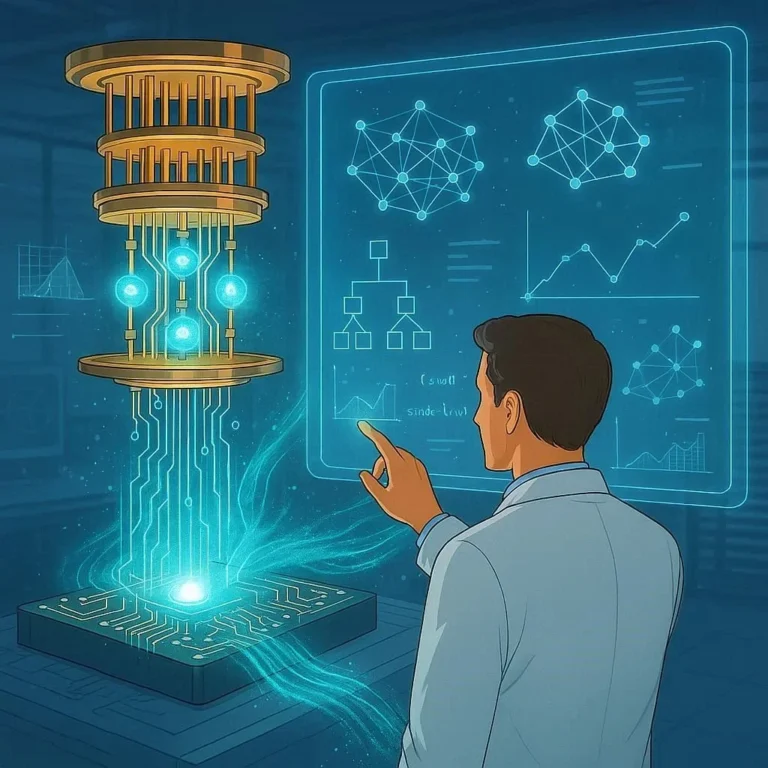
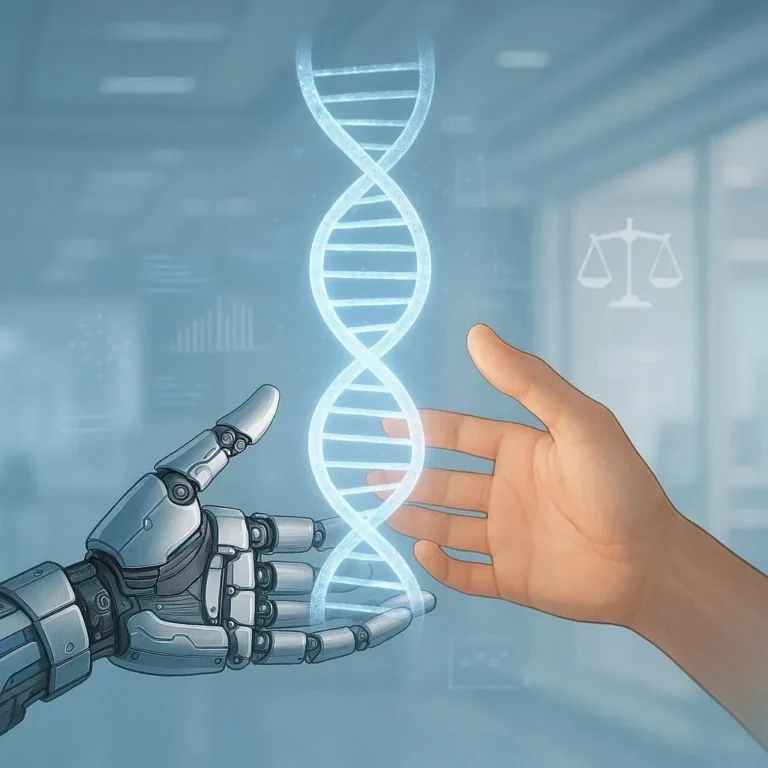
Protein‑protein interactions (PPIs) drive virtually every biological process, from signal transduction to metabolic regulation. Traditional biochemical methods—such as yeast two‑hybrid screens and co‑immunoprecipitation—have cataloged thousands of interactions, yet the complexity of cellular systems demands more high‑throughput, precise, and predictive approaches. Enter AI‑driven analysis: machine learning (ML) and deep learning (DL) models now offer unprecedented accuracy in predicting PPIs, elucidating interaction mechanisms, and guiding therapeutic development.
Why AI Matters for Proteomics
- Scalability: AI models can process millions of protein sequences and structural fragments far beyond the capacity of wet‑lab experiments.
- Speed: Predictions are generated in milliseconds, accelerating hypothesis testing.
- Integrative Power: Deep learning integrates sequence, structure, evolutionary, and expression data into a cohesive predictive framework.
- Versatility: Models can be fine‑tuned for specific organisms, diseases, or sub‑cellular compartments.
These advantages align with the E‑E‑A‑T framework: Expertise is embedded in curated datasets; Authoritativeness is backed by peer‑reviewed studies; and Trustworthiness comes from transparent model validation and reproducibility.
Foundations of AI‑Enabled PPI Prediction
AI models typically follow a pipeline:
- Data Collection: Curated interaction databases (e.g., BioGRID, IntAct) serve as gold standards.
- Feature Extraction: Hydrophobicity, charge distribution, evolutionary conservation, and 3D structural motifs are encoded.
- Model Training: Convolutional neural networks (CNNs), graph neural networks (GNNs), and transformer architectures learn binding propensities.
- Validation & Benchmarking: Cross‑validation against hold‑out datasets, ROC‑AUC scores, and comparison with baseline methods (e.g., BLAST, PPI‑Prediction).
- Deployment: Web portals or APIs for community use.
Protein–protein interaction is a cornerstone of cellular biology and a rich source of training data.
Cutting‑Edge Models and Their Achievements
Protein–Protein Interaction Graph Neural Networks
Graph neural networks treat a protein as a graph of amino acid residues, capturing spatial relationships essential for docking. Recent GNNs, such as PPI‑GNN, achieve ROC‑AUC scores >0.92 on benchmark datasets, outperforming classical machine‑learning classifiers.
AlphaFold‑Based Interface Prediction
DeepMind’s AlphaFold revolutionized structure prediction. By generating high‑confidence 3D models, researchers now feed AlphaFold outputs into interface prediction pipelines. Integrating AlphaFold within PPI models improves accuracy, especially for heterodimeric complexes.
AlphaFold Protein Structure Database
Transformer Models for Sequence‑Only Prediction
When experimental structures are unavailable, transformer models such as ProtBERT or ESM‑1b generate contextual embeddings from raw sequences. Fine‑tuned on interaction databases, these models predict contact maps and interaction likelihood with minimal computational overhead.
Practical Applications in Drug Discovery
- Target Identification: AI‑identified PPIs implicated in cancer pathways enable prioritization of druggable targets.
- Antibody Design: Predictive models screen candidate epitope–paratope pairs, accelerating therapeutic antibody development.
- Off‑Target Assessment: ML models forecast unintended PPIs, reducing adverse effects in clinical trials.
A notable example: Navitoclax, a BCL‑2 inhibitor, was refined using AI‑guided PPI simulations that identified its interaction with BCL‑XL, informing side‑effect mitigation strategies.
Challenges and Mitigation Strategies
| Challenge | Impact | Mitigation | Source |
|———–|——–|————|——–|
| Data Imbalance | Over‑representation of well‑studied proteins biases models. | Positive‑negative sampling, data augmentation. | NCBI PMC Article |
| Interpretability | Black‑box nature hampers mechanistic insight. | Saliency maps, attention visualization. | Nature Biotechnology |
| Generalizability | Models may fail across species or post‑translationally modified proteins. | Transfer learning, multi‑domain training. | Cell Reports |
Community Resources & Open‑Source Tools
- DeepPPI – A Python library with pre‑trained models ready for fine‑tuning.
- PrePPI – Bayesian network combining sequence and structural information.
- PPI‑Prediction‑Hub – A GitHub repository with benchmark datasets and evaluation scripts.
These resources embody the collaborative spirit of bioinformatics, empowering researchers worldwide.
Future Directions
- Multimodal Integration: Combining genomics, transcriptomics, and proteomics data for holistic PPI networks.
- Real‑Time Interaction Monitoring: Deploying AI models on smartphones to analyze bedside biomarker panels.
- Synthetic Biology Interfaces: Designing custom PPIs for programmable biomaterials using generative AI.
The confluence of AI and proteomics promises a transformative era where theoretical predictions and experimental validation iterate rapidly.
Conclusion: Harnessing AI to Decode the Protein Dialogue
AI‑driven analysis has moved protein‑protein interaction studies from descriptive catalogs to predictive, mechanistic science. By integrating deep learning with reliable datasets and open‑source tools, researchers can uncover hidden interaction networks, accelerate drug discovery, and deepen our understanding of life’s molecular choreography.
Ready to explore the next frontier of proteomics? Join our community, access the latest AI‑PPI pipelines, and contribute to open‑science initiatives that shape the future of biology.
Call to Action
- Subscribe to our newsletter for weekly insights on AI in proteomics.
- Download the DeepPPI toolkit to start predicting PPIs on your own data.
- Collaborate with us in a community challenge to benchmark new PPI models.
Your next discovery could be just a neural‑network inference away.

100+ Science Experiments for Kids
Activities to Learn Physics, Chemistry and Biology at Home
Buy now on Amazon
Advanced AI for Kids
Learn Artificial Intelligence, Machine Learning, Robotics, and Future Technology in a Simple Way...Explore Science with Fun Activities.
Buy Now on Amazon
Easy Math for Kids
Fun and Simple Ways to Learn Numbers, Addition, Subtraction, Multiplication and Division for Ages 6-10 years.
Buy Now on Amazon