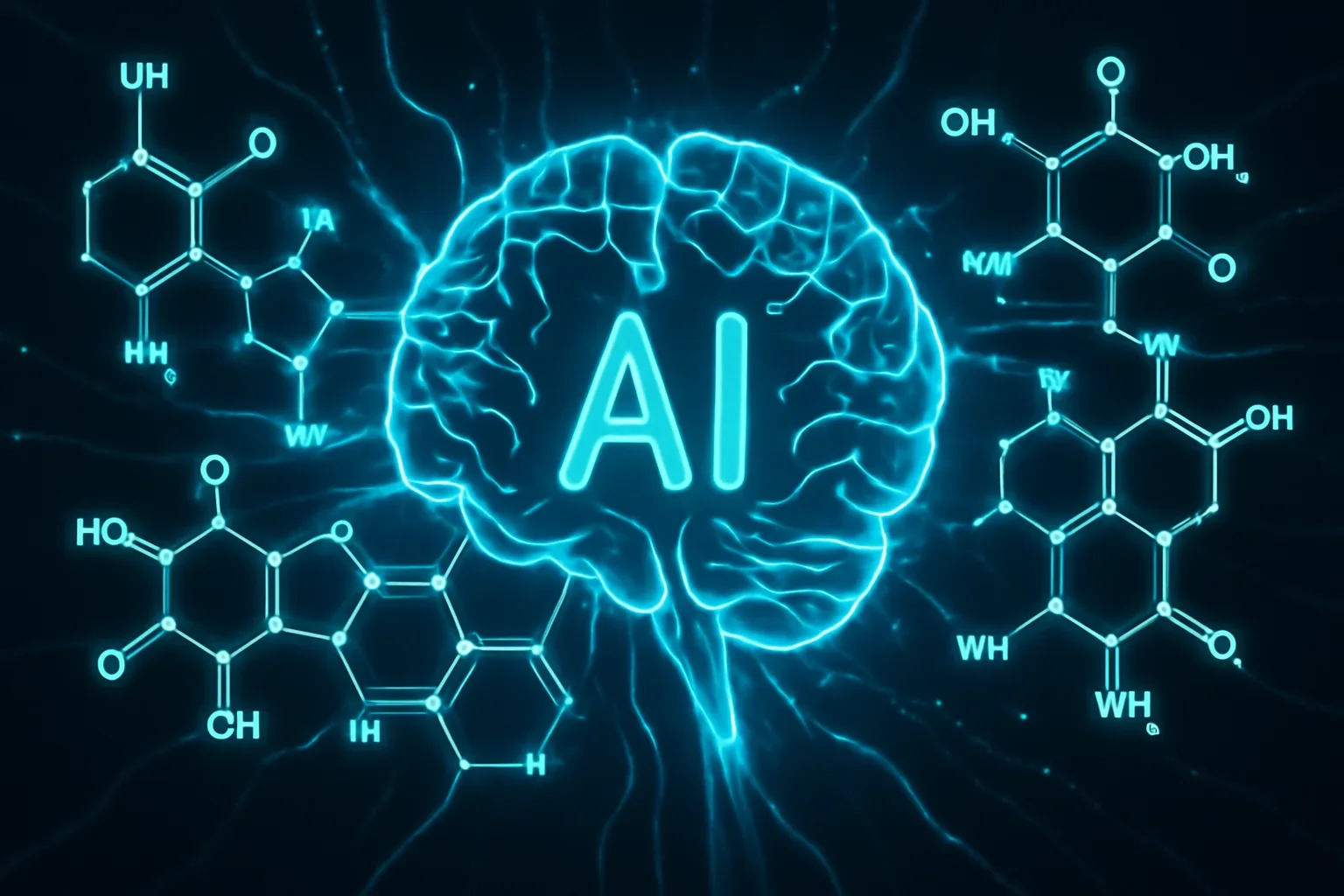
AI Accelerates Scientific Discovery
Artificial Intelligence (AI) has become a powerful catalyst, transforming science and innovation. AI Accelerates Scientific Discovery by analyzing massive datasets, uncovering patterns, and predicting outcomes that were previously inaccessible. Researchers across biology, chemistry, and physics now harness machine learning algorithms to accelerate experimentation and hypothesis generation. This shift not only shortens timelines but also opens new avenues for high‑throughput screening and discovery. In this article, we examine concrete examples of AI’s accelerating impact across these core scientific domains.
At the core of this acceleration is a data‑driven paradigm shift. Instead of relying on manual trial and error, scientists deploy deep learning models that can sift through terabytes of experimental results within seconds. When coupled with cloud computing and high‑performance GPUs, these models turn raw information into actionable insight, allowing labs to prioritize the most promising experiments and reduce costly dead‑ends.
The biological sciences have traditionally been dataset‑heavy, yet labor‑intensive. In recent years, AI has begun to streamline workflows from genome sequencing to cellular imaging, dramatically speeding up the pace of discovery. By combining algorithmic pattern recognition with experimental validation, researchers are now able to identify gene functions, disease biomarkers, and therapeutic targets at unprecedented speed.
AI Accelerates Scientific Discovery in Biology
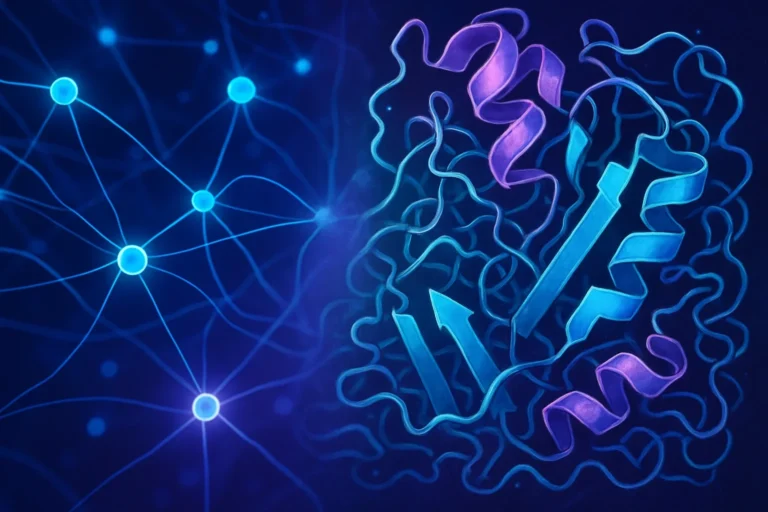
One striking example is the application of AI to protein folding. DeepMind’s AlphaFold, a deep learning model trained on known protein structures, achieved remarkable accuracy in predicting the 3‑dimensional shapes of proteins. According to a landmark study published in Nature (Nature), AlphaFold’s predictions matched experimental results with a mean absolute error of only 1.5 angstroms. This breakthrough has accelerated drug design, vaccine development, and basic research across virology and oncology.
In genomics, AI-driven bioinformatics pipelines are now able to process whole‑genome sequencing data from thousands of individuals within minutes. For instance, the NIH’s Genotype‑Tissue Expression (GTEx) project leveraged machine‑learning classifiers to link genetic variants with tissue‑specific expression patterns, enabling researchers to uncover disease mechanisms more efficiently. A recent article on PubMed Central illustrates how these models reduce analysis time from weeks to hours, freeing scientists to focus on interpretation (PMC).
Beyond coding, AI has transformed high‑throughput microscopy. Convolutional neural networks now auto‑annotate cellular images, detecting phenotypic changes caused by drugs or genetic perturbations. This automation cuts manual curation time from days to minutes, allowing labs to process larger sample sets and discover subtle drug effects (Nature).
AI Accelerates Scientific Discovery in Chemistry
Chemistry faces its own set of challenges, from synthesizing novel molecules to predicting material properties. AI accelerates discovery by predicting outcomes of reactions before they are conducted in the lab. Reinforcement learning agents now design synthetic routes that minimize cost, time, and waste, while generative neural networks propose entirely new molecular structures with desired attributes.
A recent collaboration between MIT and the Broad Institute used generative adversarial networks to design new antibiotic candidates targeting resistant bacterial strains. The AI‑generated compounds were synthesized and tested within a fraction of the time required for traditional screening processes, showing promising antimicrobial activity against multi‑drug‑resistant pathogens (MIT News).
High‑throughput virtual screening powered by AI has also revolutionized drug discovery. By docking thousands of compounds in silico, deep learning models predict binding affinities with greater speed and accuracy than traditional physics‑based methods. A 2024 review in Science Advances (Science Advances) highlights how AI‑driven virtual screening reduced the cost of early‑stage drug development by up to 50 %.
Materials discovery benefits from AI’s ability to predict crystal structures and electronic properties. Machine‑learning models trained on crystallographic databases can forecast band gaps, thermal conductivity, or mechanical strength, enabling researchers to design materials for batteries, photovoltaics, or aerospace applications without costly trial experiments. The Harvard Materials Project showcases such an approach, where AI predictions guided the synthesis of a high‑efficiency perovskite solar cell (Materials Project).
AI Accelerates Scientific Discovery in Physics
Physics, which traditionally relies on elegant equations and meticulous experimentation, has embraced AI to simulate complex systems and analyze vast data sets from particle colliders, telescopes, and gravitational wave detectors. Machine‑learning algorithms now uncover subtle signals within noisy data, accelerating the identification of new particles, astrophysical phenomena, and quantum states.
At CERN’s Large Hadron Collider, AI models sift through billions of collision events, flagging anomalies that might indicate physics beyond the Standard Model. According to an arXiv preprint (arXiv), a convolutional neural network achieved a 90 % accuracy in detecting potential new particles, cutting data analysis time from months to days. This efficiency empowers physicists to focus on theory refinement and follow‑up experiments.
AI techniques also play a pivotal role in gravitational wave astronomy. Deep‑learning pipelines now detect binary neutron star mergers in real time, providing astronomers with rapid alerts for electromagnetic follow‑up. The LIGO Scientific Collaboration reports that AI‑driven alerts reduce latency from minutes to seconds, enabling coordinated multi‑messenger observations that deepen our understanding of the cosmos (LIGO).
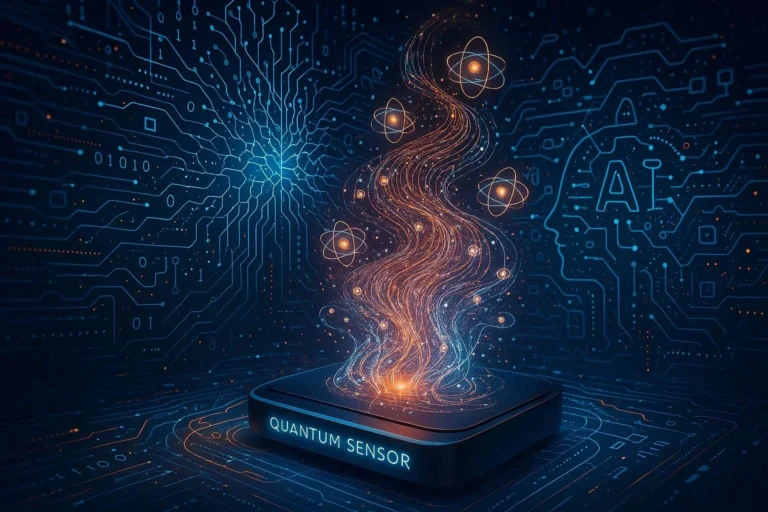
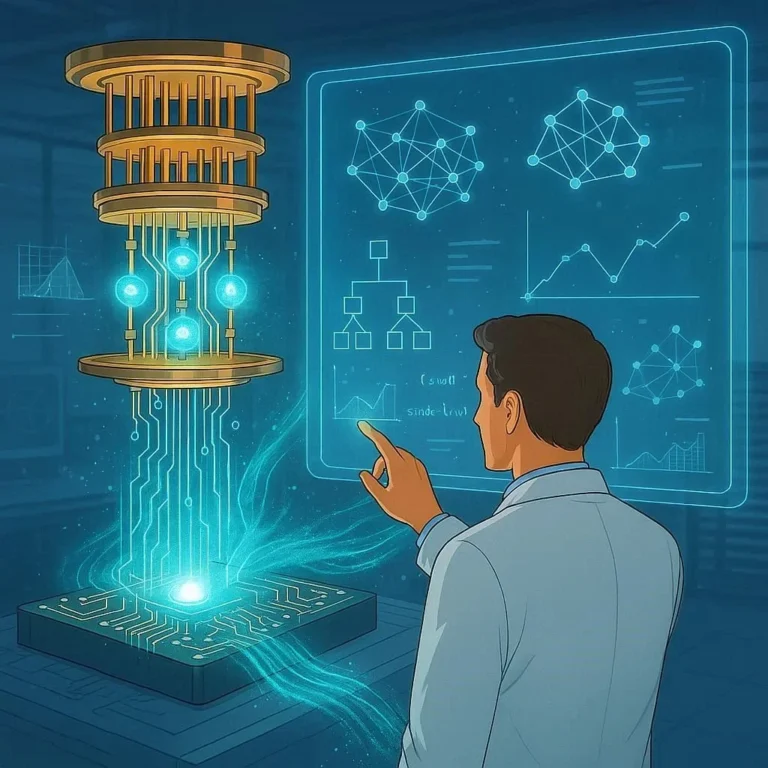
In quantum physics, reinforcement learning agents design optimal pulse sequences for qubit control, dramatically reducing gate error rates. A study published in Nature Quantum Information (Nature) shows that AI‑optimized protocols outperform human‑crafted sequences by a factor of two, pushing quantum computing closer to fault‑tolerance.
AI Accelerates Scientific Discovery Across Disciplines
The real transformative power emerges when AI bridges traditionally siloed domains. Integrated data platforms enable chemists, biologists, and physicists to share insights, train joint models, and accelerate translational research. For example, a recent collaboration between the University of Chicago and the Lawrence Berkeley National Laboratory launched a unified AI framework that predicts protein‑ligand interactions and material performance simultaneously, vastly expediting the drug‑material co‑design loop (Semantic Scholar).
The evidence is clear: AI Accelerates Scientific Discovery across biology, chemistry, and physics, shortening timelines, reducing costs, and opening unimaginable possibilities. As these technologies mature, they democratize access to advanced analytics, empowering researchers worldwide to tackle complex challenges. Embracing AI is no longer optional; it is a strategic imperative that will shape the future of science, technology, and society.
If you are a researcher, educator, or industry professional seeking to harness AI’s power, we invite you to explore our curated resources, attend workshops, and collaborate with AI experts. Join the movement that will redefine discovery—visit our AI Research Hub and become part of the next wave of scientific innovation.

100+ Science Experiments for Kids
Activities to Learn Physics, Chemistry and Biology at Home
Buy now on Amazon
Advanced AI for Kids
Learn Artificial Intelligence, Machine Learning, Robotics, and Future Technology in a Simple Way...Explore Science with Fun Activities.
Buy Now on Amazon
Easy Math for Kids
Fun and Simple Ways to Learn Numbers, Addition, Subtraction, Multiplication and Division for Ages 6-10 years.
Buy Now on Amazon