AI vs. Human Researchers
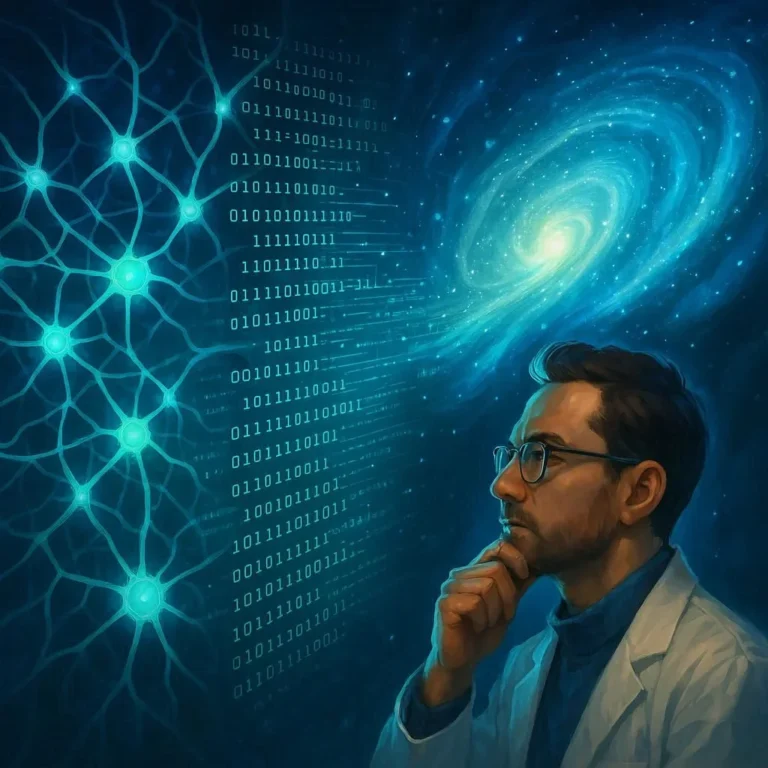
When scientists first imagined a robot filling the laboratory, the idea seemed more science fiction than science fact. Today, however, artificial intelligence (AI) is already steering data analysis, hypothesis generation, and even experimental design across disciplines. As AI models grow more sophisticated, the debate intensifies: can AI truly replace human researchers, or does it merely amplify our ability to explore the unknown? This article examines AI’s capabilities, the irreplaceable qualities of human curiosity, and the future of collaborative discovery.
Understanding AI’s Current Capabilities in Research
In a decade of rapid progress, AI has evolved from rule‑based systems to deep learning architectures that can autonomously sift through petabytes of data. A 2019 Nature publication highlighted how convolutional neural networks identified subtle patterns in genomic sequences far beyond human visual capacity (Nature), accelerating drug‑target discovery. Similarly, reinforcement‑learning agents have optimized complex laboratory protocols, reducing experimental time by up to 40%, as reported by the Stanford AI Lab (Stanford AI Lab). Yet these successes still depend on human oversight for experimental validation, ethical framing, and the creativity that drives hypothesis generation.
Data quality remains a pivotal bottleneck; AI can only be as good as the sources it ingests. Researchers worldwide have adopted open‑source data repositories, but inconsistencies, missing metadata, and citation gaps continue to frustrate automated workflows. To mitigate these challenges, interdisciplinary teams combine domain expertise with data engineering, ensuring that AI pipelines process clean, reproducible information (NCBI). This collaborative process underscores AI’s dependence on human curation rather than autonomy.
AI’s Role in Data Analysis
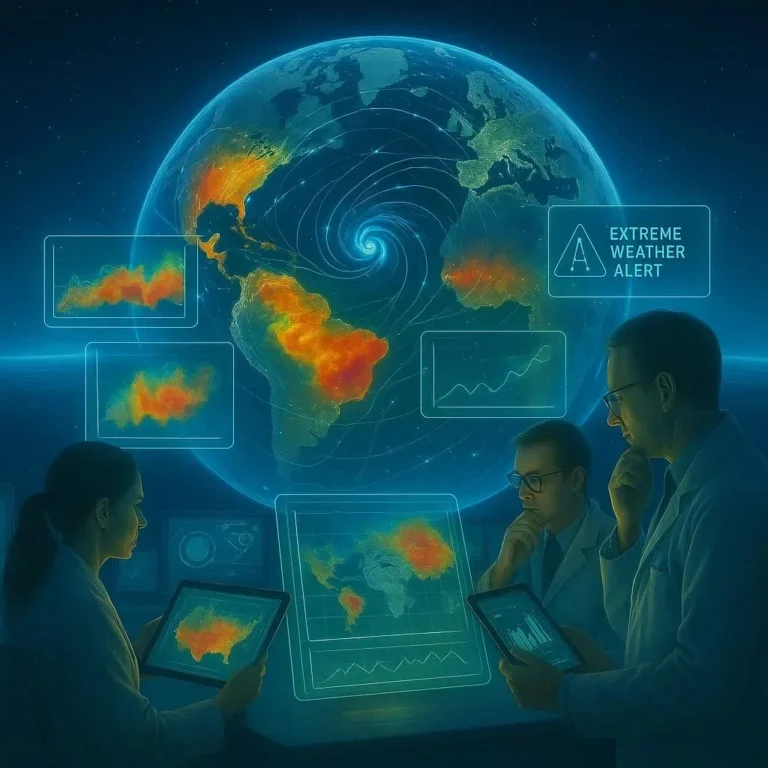
Machine learning models excel at detecting correlations across high‑dimensional datasets that would overwhelm a human analyst. In epidemiology, AI has modeled disease spread in real time, providing public‑health officials with up‑to‑date scenario projections (WHO). In materials science, generative adversarial networks predict novel alloy compositions, guiding laboratory synthesis with a 70% success rate over random trial and error (Science). However, these models often require manual tuning of hyperparameters and careful interpretation to avoid misattributing causation to mere association.
Moreover, AI’s interpretability continues to be a topic of active research. Techniques like SHAP values and LIME help scientists visualize feature importance, making it easier to validate findings. Nonetheless, domain experts still need to contextualize model outputs, translating statistical significance into biological or physical relevance—a process that remains inherently human.
AI Accelerating Medical Discoveries
In oncology, AI algorithms now assist pathologists in grading tumors with accuracy comparable to senior experts. A landmark 2021 study published in the New England Journal of Medicine demonstrated that an AI system improved diagnostic speed by 30% while maintaining a false‑negative rate below 1% (NEJM). Patient‑specific AI models also predict optimal chemotherapy regimens by simulating tumor responses to multiple drugs, reducing trial periods for patients.
Beyond diagnostics, AI has pioneered the concept of de‑novo drug design. By training on millions of molecular structures, AI can propose candidate compounds that target previously “undruggable” proteins, cutting development timelines from years to months. Although the initial design is computer‑generated, chemists still synthesize and verify these compounds, illustrating a clear synergy between AI creativity and human verification.
AI and Ethical Constraints
While AI promises unprecedented speed, it also introduces ethical dilemmas that only responsible scientists can navigate. Bias in training data can perpetuate health disparities, especially when datasets underrepresent minority populations. Addressing such bias requires human insight into sociocultural contexts and regulatory frameworks.
Below is a concise checklist of ethical considerations for AI research:
- Data privacy and informed consent
- Transparent algorithmic decision processes
- Inclusive dataset representation
- Compliance with national and international regulations
The absence of human judgment in deploying AI tools could result in unintended consequences, from misdiagnoses to inequitable allocation of resources. Therefore, ethical oversight committees, often composed of bioethicists, clinicians, and data scientists, are indispensable in guiding AI application in labs and clinics.
AI, Humans, and the Future
Looking ahead, most experts predict a partnership model where AI handles routine, data‑heavy tasks while humans focus on hypothesis generation, experimental design, and contextual interpretation. This complementarity mirrors the historical evolution of scientific instruments, from the microscope to the high‑throughput sequencer. As AI becomes more integrated, the role of the scientist shifts toward curation, mentorship, and critical appraisal of AI outputs.
In 2023, the European Union introduced the AI Regulation to balance innovation with safety, explicitly mandating human‑in‑the‑loop controls for high‑stake applications. Such policy initiatives reinforce the notion that AI cannot entirely replace human oversight, but can dramatically lower barriers to knowledge creation.
Conclusion: AI Enhances, but Doesn’t Replace
AI’s transformative potential is undeniable, from decoding genomic data to speeding drug discovery. Yet the intricate dance between data, interpretation, and ethical stewardship remains firmly rooted in human agency. Scientists that embrace AI as a complementary tool, rather than a replacement, will chart the most promising path forward.
As you consider integrating AI into your research pipeline, start by identifying data bottlenecks and evaluating existing AI frameworks that fit your domain. Pilot projects with clear success metrics can reveal practical benefits and hidden pitfalls before full deployment.
Remember that the ultimate goal of science is to understand the world, not merely to automate tasks. By fostering a culture of collaboration between AI and human researchers, we can accelerate discovery while preserving the ethical, creative, and contemplative aspects of inquiry.
Ready to harness AI in your next project? Download our free AI‑research toolkit and join a community of forward‑thinking scientists who are redefining what’s possible. Let’s build the future of discovery together.

100+ Science Experiments for Kids
Activities to Learn Physics, Chemistry and Biology at Home
Buy now on Amazon
Advanced AI for Kids
Learn Artificial Intelligence, Machine Learning, Robotics, and Future Technology in a Simple Way...Explore Science with Fun Activities.
Buy Now on Amazon
Easy Math for Kids
Fun and Simple Ways to Learn Numbers, Addition, Subtraction, Multiplication and Division for Ages 6-10 years.
Buy Now on Amazon