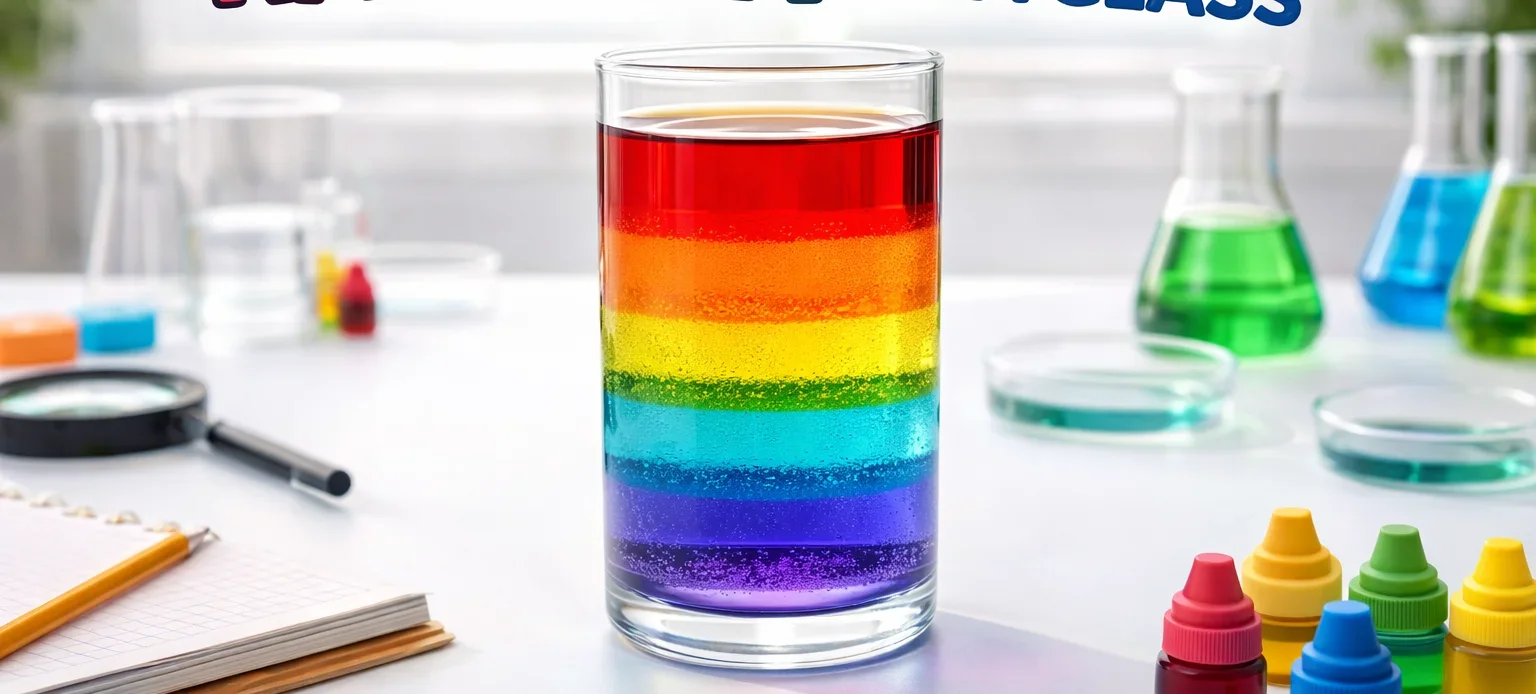
Create a Rainbow in a Glass: A Simple Science Experiment That Teaches Density
What if you could make a rainbow appear right on your table? With a few everyday ingredients, you can create a stunning rainbow in a glass that looks almost magical. This easy science experiment is colorful, quick to set up, and a great way to understand how liquid density works. It’s perfect for kids, students, and anyone who enjoys hands-on learning with visual results.
Why This Rainbow Experiment Is So Popular
The rainbow-in-a-glass experiment combines beauty with science, making it both fun and educational.
- Bright and engaging: Instantly captures attention with vivid colors
- Easy to perform: Uses simple kitchen ingredients
- Educational: Demonstrates density and liquid layering
- Perfect for learning at home or school: No special equipment required
It’s one of the most loved science experiments for beginners.
Materials Required
To get started, gather the following items:
- 4 small clear glasses or cups
- Water
- Sugar
- Food coloring (red, yellow, green, blue)
- Spoon for stirring
- One tall, transparent glass
Clear containers are important so you can see the layers clearly.
Step-by-Step: How to Make a Rainbow in a Glass
Step 1: Prepare the Colored Water
Pour the same amount of water into each of the four glasses. Add a different food color to each glass and stir until evenly mixed.
Step 2: Create Different Densities
Add sugar to each colored glass in the following amounts:
- Red: 3 tablespoons
- Yellow: 2 tablespoons
- Green: 1 tablespoon
- Blue: no sugar
Stir each solution thoroughly until all the sugar is completely dissolved.
Step 3: Layer the Liquids
Take the tall clear glass and slowly pour in the red solution first. Then gently add the yellow, followed by green, and finally blue.
Tip: Pour each layer slowly over the back of a spoon to prevent the colors from mixing.
Step 4: Watch the Rainbow Appear
If poured carefully, the liquids will settle into neat layers, forming a beautiful rainbow effect inside the glass.
The Science Behind the Rainbow
This experiment works because of density, which refers to how much mass is packed into a certain volume.
- Water with more sugar is heavier and more dense
- Water with less or no sugar is lighter
- When layered from highest density to lowest, the liquids stay separated
Because the densest liquid is at the bottom and the least dense on top, the colors stack instead of blending together.
Fun Ways to Experiment Further
- Add more colors by adjusting sugar levels
- Try other liquids like honey, syrup, dish soap, or oil
- Shine a flashlight or phone light through the glass for a glowing rainbow
- Use warm water to dissolve sugar faster (let it cool before layering)
These variations help explore how different liquids behave.
Safety Note
This experiment is safe to perform, but it’s not meant for drinking due to the high sugar concentration and food coloring.
Final Thoughts
Making a rainbow in a glass is a perfect example of how science can be both simple and beautiful. With just water, sugar, and color, you can explore important concepts like density while creating something visually stunning. It’s quick, mess-free, and ideal for curious minds of all ages.
Try it yourself and bring a little science—and a lot of color—into your day.

100+ Science Experiments for Kids
Activities to Learn Physics, Chemistry and Biology at Home
Buy now on Amazon
Advanced AI for Kids
Learn Artificial Intelligence, Machine Learning, Robotics, and Future Technology in a Simple Way...Explore Science with Fun Activities.
Buy Now on Amazon
Easy Math for Kids
Fun and Simple Ways to Learn Numbers, Addition, Subtraction, Multiplication and Division for Ages 6-10 years.
Buy Now on Amazon