Double-Slit Experiment Explained
The Double‑Slit Experiment sits at the heart of quantum mechanics, illustrating how particles behave like waves and how observation alters reality. This classic laboratory setup has baffled and inspired physicists for over a century, revealing the strange duality that defines particles such as photons and electrons. In this article we unpack the experiment’s origins, the underlying theory, and its surprising implications for modern technology.
Historical Origins of the Double‑Slit Experiment
In 1801, Thomas Young first used a slit apparatus to demonstrate light’s interference, providing early evidence that waves carried energy through space. Young’s paper was published on the principles of trigonometry and optics, but the experiment was later refined to explore electrons and other quantum particles. The modern phrasing of the experiment emerged in the 1920s when physicists like Schrödinger and Bohr began developing the wavefunction formalism that describes probability amplitudes. The enduring legacy of Young’s work underpins the way we now teach and test quantum theory worldwide.
How the Double‑Slit Setup Works
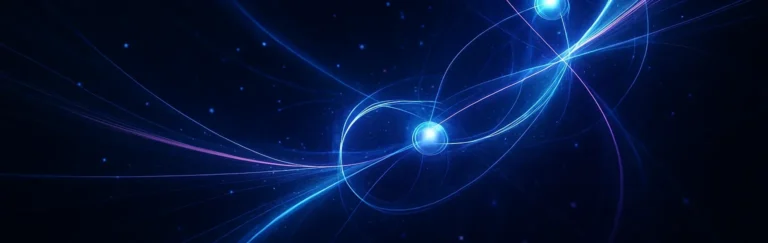
The basic arrangement consists of a coherent source—often a laser or an electron gun—emitting particles toward a barrier that has two closely spaced openings. Behind the barrier, on a detection screen, the arriving particles form a pattern of light and dark fringes known as interference. Each fringe represents a constructive or destructive overlap of probability waves stemming from both slits. If we block one of the slits, the interference pattern collapses and a simpler, single-slit diffraction pattern emerges, proving that the two pathways are essential for wave behavior.
Wave-Particle Duality Revealed by the Experiment
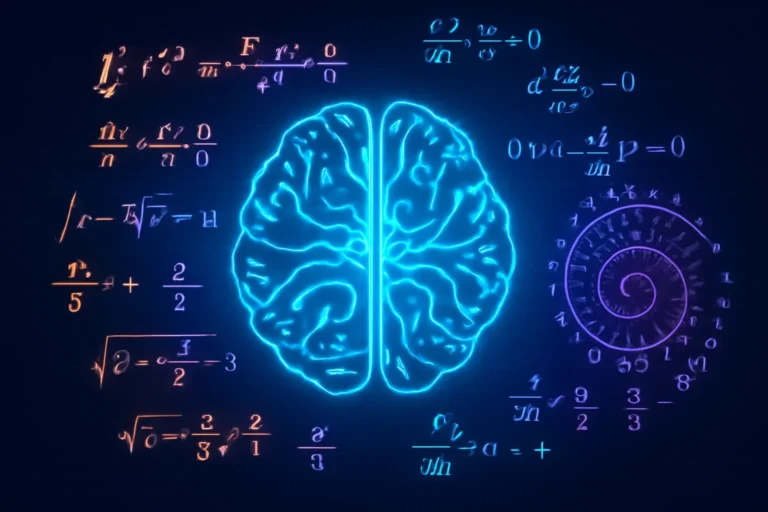
When researchers performed the experiment with electrons, the interference pattern persisted even if electrons were fired one at a time. This counterintuitive result illustrates that a single electron appears to traverse both slits simultaneously, interfering with itself. The phenomenon is captured mathematically by the Schrödinger equation:
- \(\psi(x,t)\) – the complex wavefunction whose magnitude squared gives probability density.
- The superposition principle – sums the waves from each slit before calculating intensity.
- The act of measurement – causes wavefunction collapse into a definite location on the screen.
Such behavior challenges everyday intuition and is a cornerstone of quantum mechanics. By contrast, classical particles always take a single, well‑defined path, never producing an interference pattern unless two or more overlapping trajectories exist.
Modern Reinterpretations and Applications
Today, the Double‑Slit Experiment informs a broad range of technologies. Scientists use analogous setups to create quantum sensors that measure gravitational waves, detect biological molecules, or manipulate light for advanced imaging. Moreover, research in quantum computing exploits interference to build qubits that superpose both 0 and 1 states. Below is a list of prevalent uses that stem from the principles first demonstrated in the Double‑Slit Experiment:
- Quantum Computing: Interference allows qubits to perform complex calculations exponentially faster than classical bits.
- High‑Precision Metrology: Devices like atomic interferometers measure minute changes in acceleration or rotation.
- Optical Communications: Coherent light sources rely on wave nature for data encoding across fiber networks.
- Biomedical Imaging: Interferometric methods enhance resolution beyond the diffraction limit in optical microscopes.
- Fundamental Tests: The experiment continues to test the interpretations of quantum mechanics, especially the role of measurement.
These applications underscore the experiment’s relevance; each depends upon the same wave interference that Young first noted nearly 200 years ago. The Double‑Slit Experiment’s impact extends well beyond academic curiosities—it directly shapes technological progress in our digital age.
Key Takeaways for Everyday Science Literacy
While you may find the numbers and equations daunting, the heart of the Double‑Slit Experiment is a simple truth: particles can behave like waves, and measurement can change what we see. This has profound implications for the way we understand reality: the universe operates according to probabilistic rules until we observe it. If you want to learn more, resources from reputable institutions such as Wikipedia, the National Institute of Standards and Technology’s Quantum Physics program, and courses offered by the MIT OpenCourseWare portal all provide excellent, research‑based overviews. These platforms allow curious minds to dive deeply into the mathematics and experimentation that underpin this foundational study.
What It Means for the Future of Science
The Double‑Slit Experiment has become a benchmark for new theories that seek to unify quantum mechanics with general relativity. As scientists develop larger and more sophisticated interferometers, the precision of our measurements will continue to improve, leading to insights about dark matter, quantum gravity, and the early universe. Importantly, the experiment also reminds us that science is iterative: each finding invites fresh questions, and each question demands new experiments that challenge our preconceptions.
Conclusion: Keep Exploring the Double‑Slit Experiment
If you’re fascinated by how the universe defies intuitive logic, delve further into the Double‑Slit Experiment. By engaging with primary research papers, attending online courses, or conducting simple home experiments with lasers and barrier plates, you can experience the wonder of interference firsthand. Embrace curiosity, experiment boldly, and let the science of the Double‑Slit Experiment transform the way you view reality.
Frequently Asked Questions
Q1. What is the scientific significance of the Double‑Slit Experiment?
The experiment demonstrates wave‑particle duality, shows how superposition works, and illustrates that observation collapses a quantum system into a definite state. It is a foundational test of quantum mechanics’ core principles.
Q2. Can the Double‑Slit Experiment be performed with everyday objects?
Not with macroscopic objects that obey classical physics, as they do not exhibit interference patterns. Only particles or waves that satisfy quantum conditions, like electrons or photons, can display the effect.
Q3. How does measurement affect the outcome in the experiment?
When a detector observes which slit a particle passes through, the quantum superposition collapses, eliminating interference. The particle then behaves like a classical particle, and the pattern becomes a simple single‑slit diffraction.
Q4. Are there practical applications of the Double‑Slit Experiment today?
Yes. Technologies such as quantum computing, high‑precision interferometry, optical coherence tomography, and secure quantum communications rely on the principles first revealed by this experiment.
Q5. Where can I learn more about the experiment in a beginner-friendly format?
Educational websites like Khan Academy, MIT OpenCourseWare, and the National Science Foundation offer introductory lessons that explain the experiment’s concepts without heavy math.
Related Articles

100+ Science Experiments for Kids
Activities to Learn Physics, Chemistry and Biology at Home
Buy now on Amazon
Advanced AI for Kids
Learn Artificial Intelligence, Machine Learning, Robotics, and Future Technology in a Simple Way...Explore Science with Fun Activities.
Buy Now on Amazon
Easy Math for Kids
Fun and Simple Ways to Learn Numbers, Addition, Subtraction, Multiplication and Division for Ages 6-10 years.
Buy Now on Amazon