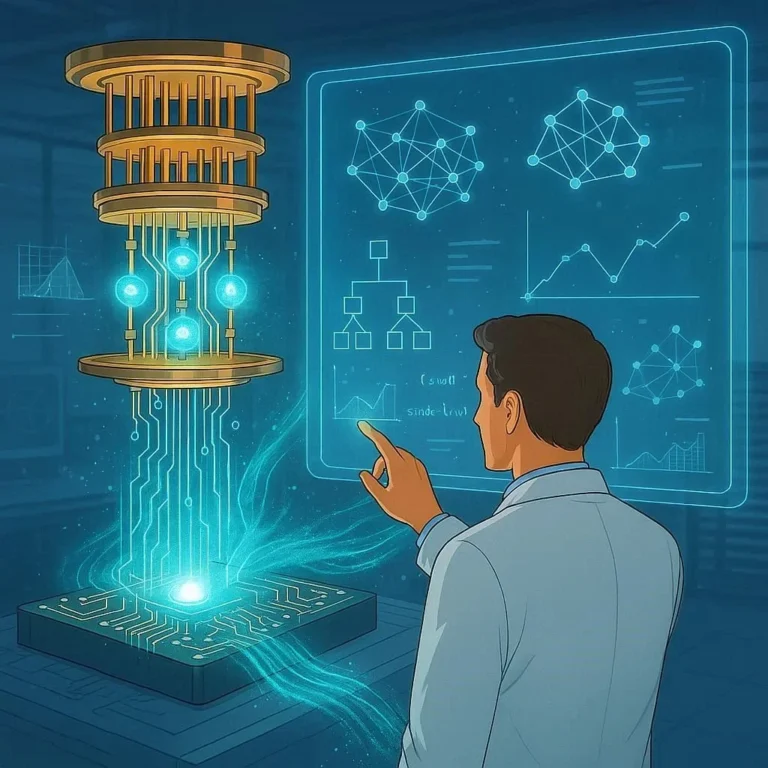
Mini Particle Accelerator
Building a particle accelerator offers a hands‑on journey into modern physics, allowing students and hobbyists to witness high‑energy phenomena up close. The concept is deceptively simple: use electric fields to speed charged particles, and magnetic fields to steer them into a precise trajectory. In this guide, we’ll cover the essential components, safety considerations, and practical design tips for creating a compact, tabletop accelerator that can generate electron beams with energies of a few mega‑electron‑volts. Whether you’re a university physics lab, a STEM club, or an individual tinkerer, mastering the basics of a particle accelerator opens doors to countless experiments, from radiation sources to material science studies.
Designing the Magnetic Structure
The magnetic fields in a particle accelerator serve to bend and focus the accelerated particles. For a mini accelerator, permanent magnets or small electromagnets are most suitable. Electromagnets allow adjustable field strengths, while permanent magnets simplify construction. The typical geometry is a “bending arc” that turns the beam by 90 degrees into a circular path, or a straight “stretcher” that keeps the beam on a line. The key magnetic parameters are field strength (usually 1–8 tesla for small units), bore size, and homogeneity. You can obtain magnet specifications from the Particle accelerator Wikipedia entry, which provides comparative data for common magnet types.
The design starts by choosing the desired beam energy. For example, a 1‑MeV electron beam requires a bending radius of roughly 0.02 m at 4 tesla. You then calculate the coil current using Ampère’s Law: I = B·(2πr)/N, where N is the number of turns. Once you have the current, you can size the conductors and heat sink. A practical choice is to use copper wire with a thermal coefficient that keeps the temperature below 75 °C during operation. The whole assembly should be mounted on a low‑thermal‑expansion aluminum plate to maintain alignment.
Accelerating Particles with RF Cavities
Radio‑frequency (RF) cavities convert alternating electric fields into kinetic energy for the particles. In a mini accelerator, a single accelerating cavity operating at 2.45 GHz (the frequency of a standard microwave oven) can suffice. The cavity creates a longitudinal electric field that accelerates electrons as they pass through. The cavity dimensions are chosen to match the RF wavelength. For 2.45 GHz, the wavelength is about 12.2 cm; a standing‑wave cavity with a length of a quarter wavelength, 3 cm, is common.
The power source is a low‑amplitude, high‑frequency oscillator. A 100‑W microwave amplifier can supply sufficient voltage (>10 kV) to push electrons to MeV energies. The cavity is typically machined from aluminum or copper, plated with gold for conductivity, and equipped with a power coupling port. One of the most reliable ways to power such a system is by repurposing a commercial microwave oven transformer and rectifier circuit—details of which can be found in the MIT physics lecture notes (MIT physics lecture notes).
Safety and Radiation Shielding
High‑energy electrons generate Bremsstrahlung photons when they encounter matter. The resulting X‑ray radiation can be hazardous; proper shielding is mandatory. For a 1‑MeV beam, a 3‑cm lead slab provides a 50‑fold reduction in X‑ray intensity. The shielding layout should surround the beam pipe, the cavity, and any target chamber. Radiation monitors, such as Geiger‑Müller tubes, should be installed at the experiment perimeter.
Additional safety measures include an interlock system that stops the RF source when access doors are opened. All electronic components must be properly grounded to prevent electrical shock. Keep the accelerator in a controlled environment with restricted access for non‑trained personnel. Compliance with local regulations from the National Accelerator Laboratory guidelines can streamline the permitting process.
Choosing Materials and Power Supply
The power supply is the backbone of the accelerator. A regulated 120‑V AC to 24‑V DC supply can power the magnet coils, while a split‑phase DC supply feeds the RF amplifier. Use a buck‑boost converter for efficient modulation of the RF amplitude. Keep currents below 10 A for safe operation; current‑sensing relays will cut power if the limits are exceeded.
The construction materials should have low neutron activation coefficients. Stainless steel or aluminum are preferable because they produce minimal neutron background. For the vacuum chamber, a stainless steel cylinder with a 50 mm inner diameter provides a sufficient clear path while maintaining mechanical integrity. A simple rotary vane pump can bring the chamber pressure below 10⁻⁶ Torr, which is adequate for electron beams up to 1 MeV.
- Magnet type: Permanent or 12‑turn electromagnet
- RF frequency: 2.45 GHz
- Beam energy target: 1 MeV
Building a Compact Test Facility
Housing the accelerator on a 90‑cm square optical table keeps the system stable and portable. Mount the magnet assembly on a kinematic mount to allow fine adjustments of the field direction. The RF cavity sits directly behind the magnet, and the beam pipe continues to a target chamber where your experiment will take place.
Use a beam‑diagnostics station consisting of a scintillator screen, a camera, and a Faraday cup to monitor beam current. These instruments provide instant feedback on alignment and energy spread. The data acquisition system can be a single‑board computer, such as a Raspberry Pi, running open‑source LabView firmware.
Conclusion: Your Path to Experimentation
By integrating modest magnetics, a repurposed RF source, and robust shielding, you can construct a safe, functional mini particle accelerator that opens the door to advanced research—be it in medical imaging, materials testing, or fundamental physics. The knowledge gained from building and operating the machine transcends simple hobbyism; it provides a tangible understanding of accelerator physics, high‑energy electromagnetic theory, and radiation safety.
Take the next step and build your own Particle Accelerator today. Empower your curiosity, unlock new experiments, and join a growing community of DIY physicists.
Frequently Asked Questions
Q1. What safety precautions are essential for a mini particle accelerator?
Shields, such as lead or tungsten, are required to block X‑ray radiation. An interlock that stops the RF source when doors open prevents accidental exposure. Proper grounding and current limiting protect against electrical shock.
Q2. Can I use a household microwave to generate the RF power?
Yes, a 2.45‑GHz microwave oven transformer can be repurposed, but it requires careful filtering and regulation to match cavity requirements. Use an amplifier and rectifier circuit for stable output.
Q3. What is the typical beam energy achievable in a tabletop accelerator?
Common systems reach 0.5–2 MeV for electrons, depending on cavity voltage and magnet strength. For higher energies, a larger acceleration channel or superconducting cavities are needed.
Q4. Does the accelerator generate neutron radiation?
Neutrons are typically produced at higher beam energies (>10 MeV). A 1‑MeV electron beam primarily produces Bremsstrahlung X‐rays, which are easier to shield.
Q5. How can I secure funding for a small accelerator project?
Seek grants from science councils, university research funds, or community science centers. Demonstrating educational or research impact can secure modest budgets or sponsorships.
Related Articles

100+ Science Experiments for Kids
Activities to Learn Physics, Chemistry and Biology at Home
Buy now on Amazon
Advanced AI for Kids
Learn Artificial Intelligence, Machine Learning, Robotics, and Future Technology in a Simple Way...Explore Science with Fun Activities.
Buy Now on Amazon
Easy Math for Kids
Fun and Simple Ways to Learn Numbers, Addition, Subtraction, Multiplication and Division for Ages 6-10 years.
Buy Now on Amazon