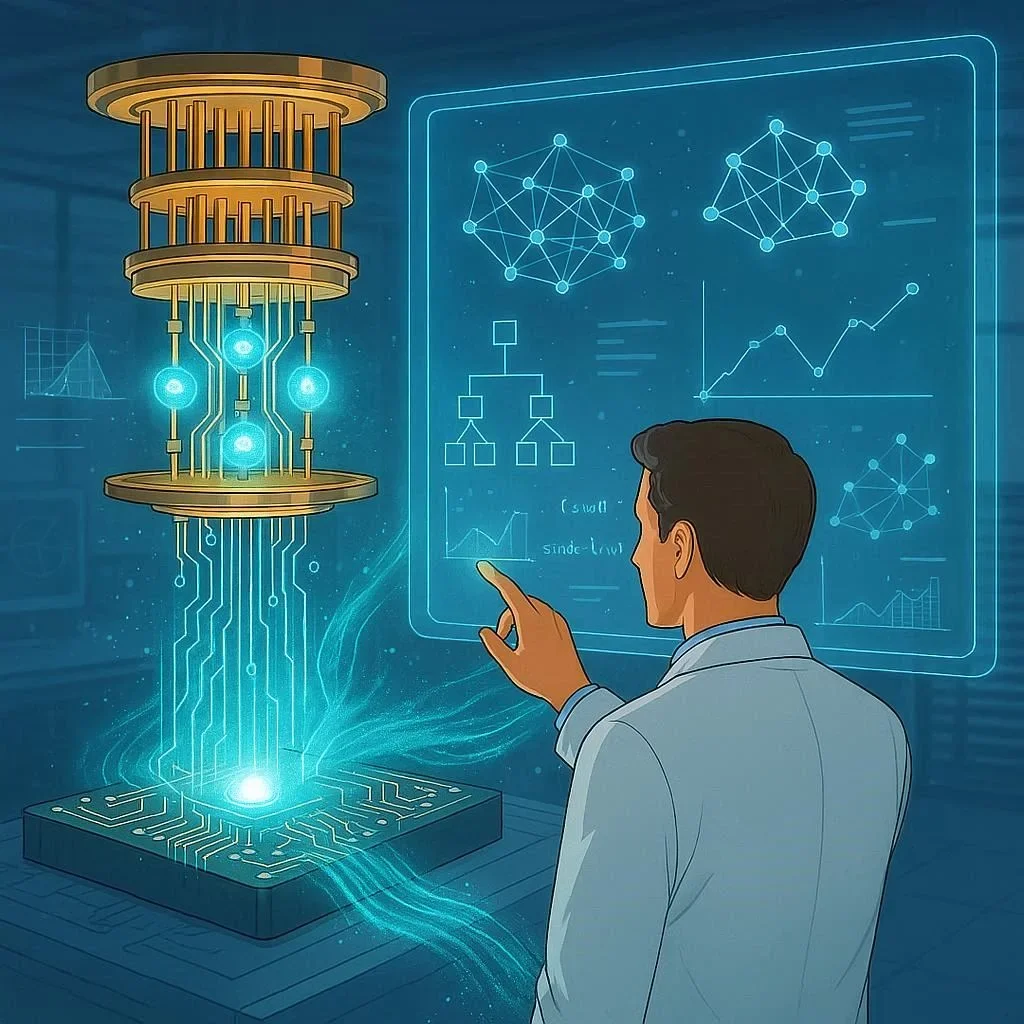
AI-Generated Lab Reports
Laboratory reports are the backbone of scientific work. They document experiments, explain methods, analyze data, and communicate results in a structured, verifiable way. For decades, writing lab reports has been a time-intensive but essential part of research and education. Today, artificial intelligence is beginning to reshape this process. With the ability to analyze datasets and generate readable summaries in seconds, AI-generated lab reports are rapidly gaining attention in academic, industrial, and educational settings.
But while automation promises efficiency and consistency, it also raises serious questions about accuracy, transparency, ethics, and scientific integrity. This article explores how AI generates lab reports, where it is already being used, and the risks scientists and educators must carefully manage.
What Are AI-Generated Lab Reports?
AI-generated lab reports are documents created or partially written by artificial intelligence systems that analyze experimental data and convert it into structured scientific text. These reports may include sections such as objectives, methodology summaries, results interpretation, graphs explanations, and even conclusions.
Rather than replacing experiments, AI focuses on post-experiment documentation. Researchers upload raw data—often spreadsheets, sensor logs, or measurement tables—and the AI processes it to produce a readable summary that resembles a traditional lab report.
The core idea is not to invent results, but to automate the interpretation and narration of data already collected.
Why Lab Report Automation Is Gaining Popularity
Modern laboratories generate massive amounts of data. In fields such as biology, chemistry, physics, and engineering, experiments often involve thousands or millions of data points. Writing detailed reports for every experiment can consume more time than the experiment itself.
AI offers several appealing advantages:
- Faster documentation
- Standardized formatting
- Reduced human workload
- Easier comparison across experiments
In industrial research and high-throughput labs, automation can significantly improve productivity. In educational settings, AI tools can help students focus more on experimental design and analysis rather than formatting and phrasing.
How AI Generates Scientific Summaries
AI-generated lab reports typically rely on machine learning models trained on large collections of scientific writing. These models learn the structure, language, and logic of lab reports by analyzing thousands of examples.
The process usually involves three main steps:
First, the AI ingests experimental data, including measurements, timestamps, and metadata. Second, statistical or analytical modules identify trends, averages, deviations, and anomalies. Third, a language model converts these findings into coherent scientific text using standard lab-report conventions.
The result is a readable summary that mimics how a human scientist might describe the data.
Examples of Auto-Generated Report Sections
AI systems are particularly effective at generating certain parts of lab reports. Results sections often translate numerical findings into descriptive statements, explaining trends and relationships. Data visualization explanations—such as describing graphs or tables—are also well suited for automation.
In some systems, AI can produce preliminary discussion sections that explain what the results suggest, though these typically require human review. Methods sections may be partially generated when experimental procedures follow standardized protocols.
However, interpretation beyond surface-level analysis remains a major challenge.
Use in Research and Industry
AI-generated lab reports are increasingly explored in industrial research environments where consistency and speed matter. Pharmaceutical testing, materials science, and manufacturing quality control are areas where repetitive experiments benefit from automated documentation.
Large research institutions and universities, including organizations such as MIT, have studied AI-assisted scientific writing as a productivity tool rather than a replacement for researchers. In these contexts, AI is treated as a drafting assistant, not an author.
The emphasis remains on human oversight and validation.
Educational Applications in Classrooms
In education, AI-generated lab reports raise both excitement and concern. On one hand, they can help students understand how professional scientific writing is structured. AI-generated examples can serve as learning aids or starting templates.
On the other hand, unrestricted use risks undermining learning objectives. Writing lab reports is not just about documentation—it teaches critical thinking, data interpretation, and scientific reasoning.
Educators must balance the benefits of AI assistance with the need for students to develop their own analytical skills.
Accuracy: The First Major Risk
The most immediate risk of AI-generated lab reports is accuracy. AI systems do not “understand” experiments in a human sense. They identify patterns and correlations but may misinterpret causation or context.
For example, an AI might correctly describe a trend but incorrectly explain why it occurred. It may also overlook experimental limitations, confounding variables, or procedural errors that a human researcher would catch.
If used without review, these errors can propagate into publications, reports, or educational submissions.
The Risk of Overconfidence in AI Output
AI-generated text often sounds confident and authoritative, even when it is wrong. This can lead users to trust the output more than they should, especially if they assume the AI has validated the science.
This phenomenon is particularly dangerous in research settings, where incorrect conclusions can influence further experiments or decisions. Scientific credibility depends not only on polished language, but on rigorous reasoning and evidence.
Human judgment remains essential.
Loss of Scientific Transparency
Another concern is transparency. Traditional lab reports allow readers to trace conclusions back to raw data and reasoning steps. AI-generated summaries may obscure this process by presenting conclusions without clearly showing how they were derived.
If researchers rely too heavily on automated summaries, it becomes harder to audit methods, identify assumptions, or reproduce results. This conflicts with the core scientific principle of reproducibility.
Clear documentation of how AI systems process data is therefore critical.
Ethical Concerns and Authorship
Who is the author of an AI-generated lab report? This question has significant ethical implications. Scientific authorship implies responsibility for accuracy, interpretation, and integrity.
Most academic institutions agree that AI cannot be listed as an author. Responsibility remains with the human researcher or student who submits the work. However, undisclosed AI use raises concerns about honesty and academic misconduct.
Clear guidelines are needed to define acceptable AI assistance versus unacceptable automation.
Bias and Training Data Limitations
AI systems are trained on existing scientific literature, which may contain biases or outdated practices. As a result, AI-generated lab reports may reproduce conventional interpretations even when data suggests something unusual.
This bias toward “normal” results can discourage novel thinking or obscure unexpected findings. In science, anomalies often lead to breakthroughs—something AI may unintentionally smooth over.
Critical thinking cannot be automated.
Data Security and Confidentiality Risks
Uploading experimental data to AI systems introduces security concerns, especially in proprietary or sensitive research. Confidential data may be exposed if AI tools rely on cloud-based processing.
Research organizations must carefully evaluate where data is stored, how it is used, and whether it becomes part of future training datasets. Protecting intellectual property and patient data is essential.
Best Practices for Using AI-Generated Lab Reports
To use AI responsibly, experts recommend several best practices. AI should assist, not replace, human authorship. All AI-generated content must be reviewed, verified, and edited by qualified researchers or educators.
Clear disclosure of AI assistance builds trust and maintains ethical standards. AI output should be treated as a draft or summary, not a final authority.
When used thoughtfully, AI can enhance productivity without compromising integrity.
The Future of Scientific Documentation
AI-generated lab reports are likely to become more common as tools improve and standards evolve. Future systems may integrate directly with lab equipment, automatically tagging data with context and uncertainty metrics.
Rather than eliminating human involvement, the goal is to free scientists from repetitive tasks so they can focus on creativity, hypothesis development, and deeper analysis.
The future of science lies in collaboration between human insight and machine efficiency.
What AI Cannot Replace
Despite impressive progress, AI cannot replace scientific intuition, ethical judgment, or responsibility. It cannot question whether an experiment should have been designed differently, nor can it recognize when results challenge existing theories in meaningful ways.
Science advances through curiosity, skepticism, and debate—qualities that remain uniquely human.
Conclusion
AI-generated lab reports represent a powerful new tool in modern science. They can rapidly summarize experimental data, standardize documentation, and reduce administrative burden. When used responsibly, they enhance efficiency and support researchers and students alike.
However, the risks are real. Errors, overconfidence, loss of transparency, and ethical concerns must be addressed with clear guidelines and human oversight. AI should serve science, not silently redefine it.
Ultimately, AI-generated lab reports are not the future of science on their own. They are part of a broader shift toward human-AI collaboration, where technology amplifies our ability to understand the world—without replacing the responsibility that comes with discovery.

100+ Science Experiments for Kids
Activities to Learn Physics, Chemistry and Biology at Home
Buy now on Amazon
Advanced AI for Kids
Learn Artificial Intelligence, Machine Learning, Robotics, and Future Technology in a Simple Way...Explore Science with Fun Activities.
Buy Now on Amazon
Easy Math for Kids
Fun and Simple Ways to Learn Numbers, Addition, Subtraction, Multiplication and Division for Ages 6-10 years.
Buy Now on Amazon