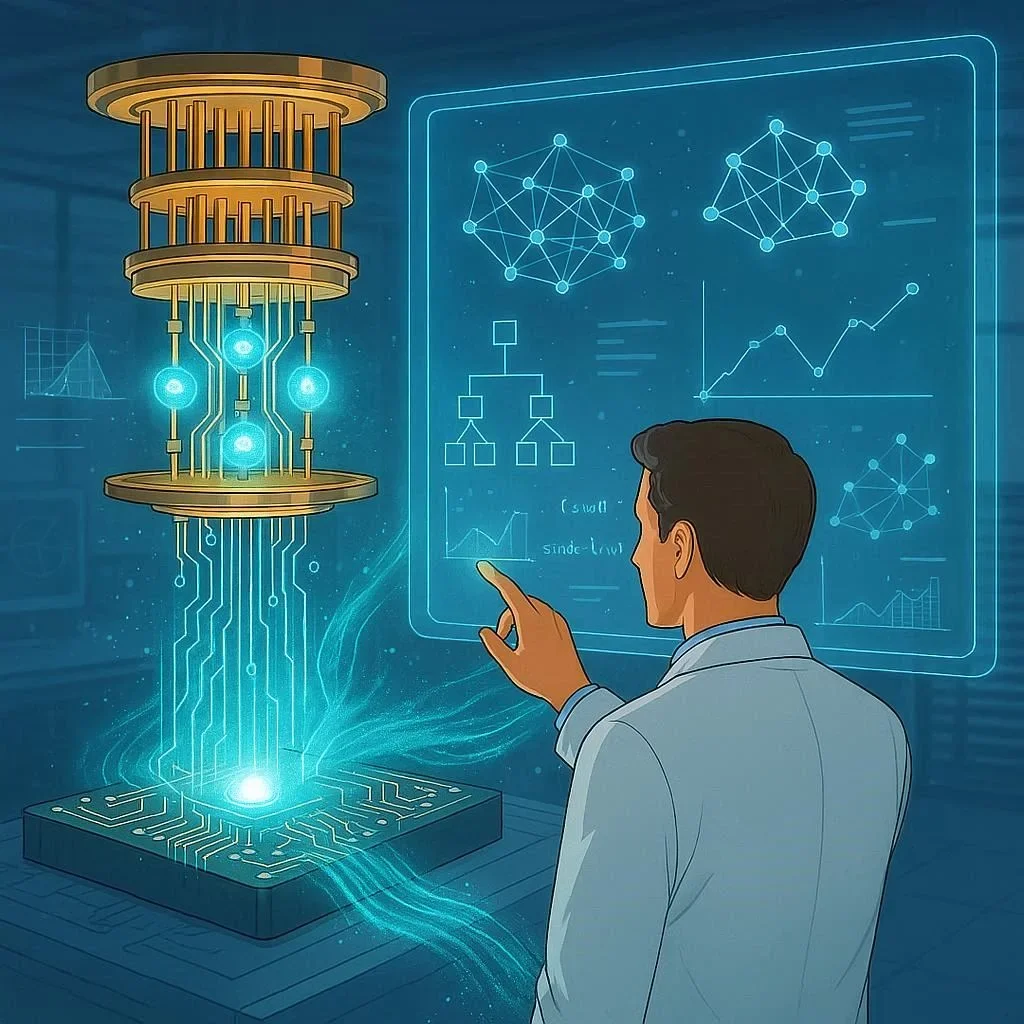
AI and the Future of Labs
Scientific laboratories have always reflected the technology of their time. From handwritten notebooks and manual instruments to computers and digital sensors, each era has transformed how research is conducted. Today, another shift is underway—one far more radical than previous upgrades. Artificial intelligence is no longer just assisting scientists; it is beginning to design experiments, operate equipment, analyze results, and refine hypotheses.
The idea of AI-driven robotic labs once belonged to science fiction. Now, it is an emerging reality. This article explores how AI is reshaping laboratories, what fully autonomous research environments could look like, and the profound opportunities and risks that come with handing parts of the scientific process to machines.
How Traditional Labs Work Today
To understand what is changing, it helps to look at how labs typically operate. A human researcher formulates a hypothesis, designs an experiment, prepares materials, runs trials, collects data, and analyzes results. This process is slow, labor-intensive, and often repetitive.
While modern labs already use automation for specific tasks—such as pipetting, imaging, or data logging—humans still make most strategic decisions. AI’s role has largely been limited to data analysis or simulation.
The future lab reimagines this workflow from the ground up.
What Is an AI-Driven Robotic Lab?
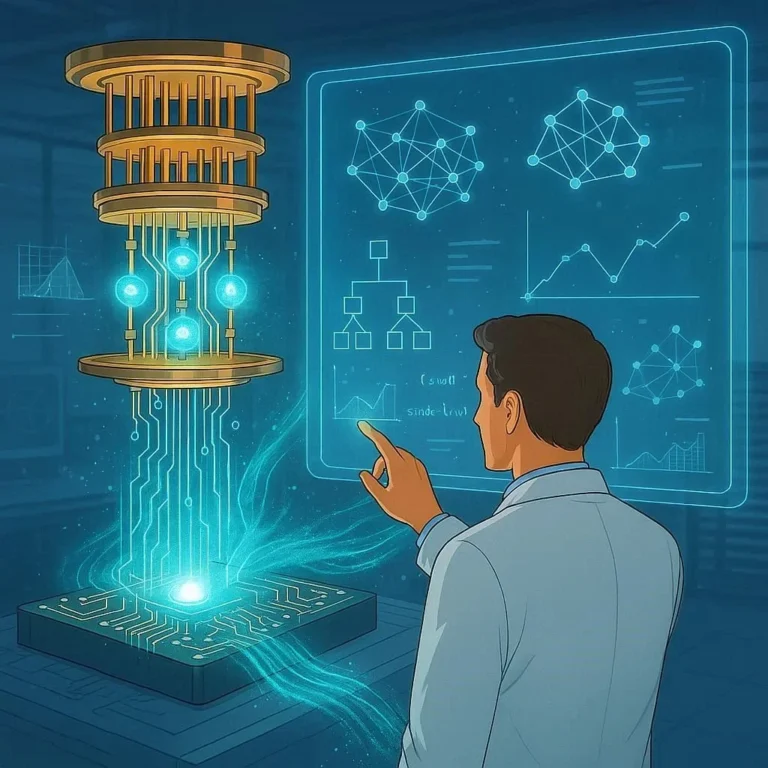
An AI-driven lab is a research environment where software intelligence and robotic systems work together to perform the full scientific cycle. This includes:
- Generating hypotheses
- Designing experiments
- Running physical procedures using robots
- Collecting and interpreting data
- Updating models and refining next experiments
Instead of executing predefined instructions, the lab adapts dynamically based on results—learning as it goes.
In essence, the lab becomes a closed-loop system of discovery.
From Hypothesis Generation to Experiment Design
One of the most transformative aspects of AI labs is hypothesis generation. Machine learning models can analyze vast amounts of existing research, identify gaps, and propose testable ideas.
Unlike humans, AI can scan millions of papers, datasets, and experimental results in minutes. It can detect subtle patterns and correlations that may not be obvious to researchers.
Once a hypothesis is proposed, AI systems can simulate possible outcomes, assess feasibility, and design optimized experiments—choosing variables, controls, and measurement methods with mathematical precision.
Robotic Execution: The Physical Side of Automation
The physical backbone of future labs is robotics. Automated arms, microfluidic systems, sensors, and imaging devices carry out experiments with high consistency and speed.
Robotic systems excel at:
- Repetitive precision tasks
- Operating continuously without fatigue
- Maintaining consistent conditions across trials
This dramatically improves reproducibility, a long-standing challenge in many scientific fields.
When AI controls these robots, experiments can run around the clock, accelerating discovery cycles.
Real-Time Data Collection and Interpretation
As experiments run, sensors generate streams of data. In traditional labs, this data is stored for later analysis. In AI-driven labs, analysis happens in real time.
Machine learning models evaluate results as they emerge, comparing them against predictions. If outcomes deviate, the AI can adjust parameters mid-experiment or terminate ineffective trials early.
This adaptive feedback loop reduces wasted effort and focuses resources on promising directions.
Closing the Loop: Self-Improving Science
The most powerful feature of autonomous labs is their ability to learn from outcomes and refine future experiments automatically.
This creates a cycle:
- Hypothesis generation
- Experiment execution
- Data analysis
- Model updating
- Improved hypothesis
Each loop increases the system’s understanding of the domain. Over time, AI labs can explore vast experimental spaces far more efficiently than humans alone.
Fields Already Being Transformed
AI-driven labs are not a distant dream; they are already emerging in specific domains.
In materials science, autonomous labs rapidly test combinations of elements to discover new alloys or compounds. In chemistry, AI systems explore reaction conditions to optimize yields. In biology, robotic labs accelerate protein engineering and drug discovery.
Research groups at leading institutions and organizations such as MIT have demonstrated early versions of self-driving labs that operate with minimal human intervention.
Speed and Scale: Why AI Labs Matter
One of the biggest advantages of AI-powered labs is speed. What once took years of manual experimentation can now happen in weeks or even days.
AI also enables scale. Thousands of experiments can be run in parallel, exploring parameter spaces too large for human teams to handle.
This capability is critical for addressing complex challenges like:
- Climate-resilient materials
- New antibiotics
- Clean energy solutions
Reducing Human Bias in Research
Human scientists bring creativity and intuition—but also bias. Researchers may unconsciously favor familiar theories or interpret ambiguous results in expected ways.
AI systems, while not free from bias, can be designed to explore possibilities more systematically. They can test unconventional hypotheses without preconceived notions, sometimes leading to surprising discoveries.
When paired with human oversight, this balance can enhance scientific objectivity.
The Role of Scientists in AI-Driven Labs
Despite fears of replacement, AI labs do not eliminate the need for human scientists. Instead, they change the nature of scientific work.
Humans will:
- Define research goals
- Set ethical boundaries
- Interpret results in broader context
- Make judgment calls about significance
Scientists become directors of discovery, guiding AI systems rather than performing every step manually.
Transparency and Explainability Challenges
One major concern is explainability. AI systems may identify effective experimental paths without clearly explaining why.
In science, understanding mechanisms is as important as results. Researchers must ensure that AI-generated conclusions can be interpreted, validated, and communicated.
Developing transparent models and maintaining detailed logs of AI decisions will be essential.
Risks of Over-Automation
While automation offers efficiency, it also carries risks. Blind trust in AI outputs can lead to errors being amplified rather than corrected.
If an AI system is trained on incomplete or biased data, it may explore flawed hypotheses repeatedly. Without human oversight, mistakes could propagate quickly.
Responsible design requires keeping humans in the loop, especially for high-impact research.
Ethical Considerations and Responsibility
Who is responsible if an AI lab produces harmful results or unsafe materials? This question has no simple answer.
Ethical frameworks must evolve alongside technology. Clear accountability, access controls, and safety constraints are necessary to prevent misuse.
AI labs must be governed by the same principles that guide human research—transparency, responsibility, and societal benefit.
Data Security and Intellectual Property
AI labs rely on massive datasets, often including proprietary or sensitive information. Protecting this data is critical.
Secure architectures, controlled access, and clear ownership policies are essential to prevent data leaks and intellectual property disputes.
As AI labs become more common, legal and regulatory systems will need to adapt.
Education and the Next Generation of Scientists
The rise of AI labs will reshape scientific education. Future scientists will need skills in:
- Data science
- AI literacy
- Systems thinking
- Ethics and governance
Hands-on experimentation will remain important, but understanding how to collaborate with intelligent systems will become equally vital.
The Global Impact of Autonomous Labs
AI-driven labs could democratize research by reducing costs and barriers. Smaller institutions and developing regions may gain access to advanced experimentation through shared autonomous platforms.
At the same time, unequal access to AI infrastructure could widen gaps if not managed thoughtfully.
International collaboration and open science initiatives will play a key role.
A New Scientific Method?
Some researchers argue that AI labs represent an evolution of the scientific method itself. Hypothesis-driven science may merge with data-driven discovery, where patterns suggest questions rather than the other way around.
This does not replace human curiosity—it amplifies it with computational power.
Balancing Innovation With Caution
As with all transformative technologies, the future of AI labs requires balance. Speed and automation must not come at the cost of understanding, safety, or ethics.
The most successful labs will be those that integrate AI thoughtfully, using it as a partner rather than an oracle.
Looking Ahead: What the Lab of Tomorrow May Look Like
Imagine a lab where:
- AI proposes experiments overnight
- Robots run tests continuously
- Data dashboards update in real time
- Scientists review insights each morning
This future is closer than many realize. While fully autonomous labs are still evolving, their foundations are already being laid.
Conclusion
AI and the future of labs represent a profound shift in how science is done. From hypothesis generation to analysis, intelligent systems and robotics are transforming laboratories into self-improving engines of discovery.
These labs promise unprecedented speed, scale, and efficiency—but they also demand careful oversight, ethical reflection, and human guidance.
The future of science is not AI alone, nor humans alone. It is a collaboration—where machines handle complexity and repetition, and humans provide purpose, creativity, and wisdom. In that partnership lies the next great era of discovery.

100+ Science Experiments for Kids
Activities to Learn Physics, Chemistry and Biology at Home
Buy now on Amazon
Advanced AI for Kids
Learn Artificial Intelligence, Machine Learning, Robotics, and Future Technology in a Simple Way...Explore Science with Fun Activities.
Buy Now on Amazon
Easy Math for Kids
Fun and Simple Ways to Learn Numbers, Addition, Subtraction, Multiplication and Division for Ages 6-10 years.
Buy Now on Amazon