Absolute Zero What Happens
Absolute Zero is more than a theoretical limit; it is a gateway to the most exotic states of matter. In thermodynamics, it represents the unattainable point where a system’s entropy theoretically reaches a minimum. Understanding what happens at this extreme informs everything from superconducting electronics to the fundamental limits of computation.
Thermodynamic Foundations at Zero Kelvin
At the core of absolute zero lies the Third Law of Thermodynamics, which states that as a perfect crystal approaches zero absolute temperature, its entropy approaches a constant value and can be considered zero for all practical purposes. This implies that every particle in the system would have its lowest possible energy state, eliminating all random thermal motion. The consequences are profound: the lattice vibrations cease, and the crystal achieves perfect order. Practically, scientists infer these conditions by cooling materials with laser or magnetic means, never reaching the exact 0 K but approaching within a few nanokelvins.
Quantum Behavior Beyond Classical Limits
- Zero-point energy persists, ensuring that even at absolute zero, particles still possess inherent quantum fluctuations.
- Macroscopic quantum phenomena such as Bose–Einstein condensation emerge, where particles move in phase as a single entity.
- Superconductivity arises in certain alloys, providing resistance-free electric current flow.
- Photons freeze out, and matter waves become dominant, redefining how energy is exchanged.
Because classical physics predicts a complete halt in motion, the reality at absolute zero is governed by quantum mechanics, where the uncertainty principle allows for zero-point motion. This subtle residual energy sets a baseline for all quantum systems, ensuring that perfect stillness is fundamentally impossible. Consequently, researchers employ ultra-cold environments to explore novel phases and quantum entanglement properties.
Implications for Cryogenics and Technology
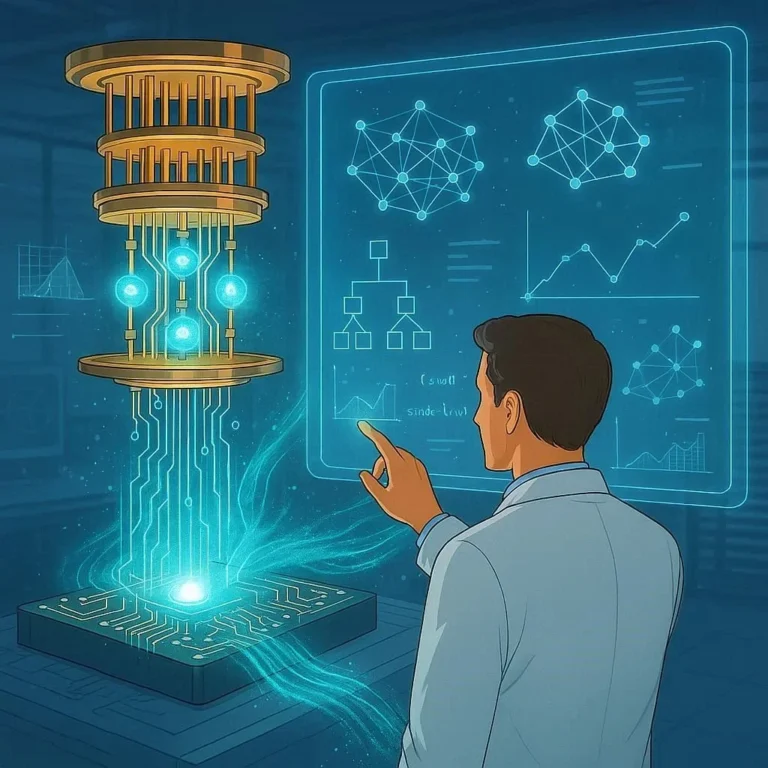
The pursuit of absolute zero has driven technological innovation in cryogenics and precision instrumentation. Modern dilution refrigerators can cool superconducting qubits below 10 millikelvin, enabling fault-tolerant quantum computers. In low-temperature physics, scientists study exotic states like quantum spin liquids and topological insulators, which only manifest near zero Kelvin.
Beyond fundamental science, low temperatures enhance signal-to-noise ratios, making detectors for X-rays and microwave background radiation more sensitive. Additionally, materials research at cryogenic temperatures can reveal new alloys with superior strength and corrosion resistance for aerospace applications. The ripple effects of approaching zero Kelvin thus span from deep-space telescopes to everyday semiconductor devices.
Entropy, Information, and the Limits of Computation
At absolute zero, entropy vanishes, which in information theory means information loss is minimized. In thermodynamic computing, the Landauer limit indicates that erasing a bit requires a minimum energy cost of kTln2. As temperature T approaches zero, that energy cost theoretically tends toward zero as well, suggesting that reversible computation could become practically free of energy consumption.
However, quantum decoherence and finite residual entropy in real systems imposes practical boundaries. Moreover, even at ultra-low temperatures, quantum noise and zero-point energy still generate stochastic fluctuations, preventing a truly noiseless computational environment. Nonetheless, the principle guides researchers in designing energy-efficient memory and logic circuits that exploit adiabatic processes.
Key Takeaways and Future Horizons
The mysteries of what happens at absolute zero are both subtle and spectacular. From perfect crystalline order to surprising quantum phenomena, this extreme realm challenges our most basic assumptions about matter and energy. As technology advances, the near-attainment of zero Kelvin may unlock unprecedented performance in quantum devices, ultra-precise sensors, and low-energy computing systems.
Discover the possibilities that absolute zero offers. Dive into the cutting-edge research and join a community exploring the edge of physics. Start your journey into the coolest field of science today!
Frequently Asked Questions
Q1. Why can absolute zero never be reached exactly?
According to the Third Law of Thermodynamics, as temperature decreases, the amount of energy required to remove more heat approaches infinity. Practically, this means each incremental step toward 0 K demands exponentially more effort, and the time needed becomes infinite. Therefore, cooling can only asymptotically approach absolute zero, never achieving it.
Q2. Does anything still exist at absolute zero?
No classical motion exists, but quantum fluctuations persist as zero-point energy. This residual energy keeps particles vibrating at their minimum possible amplitude, a necessary condition for quantum tunneling and superconductivity to happen.
Q3. How does absolute zero affect chemical reactions?
At zero Kelvin, reaction kinetics effectively stop because temperature is directly proportional to reaction rates in Arrhenius equations. Consequently, atomic bonds remain static, and materials preserve their crystalline structure without diffusion or defect migration.
Q4. Can absolute zero be used for computing?
Lower temperatures reduce thermal noise, enabling more reliable quantum bits and decreasing energy dissipation during logical operations. While not a magic bullet—quantum decoherence still occurs—very low temperatures are essential for any practical quantum computing hardware.
Q5. Are there any real-world applications that rely on near-zero temperatures?
Yes, many fields depend on cryogenic environments: medical imaging systems like MRI machines, particle detectors in high-energy physics, superconducting magnets for magnetic levitation, and quantum sensors that measure gravity or magnetic fields with unprecedented precision.
Related Articles

100+ Science Experiments for Kids
Activities to Learn Physics, Chemistry and Biology at Home
Buy now on Amazon
Advanced AI for Kids
Learn Artificial Intelligence, Machine Learning, Robotics, and Future Technology in a Simple Way...Explore Science with Fun Activities.
Buy Now on Amazon
Easy Math for Kids
Fun and Simple Ways to Learn Numbers, Addition, Subtraction, Multiplication and Division for Ages 6-10 years.
Buy Now on Amazon