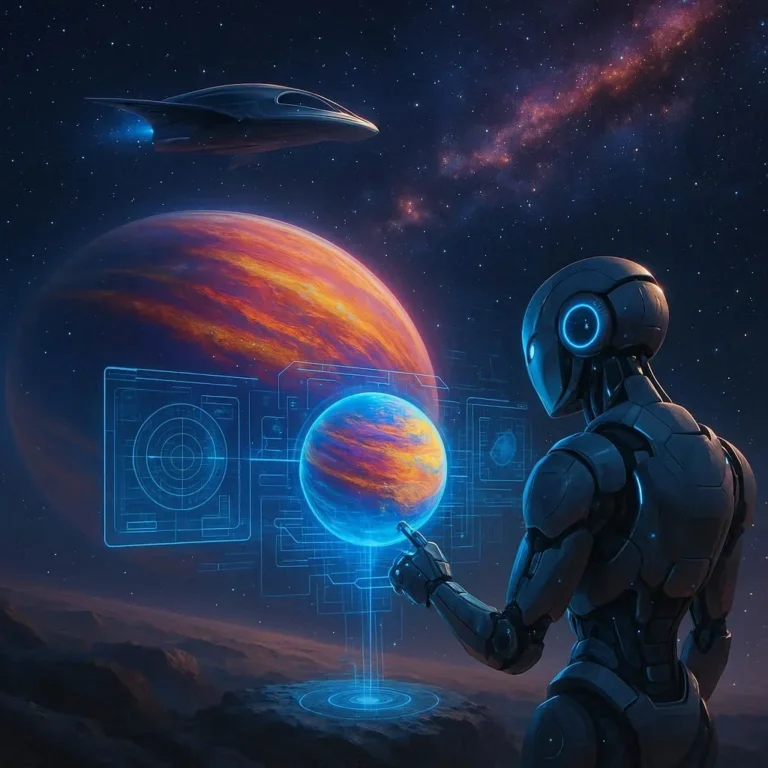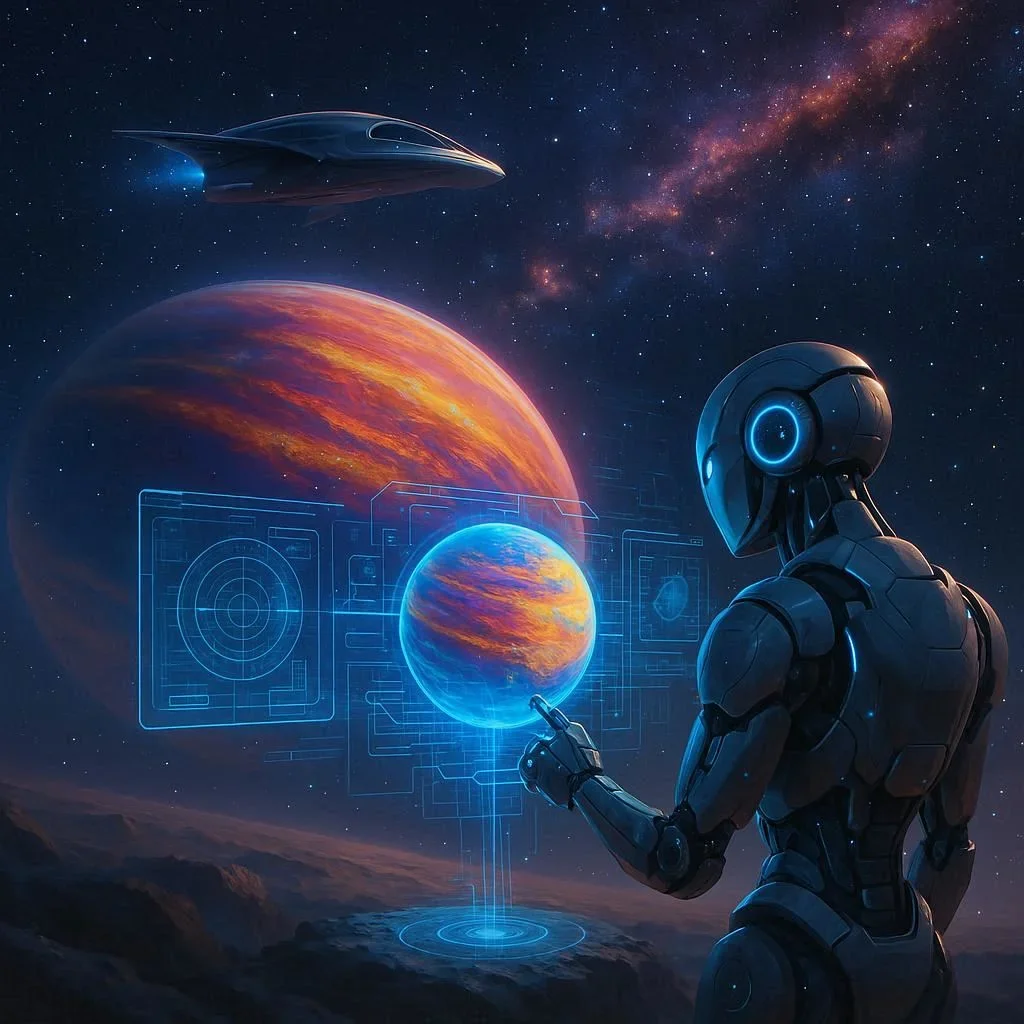
Blueprinting a Mars Habitat
A Mars habitat model is more than a box on a planet; it is a blueprint for humanity’s next home. Researchers, engineers, and visionary designers collaborate to create a living environment that balances science, safety, and humanity’s innate curiosity. Building a model involves detailed simulation of environmental conditions, resource availability, and mission objectives, ensuring that every centimeter of interior space is optimized for long‑term survival.
Understanding the Need for a Mars Habitat
The relentless drive to push human exploration beyond Earth has underscored the importance of a functioning Mars habitat. By creating a model, scientists can predict how astronauts will interact with a new ecosystem, test hypotheses about atmospheric processing, and fine‑tune life‑support mechanisms before deploying actual hardware. The early stages of habitat design demand precise knowledge of Martian regolith composition, solar flux, and dust behavior, all of which shape the structure’s durability and habitability.
Core Design Principles for Sustainable Mars Living
At the heart of any Mars habitat model are universal design criteria: structural integrity, energy independence, and closed‑loop life support. Structural integrity is achieved through geodesic domes or lattice frameworks that fuse lightweight composites with regolith ballast for radiation shielding. Energy independence centers on integrating high‑efficiency solar panels, energy storage systems, and redundancy protocols that mimic Earth‑based microgrids. Closed‑loop life support focuses on recycling water, oxygen, and waste, and on harnessing regolith to create soil for plant cultivation, thereby reducing resupply dependency.
- Structural Design: Regolith‑based shielding, composite alloys, modular expansion.
- Energy Systems: Photovoltaic arrays, battery banks, fuel cells.
- Life Support: Water reclamation, CO₂ scrubbing, habitat air circulation.
- Human Factors: Ergonomics, psychological support, activity cycles.
By interweaving these principles, a habitat model transitions from a theoretical concept to a practical blueprint that can be iterated, validated, and ultimately deployed.
Key Systems and Components of a Mars Habitat Model
Critical components include habitat modules, environmental control and life support systems (ECLSS), and habitat‑interaction technologies. Habitat modules come in single‑module, multi‑module, and modular‑reconfigurable varieties, each suited to different mission phases. ECLSS encompasses water recovery units, air revitalization, temperature regulation, and waste treatment, all engineered for the Mars dust and radiation environment. Interaction technologies—robotic assistants, augmented‑reality overlays, and autonomous drones—allow crews to conduct maintenance, scientific observation, and extravehicular missions with minimal risk.
| Model | Volume (m³) | Life Support | Build Time (weeks) | Suitability |
|---|---|---|---|---|
| Single‑Module | 70 | Basic recycling | 4 | Short missions |
| Multi‑Module | 200 | Advanced closed loop | 12 | Long‑term settlement |
| Modular Reconfigurable | 350 | Dynamic systems swap | 20 | Expanding base |
Each component’s performance is rigorously tested in simulation before any hardware is fabricated, ensuring that the final habitat will meet operational demands and safety regulations.
Modeling Techniques and Simulation Tools
Developers employ a blend of computational fluid dynamics (CFD), finite element analysis (FEA), and artificial intelligence (AI) to refine habitat designs. CFD simulates airflow patterns, CO₂ distribution, and dust mitigation strategies, informing fan placement and vent design. FEA evaluates structural loads under martian gravity, thermal expansion, and seismic events, guaranteeing that walls and connectors can withstand the planet’s harsh environment. AI algorithms optimize resource allocation, predictive maintenance schedules, and human‑robot collaboration protocols, creating a resilient ecosystem that learns and adapts during mission simulation.
Simulation environments often integrate real data streams from Mars rovers and orbiters, meaning that models can react dynamically to changing weather patterns, dust storms, and radiation spikes. The synergy between simulation and modular design accelerates iteration cycles, reduces cost, and allows for early identification of design flaws that would otherwise only become apparent in the field.
Human Factors: Ergonomics, Psychology, and Social Dynamics
Human‑centered design is pivotal. A well‑conceived habitat accommodates natural circadian rhythms, offering flexible lighting configurations that simulate Earth’s day–night cycle. Psychological support systems, such as virtual reality lounges and quiet zones, mitigate sensory deprivation and isolation. Social dynamics are bolstered through communal workspaces, shared meal areas, and flexible scheduling that encourages collaboration while respecting individual well‑being.
Ergonomic assessment focuses on workstation height, equipment reach, and tool handle placement, ensuring zero‑risk movement in the partial gravity environment. Data from ground‑based analogs and suborbital flights provide invaluable insights, allowing designers to craft environments that remain intuitive and safe for future crew members.
Regolith Utilization: From Resource to Construction
Mars regolith offers a dual advantage: as a shielding material and as a raw material for manufacturing. The concept of 3D‑printing structures directly onto the Martian surface has been demonstrated using regolith simulants and in‑situ resource utilization (ISRU) technologies. Processors pulverize regolith, mix it with sintering binders, and extrude components that are cured with focused microwave or laser energy.
Studies indicate that a regolith‑based composite can achieve density and tensile strengths comparable to terrestrial concrete, while significantly reducing vehicle mass. Incorporating regolith into habitat walls also provides natural radiation shielding, a critical feature for long‑term exposure to cosmic rays and solar flare events.
Energy Harvesting: Solar, Nuclear, and Hybrid Systems
Energy sourcing is paramount for sustainable operations. Solar arrays remain the most accessible option, delivering up to 600 W/m² under optimal conditions. However, dust accumulation can degrade output by up to 30 % over consecutive days, necessitating self‑cleaning mechanisms or robotic maintenance schedules. Nuclear micro‑reactors, such as small modular reactors (SMRs), offer baseload power reliability but require stringent shielding and robust safety protocols.
Hybrid systems combine solar arrays with rechargeable battery banks and optional micro‑reactor backup, providing uninterrupted power during dust storms or during the Martian night. This redundancy is essential for maintaining continuous air revitalization and temperature control—functions that are non‑negotiable for crew survival.
Waste Management and Circular Economy in Habitat Design
In a closed‑loop system, waste is not a problem but an opportunity. Food waste, water condensate, and even human excreta are processed into valuable resources such as bioplastic, hydrogen fuel, or soil nutrients. Advanced bioreactors can break down organic matter into methane and biogas, which can be combusted to recover energy or converted into propellants for future missions.
A well‑engineered waste pipeline reduces the habitat’s mass footprint while fostering a self‑sustaining loop. The design must protect against contamination, ensuring that biological waste does not compromise air quality or introduce pathogens into the closed environment.
Robotics and Automation: Extending Capabilities
Robotic systems serve a dual purpose: they perform high‑risk tasks and gather data to enhance habitat functioning. Ground‑based rovers can lay utility cables, monitor radiation levels, and repair module joints, reducing crew exposure to hazardous environments. Autonomous drones can deliver supplies, conduct surface mapping, and provide real‑time visual feeds during EVA missions.
Collaboration between humans and robots hinges on intuitive interfaces. Voice‑activated controls, gesture recognition, and augmented reality overlays enable crews to direct robots with minimal latency, thereby increasing operational efficiency and safety.
Scalability: From Crew Habitats to Planetary Bases
While initial models focus on support for 4–6 astronauts, long‑term habitation envisions expandable habitats capable of sustaining hundreds or even thousands of residents. Scalable design principles include modular docking ports, expandable regolith‑walls, and tiered resource distribution networks. These components can be assembled incrementally, allowing for rapid colonization of high‑potential zones.
Scalable models also consider the establishment of off‑habitat research facilities, such as in‑situ laboratories, mineral extraction plants, and solar array farms. By integrating these into the overall system architecture, a Mars habitat model becomes an interlocking network of life‑sustaining systems rather than an isolated box.
Conclusion: Build a Mars Habitat Model for Tomorrow’s Frontier
Designing and running a Mars habitat model is the linchpin of humanity’s extraterrestrial ambitions. Through meticulous simulation, advanced materials, energy solutions, and human‑centered design, we forge a pathway from concept to reality. The model’s insights drive innovation, mitigate risk, and lay the groundwork for a resilient, self‑sufficient Martian community.
By building a sophisticated Mars habitat model today, we empower tomorrow’s explorers to thrive in the red planet’s conditions. Every simulated detail sharpens the blueprint for future settlements, ensuring that when humans first step onto Mars, they do so in a space crafted for sustainment, safety, and growth. Take action now: engage with our modeling framework, contribute your expertise, and help bring a thriving Mars habitat to life.
Frequently Asked Questions
Q1. What software is most effective for modeling Martian habitats?
Popular choices include ANSYS for finite element analysis, Autodesk Fusion 360 for design, and MATLAB coupled with custom scripts for environmental simulations. NASA’s Human Research Program also provides domain‑specific modules for life‑support modeling. Combining these tools allows for a holistic view of structural, thermal, and life‑sustainability parameters.
Q2. How does regolith shielding protect against radiation?
Regolith’s high density blocks high‑energy cosmic rays and solar particles by acting as a mass barrier. Studies indicate that a 60‑cm layer can reduce radiation dose by roughly 70 %. Integrating regolith walls into habitat designs provides passive shielding, diminishing the need for heavy, active radiation mitigation systems.
Q3. What role does artificial intelligence play in habitat operations?
AI optimizes resource allocation, predicts equipment failures, and schedules crew tasks based on power availability and environmental conditions. Machine learning models can analyze sensor data to detect anomalies early, allowing for proactive adjustments to the closed‑loop life‑support systems.
Q4. Can a habitat model be reused for different mission durations?
Yes, modular designs enable reconfiguration to accommodate short‑term exploratory crews or long‑term colony operations. By swapping out modules—such as adding growth chambers or expanding habitat volume—mission planners can adapt the habitat to evolving objectives without complete redesign.
Q5. What future technologies could further improve Mars habitat models?
Emerging technologies like graphene composites for lightweight shielding, autonomous swarms for habitat maintenance, and AI‑driven bio‑fabrication of structural elements could dramatically enhance durability, reduce launch mass, and streamline construction processes on Mars.
Related Articles

100+ Science Experiments for Kids
Activities to Learn Physics, Chemistry and Biology at Home
Buy now on Amazon
Advanced AI for Kids
Learn Artificial Intelligence, Machine Learning, Robotics, and Future Technology in a Simple Way...Explore Science with Fun Activities.
Buy Now on Amazon
Easy Math for Kids
Fun and Simple Ways to Learn Numbers, Addition, Subtraction, Multiplication and Division for Ages 6-10 years.
Buy Now on Amazon