Black Hole Mergers Explained
Black Hole Mergers are among the most energetic events in the universe, releasing vast amounts of energy in the form of gravitational waves that ripple through spacetime. These cataclysmic collisions not only test the limits of Einstein’s General Relativity but also provide a unique laboratory for studying the behavior of matter and gravity under extreme conditions. In this article, we’ll explore the science behind black hole mergers, how they are detected, and why they matter for modern astrophysics.
Understanding Black Hole Mergers
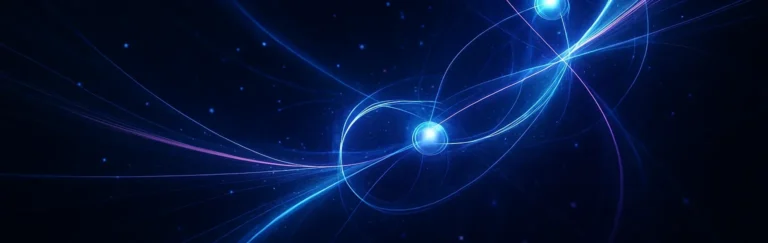
When two black holes orbit each other, they gradually lose energy through the emission of gravitational waves. As the orbit shrinks, the black holes spiral inward, eventually colliding and merging into a single, more massive black hole. The process can be divided into three stages: inspiral, merger, and ringdown. Each stage emits a distinct gravitational-wave signature that can be captured by detectors such as LIGO and Virgo.
Detecting Black Hole Mergers
Gravitational-wave observatories use laser interferometry to measure minute distortions in spacetime caused by passing waves. The first direct detection of a black hole merger, GW150914, was announced in 2016 and confirmed the existence of binary black hole systems. Since then, dozens of events have been recorded, each providing insights into the masses, spins, and distances of the merging black holes.
Gravitational Waves from Black Hole Mergers
Gravitational waves carry information about the dynamics of the merger. The amplitude and frequency of the waves increase as the black holes approach each other, peaking during the final merger. After the collision, the newly formed black hole settles into a stable state, emitting a damped “ringdown” signal that can be used to test the no-hair theorem of black holes.
Implications of Black Hole Mergers
Black hole mergers have far-reaching implications for cosmology and fundamental physics. They help astronomers map the distribution of black holes across the universe, constrain models of stellar evolution, and probe the nature of gravity. Moreover, the energy released in a merger can exceed the total electromagnetic output of all stars in the observable universe, making these events some of the most powerful explosions known.
Key Stages of a Black Hole Merger
- Inspiral: The black holes orbit each other, emitting gravitational waves that carry away orbital energy.
- Merger: The horizons of the two black holes coalesce, producing a burst of gravitational radiation.
- Ringdown: The newly formed black hole emits damped waves as it settles into a stable Kerr metric.
Each stage offers a different window into the physics of strong gravity. For instance, the inspiral phase can reveal the masses and spins of the progenitor black holes, while the ringdown phase tests the predictions of General Relativity in the strong-field regime.
Secondary Effects and Observational Signatures
While black hole mergers are primarily detected through gravitational waves, they can also produce electromagnetic counterparts in certain scenarios, such as when the black holes are surrounded by gas or accretion disks. These counterparts, though rare, provide complementary data that can help localize the event and study the environment around the merging black holes.
Researchers also investigate the possibility of intermediate-mass black holes merging with stellar-mass black holes, which could shed light on the formation pathways of supermassive black holes found at the centers of galaxies.
Future Prospects and Upcoming Observatories
Next-generation detectors like the Einstein Telescope and LISA (Laser Interferometer Space Antenna) will extend our reach to higher redshifts and lower-frequency waves, allowing us to observe black hole mergers across cosmic time. These instruments will enable detailed studies of black hole demographics and the role of mergers in galaxy evolution.
In addition, collaborations between gravitational-wave observatories and electromagnetic telescopes will enhance multi-messenger astronomy, providing a more complete picture of the most violent events in the cosmos.
Key Takeaways
Black hole mergers are not only spectacular astrophysical phenomena but also powerful probes of fundamental physics. They confirm the predictions of General Relativity, help map the distribution of black holes, and open new avenues for studying the early universe.
Conclusion and Call to Action
Understanding black hole mergers is essential for unlocking the mysteries of the universe. By continuing to refine our detection techniques and expanding our theoretical models, we can gain deeper insights into the nature of gravity, the lifecycle of stars, and the evolution of galaxies. Stay tuned for the next wave of discoveries—literally—and consider supporting gravitational-wave research through donations or by joining citizen science projects that help sift through the data.
For more detailed information, visit the following authoritative resources:
- Wikipedia: Black Hole
- LIGO Scientific Collaboration
- NASA: LIGO and Gravitational Waves
- ESA: LISA Mission
- Nature: GW150914 Discovery
Frequently Asked Questions
Q1. What is a black hole merger?
A black hole merger occurs when two black holes orbit each other, lose energy through gravitational waves, and eventually collide to form a single, more massive black hole. The process is divided into inspiral, merger, and ringdown stages, each producing distinct gravitational-wave signatures. These events are among the most energetic phenomena in the universe, releasing energy that can outshine all electromagnetic output of stars combined.
Q2. How do we detect black hole mergers?
We detect them using laser interferometers like LIGO and Virgo, which measure minute distortions in spacetime caused by passing gravitational waves. The first direct detection, GW150914, confirmed the existence of binary black hole systems. Subsequent observations have provided data on masses, spins, and distances of merging black holes.
Q3. What information do gravitational waves carry from a merger?
Gravitational waves encode the dynamics of the merger: the amplitude and frequency increase during inspiral, peak at merger, and then dampen during ringdown. This data reveals the masses and spins of the progenitors and tests General Relativity’s predictions, such as the no‑hair theorem. It also helps map the distribution of black holes across the cosmos.
Q4. Can black hole mergers produce electromagnetic signals?
While most mergers are “dark,” they can produce electromagnetic counterparts if surrounded by gas or accretion disks. Such signals are rare but valuable for localizing events and studying the environment around merging black holes. Multi‑messenger observations combine gravitational and electromagnetic data for a fuller picture.
Q5. What future detectors will improve our study of black hole mergers?
Next‑generation observatories like the Einstein Telescope and LISA will detect lower‑frequency waves and reach higher redshifts, expanding our view of black hole demographics and their role in galaxy evolution. These instruments will also enable more precise tests of gravity and the early universe. Collaborative efforts with electromagnetic telescopes will further enhance multi‑messenger astronomy.
Related Articles

100+ Science Experiments for Kids
Activities to Learn Physics, Chemistry and Biology at Home
Buy now on Amazon
Advanced AI for Kids
Learn Artificial Intelligence, Machine Learning, Robotics, and Future Technology in a Simple Way...Explore Science with Fun Activities.
Buy Now on Amazon
Easy Math for Kids
Fun and Simple Ways to Learn Numbers, Addition, Subtraction, Multiplication and Division for Ages 6-10 years.
Buy Now on Amazon