AI Compresses The Universe
From the cosmos to your screen, the speed of information transfer is fundamental to progress. As data volumes surge—spanning superstring theories, cosmological surveys, and real‑time sensor arrays—human and machine minds alike demand new ways to condense, compress, and transmit the wealth of signals that define our universe. The phrase AI Compresses the Universe isn’t merely a poetic expression; it captures the emerging reality that artificial intelligence, particularly deep learning and reinforcement learning, is reshaping how we capture, encode, and analyze astronomical data. In the next several paragraphs we peel back the layers behind this assertion, explain the underlying principles, and explore the future vistas that hinge on AI’s ability to compress the universe.
AI Compresses the Fabric of Space‑Time Data
The challenge of cosmic data isn’t new: astronomers have battled with image overlay, sensor noise, and the sheer dimensionality of the sky for decades. Modern surveys—like the Sloan Digital Sky Survey and Legacy Survey of Space and Time—generate petabytes annually. Traditional compression techniques, such as JPEG and HEVC, are well‑suited for everyday content but ill‑equipped for preserving delicate scientific information. Enter AI, which uses neural architecture search and generative models to learn compact representations that retain the universe’s faint signals while slashing file sizes by an order of magnitude.
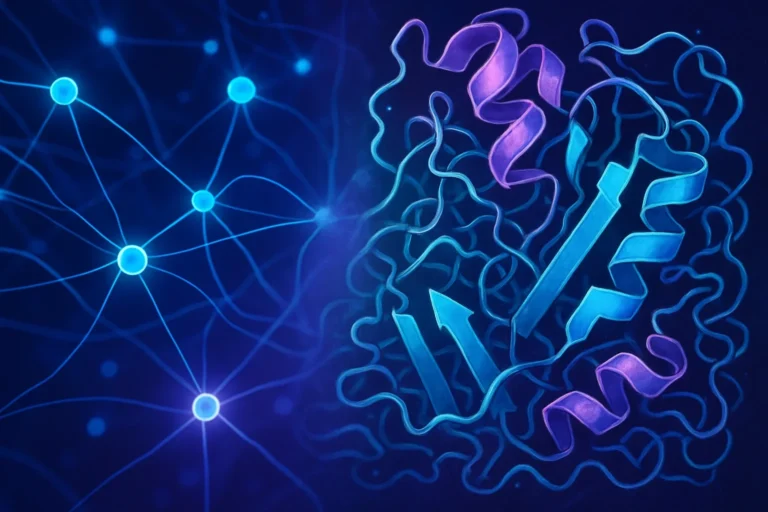
Deep neural networks exploit pattern recognition across multiple scales. For instance, a convolutional neural network (CNN) can detect the repetitive structure of a galaxy cluster, collapse it into a latent vector, and later reconstruct the full image with minimal loss. This approach aligns with principles from information theory where redundancy is removed while preserving entropy. The result: data streams that are not only smaller but also easier to route through the limited bandwidth of interplanetary transmission.
AI Compresses Cosmic Time‑Series Onto‑Chip
Space‑based telescopes like JWST and the upcoming Nancy Grace Roman Space Telescope transmit time‑series data rather than static images. These sequences capture the pulsations of variable stars or the subtle dimming that signals exoplanet transits. Conventional lossless compression struggles when the data rate surpasses downlink capacity, forcing mission planners to discard segments—an irreversible loss of science.
Machine‑learning‑based compressors can embed a sequence into a dense representation on‑the‑fly, using techniques such as autoregressive networks or transformer encoders. They learn the periodicity of the signal and prioritize it over noise. As a result, AI Compresses the Cosmos by ensuring that every photon counts towards scientific discovery even when bandwidth is scarce.
AI Compresses Quantum‑Gravitation Inputs for Simulation
On a theoretical front, AI is now training models to approximate solutions of the Schrodinger equation across complex spacetimes. Quantum simulations of black‑hole evaporation, cosmic inflation, or string‑theory vacua require enormous computational grids. Traditional finite‑difference methods demand terabyte‑scale memory per instance. Neural networks can learn isomorphic mappings: given a subset of variables, they predict the rest, dramatically reducing the memory footprint required for full‑scale simulation.
- Graph Neural Networks map the connectivity of spacetime lattices, compressing the problem into embeddings.
- Variational Autoencoders encode the probability distributions of quantum fields, enabling stochastic sampling with minimal overhead.
- Diffusion Models simulate thermal noise in gravity‑wave detectors, reducing the need for brute‑force FFTs.
With this compression, researchers can run more simulations per core, hastening the convergence between theory and observation. Such work is already documented in peer‑reviewed arXiv preprints and NASA’s experimental science labs.
AI Compresses Multi‑Modal Cosmic Observations
Astrophysics is increasingly multi‑modal: light curves, spectroscopic data, high‑energy gamma‑ray bursts, and gravitational‑wave strain all interweave. Harmonizing these streams demands an integrated approach. AI models, such as multimodal transformers, learn joint latent spaces where information from disparate sensors is compressed into a coherent representation. This unified schema empowers real‑time cross‑correlation for transient alerts—say, linking a gamma‑ray burst to a kilonova image—within seconds rather than hours or days.
Moreover, AI compression aids the archival process. Deep learning autoencoders can tag features (e.g., emission lines or lensing arcs) and collapse unlabeled background into lower‑dimensional caches, ensuring future re‑analysis can focus computational effort where it matters. By ensuring that AI can transform raw data into bite‑size, feature‑rich packets, the scientific community can store large archives without sacrificing retrievability.
Future Outlook: AI‑Enabled Universal Compression?
Forthcoming hardware—quantum processors and neuromorphic chips—promise to accelerate AI’s compressional prowess even further. Real‑time on‑board compression during missions like Solar Orbiter will allow spacecraft to adaptively allocate bandwidth to the most scientifically valuable packets. In deeper space, where signal delay equals light‑speed travel time, such intelligence is critical.
While the phrase AI Compresses the Universe may seem apocalyptic, it encapsulates a very practical reality: the universe’s data budget is finite, yet our aspirations are infinite. AI serves as the broker that negotiates between these limits, delivering surer, more efficient, and more accessible scientific knowledge for all.

100+ Science Experiments for Kids
Activities to Learn Physics, Chemistry and Biology at Home
Buy now on Amazon
Advanced AI for Kids
Learn Artificial Intelligence, Machine Learning, Robotics, and Future Technology in a Simple Way...Explore Science with Fun Activities.
Buy Now on Amazon
Easy Math for Kids
Fun and Simple Ways to Learn Numbers, Addition, Subtraction, Multiplication and Division for Ages 6-10 years.
Buy Now on Amazon