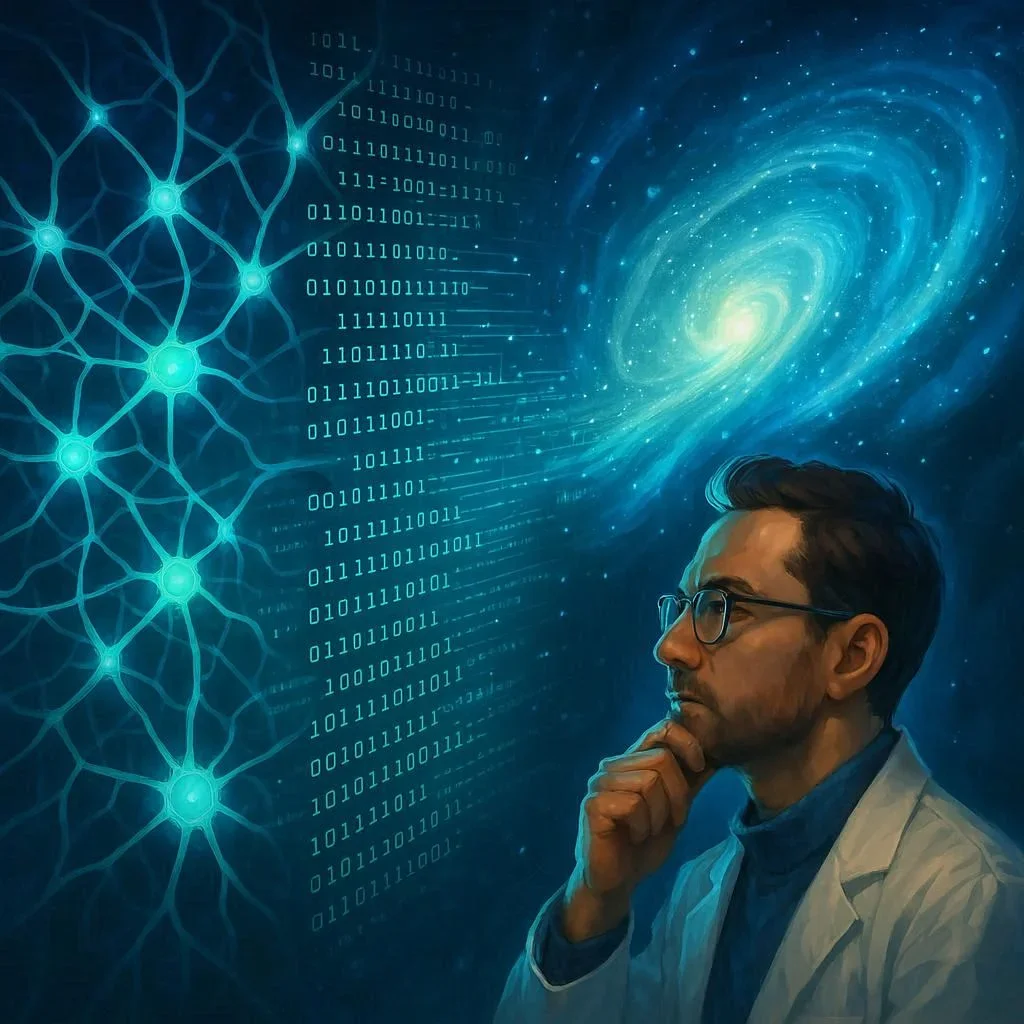
AI Reconstructs 3D Galaxies
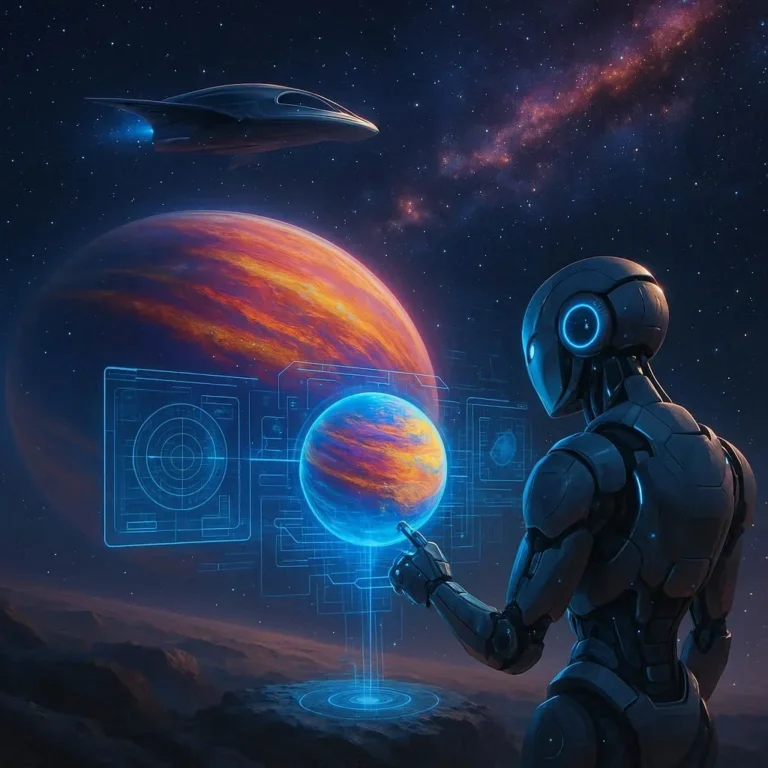
In recent months, astrophysicists have celebrated a breakthrough that blends cutting‑edge artificial intelligence with celestial observation: AI reconstructs 3D galaxies. This marriage of machine learning and astronomical data promises to shed new light on the life cycles of galaxies, the dark matter that shapes them, and the evolution of the universe itself. By converting two‑dimensional imagery from space telescopes into fully three‑dimensional models, researchers can probe stellar populations, gas dynamics, and the mysterious forces that govern cosmic structures.
How AI Achieves 3D Reconstruction
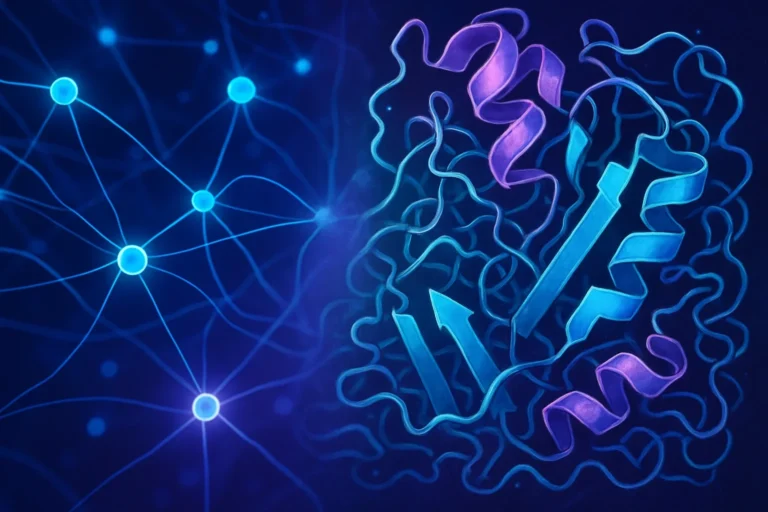
Traditional galaxy imaging captures a flat snapshot of a vast, three‑dimensional system. To overcome this limitation, teams employ deep‑learning architectures that infer depth from multiple perspectives, spectral line shifts, and photometric gradients. Convolutional neural networks (CNNs) analyze billions of photons recorded by the Hubble Space Telescope, while generative adversarial networks (GANs) predict the likely spatial distribution of stars and gas. The result is a volumetric dataset that faithfully reproduces the galaxy’s morphology and kinematics.
Case Study: The Whirlpool Galaxy
One of the first successes involved the Whirlpool Galaxy (M51), a classic spiral with an interacting companion. Scientists trained models on high‑resolution images from JWST and matched grayscale intensity variations with spectroscopic velocity data. The AI produced a 3D render that revealed spiral arm density waves, a central bar’s hidden twists, and miniature star‑forming knots otherwise invisible in 2‑D views.
- Observation: Hubble and JWST imaging data
- processing: Deep‑learning depth inference
- Validation: Comparison with spectroscopic velocity maps
- Insights: Spiral arm dynamics and bar-driven star formation
Implications for Dark Matter Research
Accurate 3D models allow scientists to map the gravitational potential that shapes galaxies. By observing how stars orbit within the reconstructed volume, researchers detect subtle deviations from Newtonian expectations that hint at dark matter halos. These findings help refine simulation parameters in cosmological models, bridging the gap between observable evidence and theoretical frameworks.
Future Horizons: Simulating Early Universe Galaxies
Looking ahead, AI reconstruction is set to empower studies of primordial galaxies just minutes after the Big Bang. The James Webb Space Telescope’s near‑infrared capabilities will capture faint, high‑redshift sources that are effectively point sources in 2‑D images. By applying predictive AI models, astronomers can extrapolate their three‑dimensional structures, revealing the first generation of stars and the onset of reionization.
Because AI‑driven reconstructions are computationally efficient, they will become indispensable for upcoming surveys such as the Vera C. Rubin Observatory’s Legacy Survey of Space and Time (LSST). With billions of galaxies cataloged, machine learning will sift through noise, reconstructing each world’s depth and offering a comprehensive view of cosmic evolution.
Key Resources and Further Reading
To explore the technical foundations of these breakthroughs, consider the following authoritative links:
- 3D Reconstruction on Wikipedia
- Hubble Space Telescope Official Page
- James Webb Space Telescope Overview
- Deep Learning in Astronomy Journal
- Astronomical Research Simulations
Explore the cosmos like never before. Dive into AI‑driven 3D galaxy reconstructions and uncover the universe’s hidden architecture—join our community of forward‑thinking astronomers today!
Frequently Asked Questions
Q1. What does ‘AI reconstructs 3D galaxies’ mean?
It refers to using machine‑learning algorithms to transform two‑dimensional telescope images into accurate three‑dimensional models of galaxies. By inferring depth from spectral data, photometric gradients, and multiple viewpoints, AI can rebuild the spatial arrangement of stars, gas, and dust.
Q2. How does deep learning generate 3D models from 2D images?
Convolutional neural networks (CNNs) extract spatial features, while generative adversarial networks (GANs) propose realistic depth maps. The system is trained on simulated volumes and calibrated with spectroscopic velocity data, enabling it to predict the most probable 3D structure.
Q3. Why is this useful for dark matter research?
3D reconstructions allow astronomers to track stellar orbits within a galaxy’s volume, revealing gravitational potential wells. Deviations from Newtonian dynamics can then be interpreted as evidence for dark matter halos, helping refine cosmological models.
Q4. Can AI reconstruct galaxies from the early universe?
Yes. With data from JWST’s near‑infrared sensors, AI can extrapolate the spatial configuration of high‑redshift objects that appear as point sources in 2D images. This technique unlocks insights into first‑generation stars and reionization.
Q5. What resources are needed to implement these AI reconstructions?
Researchers typically use high‑performance GPUs, large labeled datasets from space telescopes, and open‑source ML libraries such as TensorFlow or PyTorch. Access to spectroscopic data and validation pipelines is also essential for accurate model training.
Related Articles

100+ Science Experiments for Kids
Activities to Learn Physics, Chemistry and Biology at Home
Buy now on Amazon
Advanced AI for Kids
Learn Artificial Intelligence, Machine Learning, Robotics, and Future Technology in a Simple Way...Explore Science with Fun Activities.
Buy Now on Amazon
Easy Math for Kids
Fun and Simple Ways to Learn Numbers, Addition, Subtraction, Multiplication and Division for Ages 6-10 years.
Buy Now on Amazon