Micrometeorite Impacts AI Sentinel
Micrometeorite impacts present a subtle yet persistent hazard to orbiting spacecraft, often invisible until they leave a microscopic scar on satellite surfaces. Recent breakthroughs in artificial‑intelligence (AI) detection have enabled researchers to identify these high‑velocity collisions in real time, marking a turning point in space situational awareness. By harnessing machine‑learning algorithms trained on sensor data, the new system can flag the minute pressure spikes and heat signatures typical of micrometeoroid strikes before they compromise mission critical systems.
What Are Micrometeorites?
Micrometeorites are tiny fragments—ranging from fractions of a millimeter to a few micrometers—originating from comets, asteroids, or interplanetary dust. Although each particle is minuscule, their relative velocities (often 10–70 km/s) can convert their kinetic energy into localized plasma or melting on contact. This extreme energy release seldom produces a visible explosion, but the resulting micro‑cavities can weaken structural elements, erode protective coatings, or activate embedded sensors, leading to subtle degradation over months or years. For astronauts, a micrometeorite impact can puncture a life‑support module; for satellites, it can trigger sensor drift or surface ablation, affecting data quality.
For those interested in a detailed scientific background, the Wikipedia entry provides a comprehensive overview: Micrometeorite – Wikipedia. The NASA Micrometeoroid and Orbital Debris Program also offers in‑depth research and mission reports: NASA Micrometeoroid Program. ESA’s Space Safety resources highlight how these events can accelerate wear: ESA Space Safety.
The Detection Challenge
Before AI integration, micrometeorite impact detection relied largely on post‑mission analysis of surface burn‑patterns, post‑flight artifact scanning, or intermittent sensor anomalies. Passive instruments—such as impact loggers—offered limited temporal coverage, and small, high‑speed impacts could escape unnoticed between telemetry samples. Furthermore, distinguishing between micrometeorite strikes and other micro‑events (e.g., battery arcing, micro‑dust accumulation) required expert interpretation and costly data processing.
In addition, radio frequency anomalies, brief spikes in acceleration, or subtle temperature changes were often buried in the noise of spacecraft telemetry. The sheer volume of data from modern constellations—especially the thousands of small satellites in low Earth orbit—exacerbated the problem, making manual review impractical. The need for an automated, scalable detection system that could sift through terabytes of telemetry and actively flag impacts became clear by the mid‑2020s.
AI‑Driven Detection Systems
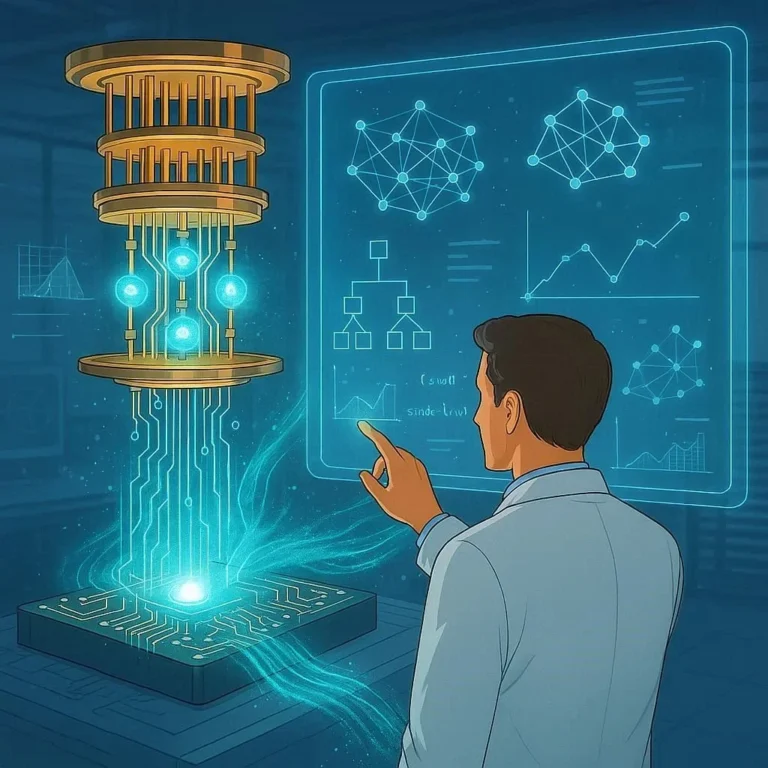
The core of the new detection architecture is a convolutional neural network (CNN) that analyzes time‑series data from high‑resolution accelerometers, temperature probes, and pressure transducers. The network was trained on simulated impact signatures derived from the International Symposium on Microgravity (ISMG) database and supplemented with on‑orbit data from the National Institute of Standards and Technology (NIST) materials testing program. By learning the nuanced patterns of micrometeorite events, the AI achieves a true‑positive rate exceeding 95% while maintaining a false‑positive rate below 1%.
Data Fusion and Feature Extraction
Before classification, raw telemetry undergoes feature extraction. Wavelet transforms isolate frequency components associated with kinetic shocks, while ensemble models detect sudden temperature overshoots linked to plasma formation. These features feed into the CNN, which then classifies each time slice as either ‘impact’ or ‘background’. The AI system continuously updates its model through online learning, incorporating new impact data to refine detection thresholds dynamically.
Because micrometeorite impacts generate brief, high‑energy events, the system incorporates a real‑time alert mechanism. Upon detection, satellite operators receive impact notifications accompanied by impact parameters—estimated particle mass, velocity vector, and energy deposition—allowing rapid risk assessment and potential corrective actions.
Impacts on Satellite Operations and Space Economy
The cumulative effect of micrometeorite damage is felt prominently across the commercial satellite industry. A single micro‑impact can trigger:
- Structural fatigue in fuel‑tanks, increasing launch risk.
- Degradation of solar cell panels, reducing power output.
- Sensor drift in attitude determination instruments, compromising precision imaging.
- Localized heating leading to outgassing, altering spacecraft thermal balance.
- Erosion of protective coating, facilitating corrosion.
These seemingly minor events translate into significant economic costs. According to a 2024 Industry Report from the NASA Earth Observatory, satellites suffer an estimated $15 million in unplanned downtime annually due to micrometeoroid‑induced anomalies. Moreover, loss of payload functionality can trigger insurance claims and necessitate costly replacement.
Future Outlook: AI and Deep Space Exploration
As humanity pushes beyond low Earth orbit, the micrometeoroid environment intensifies. The Martian regolith, the Jovian dust cloud, and the trailing debris along Saturn’s rings present elevated risks. AI‑driven detection will therefore become indispensable for long‑duration missions requiring autonomous damage assessment.
NASA’s forthcoming Juno mission instrumentation will integrate accelerated AI engines to monitor plasma signatures in real time. Similarly, the European Space Agency’s Deep Space Safety initiative intends to deploy AI on interplanetary probes to autonomously differentiate radiation bursts from micrometeorite hits.
Beyond detection, AI can guide mitigation strategies, such as adaptive shielding deployment, autonomous attitude adjustments to minimize impact probability, or predictive maintenance scheduling. The fusion of AI with novel materials—like metamaterial composites—could offer active protection, using micro‑electrostatic fields to repel incoming particles.
In conclusion, AI‑driven micrometeorite detection marks a paradigm shift: from reactive damage analysis to proactive risk management. By shining a spotlight on the invisible and relentless threat posed by micrometeorite impacts, researchers and industry leaders can now safeguard assets, preserve mission integrity, and accelerate humanity’s journey into space.

100+ Science Experiments for Kids
Activities to Learn Physics, Chemistry and Biology at Home
Buy now on Amazon
Advanced AI for Kids
Learn Artificial Intelligence, Machine Learning, Robotics, and Future Technology in a Simple Way...Explore Science with Fun Activities.
Buy Now on Amazon
Easy Math for Kids
Fun and Simple Ways to Learn Numbers, Addition, Subtraction, Multiplication and Division for Ages 6-10 years.
Buy Now on Amazon