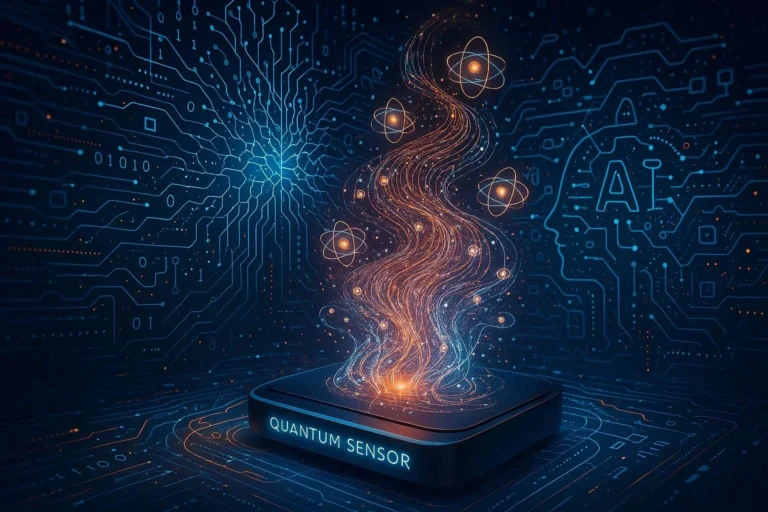
AI‑Driven Anomaly Detection Spacecraft
In the high‑stakes realm of space exploration, maintaining the integrity of spacecraft systems is paramount. AI‑Driven Anomaly Detection has emerged as a cutting‑edge technology that transforms raw telemetry into actionable insights, ensuring mission success and crew safety. By applying advanced machine learning techniques to spacecraft health monitoring, engineers can now detect subtle deviations far earlier than traditional rule‑based methods.
AI Foundations in Spacecraft Health Monitoring
At the core of anomaly detection lies a robust dataset of nominal operational patterns. Leveraging vast amounts of historical telemetry, AI models learn what “normal” looks like for every sensor, valve, and subsystem. Once trained, these models continually compare real‑time data against the learned baseline, flagging any statistically significant divergence. The result is a highly sensitive fault detection system that doesn’t rely on pre‑defined thresholds, which can be unrealistic in dynamic space environments.
Data Collection & Telemetry
Spacecraft transmit terabytes of telemetry—from power usage to attitude control readings—across deep‑space networks. Efficient pre‑processing pipelines are essential to clean, normalize, and time‑align this data before feeding it to AI algorithms. Techniques such as feature extraction, dimensionality reduction, and time‑series segmentation help to reduce noise and extract meaningful patterns.
- Real‑time Stream Processing – Enables anomaly alerts within milliseconds.
- Edge Computing on Board – Offloads preliminary filtering from ground stations.
- Adaptive Data Quality Assessment – Continuously improves model robustness.
Machine Learning Models for Fault Detection
Equipped with clean telemetry, the next step is model selection. Several AI paradigms have proven effective in space contexts: autoencoders for reconstruction error, one‑class support vector machines for novelty detection, and recurrent neural networks for sequential anomaly spotting. Ensemble methods further enhance detection confidence by aggregating predictions from multiple models.
A notable application was NASA’s effort documented on NASA, where an LSTM network identified anomalies in the propulsion subsystem before they escalated into failures. This proactive approach mirrors the fault detection goals of large‑scale missions like Mars rovers and the International Space Station.
Integration with Mission Operations
Beyond model development, seamless integration with ground control workflows is critical. Alerts must be contextualized, providing operators with interpretable features, confidence scores, and recommended mitigation steps. Visualization dashboards, coupled with automated diagnostic scripts, help reduce decision latency during critical event windows.
The European Space Agency’s initiative on ESA showcases a real‑time monitoring system that merges AI predictions with operator expertise, ensuring that anomaly flags are vetted before actions are taken.
Future Outlook & Challenges
While AI‑Driven Anomaly Detection has proven transformative, challenges remain. Limited training data for novel missions, adversarial sensor noise, and the need for explainable AI in safety‑critical environments demand continued research. Interdisciplinary collaborations between aerospace engineers, data scientists, and cognitive engineers are vital to advance explainability and trustworthiness.
Additionally, cross‑mission knowledge transfer—sharing anomaly patterns between similar platforms—can accelerate learning curves for new spacecraft. Emerging standards for data interchange and AI model catalogs will support this federated intelligence approach.
Resources such as the Anomaly Detection Wikipedia page provide foundational insights into detection algorithms, while academic platforms like MIT (MIT) host cutting‑edge research on both AI methods and space system resilience.
Conclusion: Harness AI for Spacecraft Security
AI‑Driven Anomaly Detection is no longer a theoretical concept; it is a mission‑enabling technology that safeguards every spacecraft from launch to decommission. By embedding sophisticated machine learning models into health‑monitoring pipelines, engineers can detect failures early, reduce downtime, and optimize resource allocation. If you’re looking to elevate your spacecraft’s resilience, consider integrating AI anomaly detection into your next mission. Start exploring these technologies today and turn data into your most reliable co‑pilot.
Frequently Asked Questions
Q1. What is AI‑Driven Anomaly Detection in spacecraft?
AI‑Driven Anomaly Detection uses machine learning models trained on historical telemetry to learn the ‘normal’ behavior of a spacecraft. The system continually compares incoming data against this learned baseline, flagging statistically significant deviations as potential faults. By doing so, it can spot issues before they fully manifest, enabling proactive maintenance or corrective actions.
Q2. How does it differ from traditional rule‑based monitoring?
Traditional rule‑based monitoring relies on fixed thresholds set by engineers, which may not capture complex or subtle patterns. In contrast, AI models learn directly from data, allowing them to detect a wider range of anomalies, adapt to changing operating conditions, and reduce false positives. The result is a more resilient and accurate fault‑detection pipeline.
Q3. What data streams are typically analyzed?
The primary data sources are telemetry packets that include power usage, attitude control, thermal readings, propulsion metrics, and sensor health indicators. Pre‑processing steps—such as cleaning, normalization, and time‑alignment—prepare this data for feature extraction and dimensionality reduction before feeding it into the models.
Q4. How do teams overcome limited historical data for new missions?
Techniques such as transfer learning, synthetic data generation, and federated knowledge sharing across similar platforms can mitigate data scarcity. Additionally, unsupervised and self‑supervised methods, like autoencoders and one‑class SVMs, can learn normal behavior even with sparse examples by focusing solely on reconstruction errors.
Q5. What are the key steps to integrate AI detection into a new spacecraft?
First, collect baseline data and pre‑process it for model training. Next, select and fine‑tune appropriate algorithms, validating them on hold‑out datasets. Finally, embed the trained model into the on‑board system or ground‑station pipeline, create dashboards for operators, and set up automated mitigation scripts to act on high‑confidence alerts.
Related Articles

100+ Science Experiments for Kids
Activities to Learn Physics, Chemistry and Biology at Home
Buy now on Amazon
Advanced AI for Kids
Learn Artificial Intelligence, Machine Learning, Robotics, and Future Technology in a Simple Way...Explore Science with Fun Activities.
Buy Now on Amazon
Easy Math for Kids
Fun and Simple Ways to Learn Numbers, Addition, Subtraction, Multiplication and Division for Ages 6-10 years.
Buy Now on Amazon