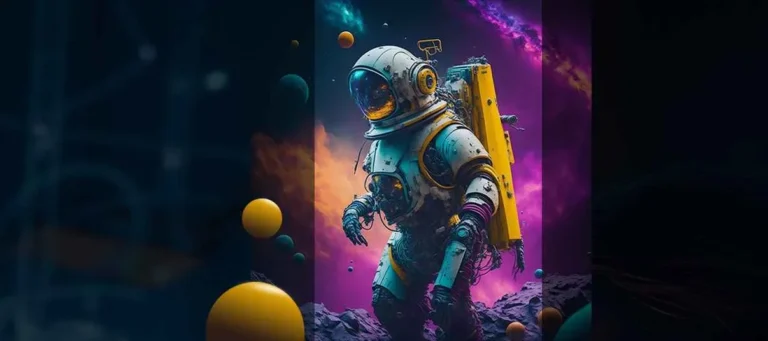

AI in Robotics: From Perception to Decision-Making
Artificial Intelligence (AI) has become the cornerstone of modern robotics, turning passive machines into proactive companions, assistants, and autonomous explorers. This blog unpacks the journey from raw sensor data to intelligent action, focusing on how perception and decision‑making converge to produce truly autonomous systems.
The Foundations of Robotic Perception
Robotic perception is the process by which a robot interprets its surroundings through sensors such as cameras, lidars, sonars, and tactile arrays. The fusion of data from these heterogeneous modalities, often called multi‑modal perception, enables a robot to build a coherent view of the world.
Key Perception Techniques
- Computer Vision – Convolutional Neural Networks (CNNs) detect objects, estimate depth, and perform segmentation. Computer Vision forms the visual backbone of modern robots.
- Simultaneous Localization and Mapping (SLAM) – Algorithms such as ORB‑SLAM create maps while tracking the robot’s position in real time.
- Depth Estimation & Lidar Processing – Point‑cloud analytics convert laser returns into 3‑D meshes, aiding obstacle avoidance.
- Sensor Fusion – Kalman filters and Bayesian networks merge data streams, reducing uncertainty.
Why It Matters: Accurate perception is the prerequisite for any meaningful decision. A robot that misinterprets terrain could collide or stall, undermining safety and efficiency.
From Perception to Learning: The Role of Machine Learning
Once perception delivers raw data, machine learning (ML) pipelines extract high‑level features and patterns. In robotics, the adoption of deep learning has accelerated breakthroughs in tasks that were once manual.
Representative Learning Paradigms
- Supervised Learning – Trained with labelled datasets to recognize objects, e.g., recognizing a cup in a cluttered kitchen.
- Reinforcement Learning (RL) – Enables a robot to learn optimal policies by exploring environment‑reward interactions. RL has propelled advances in robotic manipulation and locomotion.
- Transfer Learning – Leverages models pre‑trained on large image datasets (like ImageNet) to speed up convergence on robotic tasks.
- Online & Continual Learning – Adapts to drifts in sensor data without catastrophic forgetting.
Industry Examples:
- NVIDIA’s Isaac Robotics platform integrates TensorRT for real‑time inference, while OpenAI’s robotics environments (e.g., Simulated Hand Manipulation) pioneer RL in physical tasks.
Decision‑Making in Autonomous Robotics
Decision‑making is where perception meets action. Here, AI translates sensory input into control signals, strategizing movements while respecting constraints and goals. This stage sits at the heart of autonomous navigation, manipulation, and social interaction.
Core Decision Components
- Path Planning – Algorithms such as A* and Rapidly‑Exploring Random Trees (RRT) chart collision‑free routes.
- Behavior Trees – Structured, modular decision graphs enable modularity and scalability in complex tasks.
- Probabilistic Reasoning – Bayesian networks model uncertainty, crucial for ambiguous or dynamic environments.
- Multi‑Agent Coordination – Swarm robotics employs distributed decision strategies for fleet operations.
End‑to‑End Learning for Decision-Making
Emerging research demonstrates end‑to‑end pipelines where a neural network maps vision directly to motor commands. Deep Deterministic Policy Gradient (DDPG) and Proximal Policy Optimization (PPO) are two RL algorithms that have shown promising results.
Case Study: The Boston Dynamics Spot robot uses a hybrid system: perception layers feed a classical state‑estimator, while a DDPG policy governs petting‑style navigation in unstructured terrains.
The Synthesis: From Raw Data to Autonomous Motion
The complete AI‑driven robotic stack can be visualised as a pipeline:
| Layer | Function | Typical Tools | Example Application |
| Sensor Acquisition | Capture real‑world data | Lidar, RGB‑D, IMU | Autonomous drone mapping |
| Perception | Interpret data | CNNs, SLAM | Object localisation |
| Learning | Derive patterns | CNN backbone, RL agents | Grasp planning |
| Decision | Plan and act | Behavior trees, Optimisers | Self‑driving car |
| Control | Execute motor commands | PID, Model Predictive Control | Humanoid walk |
The bottleneck is always the information gap: timely, accurate perception is required for dependable decisions, especially under tight real‑time constraints. Recent progress in edge‑AI accelerators (e.g., Nvidia Jetson, Intel Movidius) bridges this gap, enabling faster inference on-board.
Ethical, Legal, and Societal Implications
While AI endows robots with unprecedented autonomy, it also raises critical questions:
- Safety & Reliability – How do we certify that a robotic decision algorithm will never fail in life‑critical contexts? ISO/IEC 61508 outlines functional safety for safety‑related systems.
- Privacy – Robots equipped with cameras may inadvertently record sensitive data. Transparency mechanisms, like the Consent‑First data policy advocated by the NIST, can mitigate risks.
- Job Displacement – Automation in warehouses and manufacturing sparks debates about workforce transition. Upskilling programs are essential.
- Ethical Alignment – Ensuring robots act in accordance with human values can be approached via value‑learning algorithms and human‑in‑the‑loop oversight.
A balanced approach requires collaboration between policymakers, industry, and academia, fostering Responsible AI frameworks. The IEEE Global Initiative for Ethical Considerations in Artificial Intelligence and Autonomous Systems offers actionable guidelines.
Emerging Trends and the Future
- Federated Learning for Robotics – Enables distributed model training across fleets without sharing raw data, preserving privacy while leveraging collective experience.
- Neuro‑Symbolic Systems – Merge deep perception with symbolic reasoning, addressing the limitations of purely deep models in interpretability and logical inference.
- Bio‑Inspired Algorithms – From ant‑inspired swarm intelligence to neural‑plausible control, biomimicry continues to influence robotic decision paradigms.
- Robust AI for Extreme Environments – Space‑grade robots, deep‑sea explorers, and disaster‑response units demand models that can learn with sparse data and uncertain conditions.
The integration of AI into robotics is poised to transform industries beyond manufacturing: healthcare (surgical robots), agriculture (precision farming drones), and even personal assistants (service robots). The synergy of perception, learning, and decision‑making accelerates the deployment of safe, adaptive robots worldwide.
Conclusion: Embracing Intelligent Autonomy
AI in robotics is not merely a technological upgrade; it is a paradigm shift that lets machines understand and interact with the world in ways that mirror, and sometimes surpass, human cognition. From the pixel‑level nuance of computer vision to the macro‑strategic decisions of autonomous navigation, every layer is a testament to the power of learned intelligence.
Ready to transform your robotics projects? Dive deeper into AI‑powered perception, try open‑source frameworks like ROS, and experiment with cloud‑based learning pipelines. Stay ahead of the curve by subscribing to our newsletter and exploring the latest research breakthroughs.
Call to Action:
- Bookmark this article for future reference.
- Share your thoughts in the comments: What AI‑driven robotic application excites you the most?
- Follow our blog for weekly insights into AI, robotics, and emerging tech.

100+ Science Experiments for Kids
Activities to Learn Physics, Chemistry and Biology at Home
Buy now on Amazon
Advanced AI for Kids
Learn Artificial Intelligence, Machine Learning, Robotics, and Future Technology in a Simple Way...Explore Science with Fun Activities.
Buy Now on Amazon
Easy Math for Kids
Fun and Simple Ways to Learn Numbers, Addition, Subtraction, Multiplication and Division for Ages 6-10 years.
Buy Now on Amazon