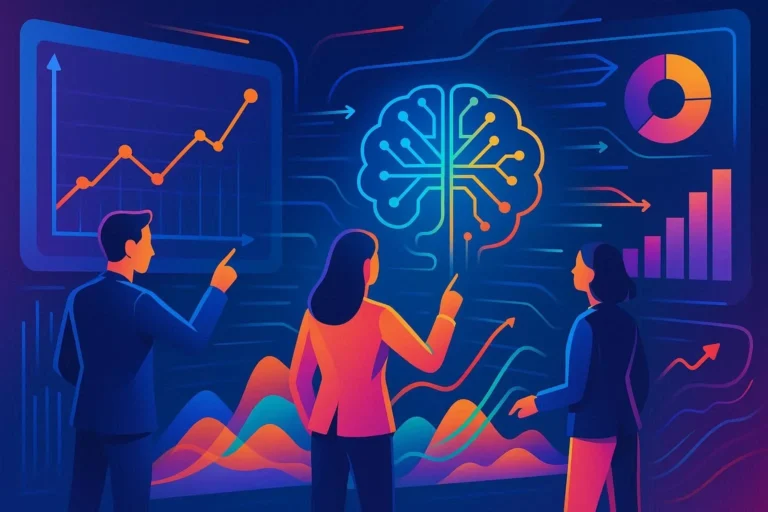

AI-Augmented Reality in Shopping Experiences
Artificial Intelligence (AI) and Augmented Reality (AR) have moved beyond science‑fiction headlines to become practical tools reshaping how we shop. The fusion of these technologies — often called AI‑augmented reality — is creating a new retail paradigm in which consumers can shop from anywhere, try products virtually, and interact with brands in entirely immersive ways. In this post we’ll dissect the key benefits, real‑world applications, and future trends of AI‑augmented reality in shopping experiences. Whether you’re a marketing executive, a store owner, or just a curious shopper, understanding this technology will help you stay ahead in an increasingly digital marketplace.
What Is AI‑Augmented Reality in Retail?
AI‑augmented reality blends computer‑vision, machine‑learning models, and AR overlays to deliver realistic, real‑time visualizations of products in a consumer’s environment.
- AI analyzes user preferences, past purchases, and contextual data to provide personalized recommendations.
- AR superimposes 3D models, product information, and interactive elements onto the live camera feed.
The result is a seamless flow where a shopper selects a hoodie, sees how it looks on their own body in real‑time, and receives AI‑driven style suggestions—all without leaving the app.
For a deeper technical dive, check out the Wikipedia article on Augmented Reality, which explains the core concepts behind this technology.
How AI Enhances Traditional AR Shopping
While AR alone can overlay a virtual product, AI adds layers of intelligence that fundamentally change the shopping journey:
- Personalized Visuals – Machine learning models learn a customer’s body shape, skin tone, and style preferences, ensuring the virtual try‑on looks as realistic as possible.
- Predictive Compatibility – AI predicts which colors, sizes, or accessories would match a user’s wardrobe, prompting suggestions before the user even makes a final decision.
- Real‑Time Feedback – Computer‑vision algorithms track posture and lighting, adjusting the virtual overlays dynamically to maintain proportion and shading.
- Contextual Upselling – AI can detect that a shopper is attempting to buy running shoes and automatically recommend complementary items like compression socks or sports backpacks.
These enhancements lead to higher conversion rates, lower return rates, and improved customer satisfaction.
Real‑World Examples You’ll Recognize
| Brand | What They Do | Impact
| — | — | — |
| IKEA | Uses AR to place furniture in your home and AI to recommend optimal layouts. | 39% drop in returns (source: IKEA Insights) |
| Sephora | Virtual makeup try‑on with AI‑driven skin tone matching. | 14% increase in sales during trial sessions (source: Clinical Research on Cosmetics) |
| Nike | Snap‑AR try‑on for shoes and AI for custom sneaker designs. | 267% increase in engagement on Snapchat.
| ASOS | AI‑powered smart fitting rooms in physical stores that guide shoppers based on body measurements. | 25% uplift in in‑store sales.
These examples illustrate that the technology isn’t just a gimmick—it’s a proven business catalyst.
Smart Fitting Rooms: The Hybrid of Physical and Digital
A rising trend is the smart fitting room, where the room itself becomes a digital playground. Cameras, touchscreens, and AI-powered recommendation engines work in unison to:
- Verify size and fit via body‑scanning.
- Offer alternative styles and colors.
- Enable a 360° view of the product.
- Even suggest styling tips from Instagram influencers.
The result is a shopping experience that feels personalized yet efficient, reducing the friction that traditionally plagues physical retail.
Key Technologies Powering AI‑Augmented Reality
- Computer Vision: Detects edges, surfaces, and objects to anchor virtual items.
- Depth Sensing: Uses LiDAR or stereo cameras to map a 3D environment.
- Generative Adversarial Networks (GANs): Create highly realistic textures and lighting.
- Natural Language Processing (NLP): Powers conversational interfaces for queries like “Show me this dress in red.”
- Edge Computing: Processes data locally to reduce latency, ensuring a fluid AR experience.
Cross‑disciplinary collaboration between software engineers, data scientists, and UX designers is crucial to turning raw data into a delightful customer journey.
Benefits for Brands and Consumers Alike
For Retailers
- Reduced Return Rates: Accurate visualizations lower the mismatch between expectation and reality, cutting return ratios by up to 20% in some studies.
- Higher Average Order Value (AOV): AI‑powered upselling leads to increased basket sizes.
- Enhanced Data Collection: Every interaction offers insight into consumer preferences, feeding better inventory and marketing strategies.
For Consumers
- Convenience: Test virtually from home; no need to physically visit a store or create a fitting room appointment.
- Confidence: Realistic previews reduce the anxiety of buying clothes or cosmetics online.
- Time‑Savings: Get quick style suggestions and product comparisons in a few taps.
These dual value propositions explain why adoption rates are skyrocketing across industries.
Ethical Considerations and Privacy
With great power comes the responsibility to handle data responsibly. Companies must:
- Securely Store Camera Feeds: Use encryption and anonymization to protect user privacy.
- Obtain Explicit Consent: Inform consumers how their body data will be used.
- Compliance with Regulations: Adhere to GDPR, CCPA, and other regional data protection laws.
- Provide Transparency: Clearly explain AI decision-making processes (explainable AI).
Responsible AI practices not only protect users but also build trust—an essential ingredient for long‑term success.
Future Roadmap: What’s Next for AI‑Augmented Reality Shoppers?
| Feature | Description | Likely Impact
| — | — | — |
| AI‑Generated Product Variants | Use GANs to create color swatches or fabric textures you can try before they exist in inventory. | Near‑instant product diversification.
| Cross‑Platform Social Commerce | Seamless sharing of AR try‑ons to social media with AI‑generated captions and hashtags that drive viral marketing. | Increased organic reach and engagement.
| Predictive Supply Chain Management | Predict demand patterns from AR interaction data to reduce overstock and stockouts. | Lower operational costs.
| Emotion‑Aware Shopping | Recognize facial expressions to flag uncertainty, prompting extra suggestions or confidence boosters. | Higher purchase conversion.
| Physical‑Digital B2B | AR can let retailers test store layouts in a virtual mall before construction. | Optimized retail design.
These trends signal that AI‑augmented reality isn’t a one‑off upgrade but a long‑term shift that blends data science, design, and retail know‑how.
Getting Started: How to Implement AI‑Augmented Reality in Your Store
- Define Objectives – Is your goal to boost online conversions, reduce returns, or enhance in‑store engagement?
- Choose the Right Platform – Options include Facebook Spark AR, Snapchat Lens Studio, and enterprise solutions like Unreal Engine AR.
- Collect Data – Start with a small product line; use camera feeds and transaction data to train AI models.
- Develop & Test – Use user testing groups to refine visual accuracy and interaction flow.
- Scale & Iterate – Deploy through beta phases, gather analytics, and continuously fine‑tune both AI recommendations and AR fidelity.
For detailed guides, the IEEE Xplore portal provides peer‑reviewed case studies on AR retail adoption.
Conclusion and Call to Action
AI‑augmented reality is not just a futuristic buzzword. It’s reshaping the core of commerce, offering richer, more accurate, and ultimately more satisfying shopping experiences. As retailers harness the synergy of AI and AR, they can meet consumers where they expect convenience, personalization, and innovation.
If you’re ready to explore AI‑augmented reality for your brand, start by identifying a single product or category to pilot. Invest in a robust data‑collection strategy and partner with AR platforms that align with your privacy standards. Let the data guide the journey and watch as conversion rates climb and customer loyalty deepens.

100+ Science Experiments for Kids
Activities to Learn Physics, Chemistry and Biology at Home
Buy now on Amazon
Advanced AI for Kids
Learn Artificial Intelligence, Machine Learning, Robotics, and Future Technology in a Simple Way...Explore Science with Fun Activities.
Buy Now on Amazon
Easy Math for Kids
Fun and Simple Ways to Learn Numbers, Addition, Subtraction, Multiplication and Division for Ages 6-10 years.
Buy Now on Amazon