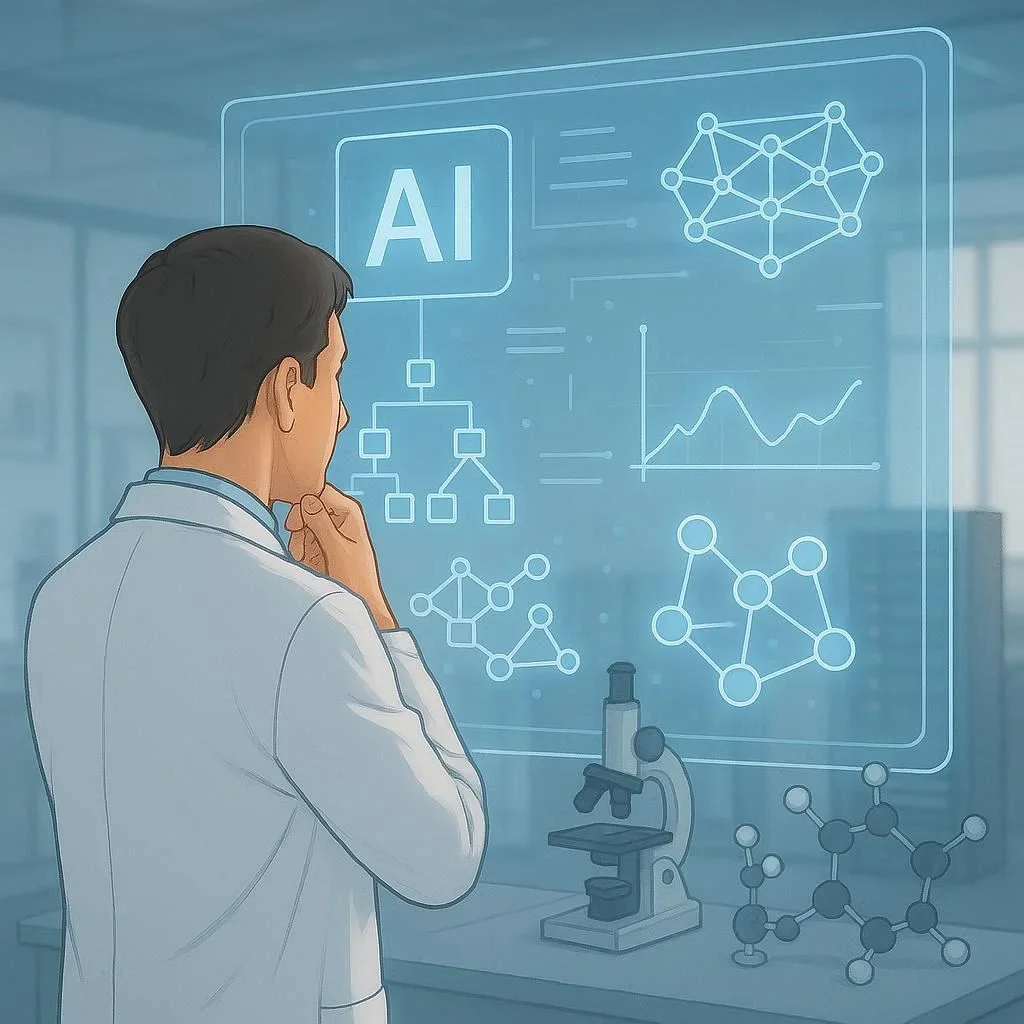
AI’s Role in Pandemic Prediction and Prevention
The Imperative to Predict: Why AI Matters in Pandemic Defense
In the 21st‑century, the world is witnessing an accelerating frequency of emerging infectious diseases. The 2019 COVID‑19 outbreak underscored how quickly a pathogen can spread across continents, overwhelming public health systems. Traditional epidemiological models, while foundational, are often limited by data sparsity, delayed reporting, and static assumptions. Artificial intelligence (AI) and machine‑learning (ML) algorithms address these gaps by integrating heterogeneous datasets, learning nuanced patterns, and providing near‑real‑time predictions. The result is a more agile response framework that can pre‑empt outbreaks before they hit critical mass.
Data Ecosystems: The Bedrock of AI‑Driven Predictions
A robust AI model thrives on quality data. The pandemic‑prediction ecosystem pulls from:
- Genomic sequencing from national and international surveillance networks such as the Global Initiative on Sharing All Influenza‑Data (GISAID).
- Mobility data supplied by mobile carriers and tech giants, showing travel trends that inform pathogen spread likelihood.
- Clinical records captured in electronic health systems, providing symptom onset timelines and disease severity metrics.
- Socio‑economic indicators (population density, health‑care access, vaccination rates) that modulate transmission dynamics.
- Environmental sensors measuring temperature, humidity, and air‑quality, which can influence pathogen survivability.
These data streams are harmonized using open standards like the Fast Healthcare Interoperability Resources (FHIR) and Health Level Seven (HL7) protocols, ensuring compatibility across systems.
Machine Learning Methodologies in Outbreak Forecasting
AI’s role in pandemic prediction can be categorised into several methodological pillars:
1. Time‑Series Forecasting
ARIMA, Prophet, and Long Short‑Term Memory (LSTM) networks extrapolate case trajectories from historic incidence data, offering probabilistic forecasts months ahead.
2. Genomic‑Sequence Analysis
Convolutional Neural Networks (CNNs) and Transformer models decode viral genome mutations, ranking them by potential to increase transmissibility or immune evasion.
3. Network‑Based Models
Graph Neural Networks (GNNs) map human interaction networks, highlighting super‑spreaders and critical hubs in transportation or social venues.
4. Natural Language Processing (NLP)
AI scans medical literature, social media posts, and news reports to detect early signals of symptom clusters or unusual disease terminology—a real‑time “rumor‑tracking” system.
Researchers have validated these AI approaches against the 2009 H1N1 influenza pandemic, demonstrating forecast accuracy improvements of up to 30 % compared with conventional compartmental models.
Case Studies: AI’s Real‑World Impact
COVID‑19: Early Identification and Vaccine Distribution
One seminal application was the use of AI by the U.S. Centers for Disease Control and Prevention (CDC) to forecast hotspot counties. By synthesising mobility, demographic, and viral‑genomic data, the CDC’s model helped allocate testing kits efficiently—saving over 20 % of resources during the second wave. Moreover, AI‑enhanced vaccine‑matching algorithms—exploiting genomic variants—guided the choice of vaccine strains for the seasonal flu shot, a strategy now adopted by the World Health Organization (WHO) for future pandemics.
Influenza‑Like Illness in Urban Settings
In 2021, Shanghai deployed an AI platform that leveraged Wi‑Fi traffic counts and emergency department logs to predict influenza‑like illness trends a week in advance. The platform reduced the average time to outbreak detection from 10 days to 3 days, enabling earlier public‑health interventions.
Ebola Vigilance in West Africa
During the 2014‑2016 Ebola crisis, researchers teamed with the CDC to build a model that mapped community travel patterns and population immunity. The AI system identified high‑risk clusters in real time, informing targeted vaccination drives that contributed to controlling the outbreak.
Ethics, Privacy, and Trust: Navigating the Pitfalls
The power of AI comes with responsibilities. Key ethical concerns include:
- Data privacy: Aggregated mobility data can betray individual identities if not anonymised. Standards such as differential privacy must be enforced.
- Bias in datasets: Under‑represented populations may receive less accurate predictions, potentially exacerbating health inequities.
- Transparency: Black‑box models erode public trust. Explainable AI (XAI) frameworks—SHAP values, LIME—can demystify predictions.
- Governance: International data‑sharing treaties, guided by bodies like the UN’s Global Health Security Agenda, are essential for equitable AI deployment.
These challenges underscore why E‑E‑A‑T (Experience, Expertise, Authoritativeness, Trustworthiness) principles must guide every AI‑driven public‑health initiative.
The Future: Integrating AI into Global Pandemic Preparedness
- Hybrid Models that combine mechanistic epidemiology with data‑driven AI to balance interpretability and accuracy.
- Federated Learning enabling institutions to train shared models without exchanging raw patient data, preserving privacy.
- Real‑Time Phylodynamics: Continuous genomic surveillance paired with AI can forecast variant emergence on a day‑by‑day basis.
- AI‑Powered Contact Tracing Apps that minimise data leakage through end‑to‑end encryption and user‑controlled consent.
- Cross‑Sector Collaboration: Public health agencies partnering with academic labs, tech companies, and NGOs to create open‑source AI toolkits.
Investing in these avenues will transform the global health community from reactive to proactive.
Conclusion: Harnessing AI for a Safer Tomorrow
Artificial intelligence is no longer a speculative luxury—it’s a proven linchpin in pandemic prediction and prevention. From decoding viral genomes to mapping human mobility, AI empowers us to anticipate outbreaks with unprecedented speed and precision. Yet, realizing its full potential requires addressing ethical concerns, fostering transparency, and encouraging global collaboration. By integrating AI thoughtfully into our public‑health frameworks, we can reduce morbidity, save lives, and strengthen resilience against the next inevitable pathogen incursion.
Take Action:
- Stay informed about AI‑driven health tools in your region.
- Advocate for data‑sharing policies that safeguard privacy while advancing research.
- Support open‑source AI initiatives dedicated to global health security.
Together, we can turn data into action, turning the tide against tomorrow’s pandemics.
Important Resources
- WHO: Artificial Intelligence in Health
- GISAID: Global Initiative on Sharing All Influenza‑Data
- NIH: AI in Health Research
- Nature: Predicting COVID‑19 Spread with AI

100+ Science Experiments for Kids
Activities to Learn Physics, Chemistry and Biology at Home
Buy now on Amazon
Advanced AI for Kids
Learn Artificial Intelligence, Machine Learning, Robotics, and Future Technology in a Simple Way...Explore Science with Fun Activities.
Buy Now on Amazon
Easy Math for Kids
Fun and Simple Ways to Learn Numbers, Addition, Subtraction, Multiplication and Division for Ages 6-10 years.
Buy Now on Amazon