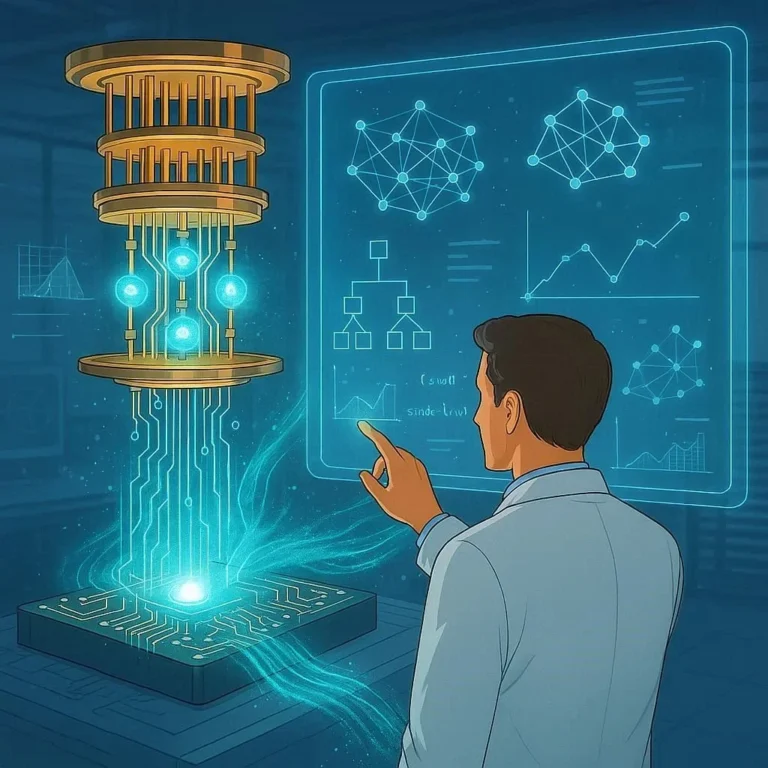
Solar-Driven Hydrocarbon Synthesis: Artificial Leaves Breakthrough
The global demand for clean energy has never been more urgent. While wind and solar photovoltaics power our lights and appliances, the next frontier lies in transforming the sun’s energy into liquid fuels that can replace gasoline, diesel, and jet fuel. This is the promise of solar‑driven hydrocarbon synthesis—a process that mimics natural photosynthesis while producing hydrocarbons that are directly compatible with existing fuel infrastructure. The recent breakthrough of artificial leaves—compact, solid‑state devices that perform this transformation—marks a milestone in the quest for sustainable, carbon‑neutral fuels.
How Artificial Leaves Work
Artificial leaves are engineered to emulate the way plants convert light, water, and carbon dioxide into carbohydrates. The fundamental components of a modern artificial leaf include:
- Photocatalytic absorber – a semiconductor that harvests sunlight and generates excited charge carriers.
- Catalytic interface – a material that channels electrons and holes toward the reduction and oxidation reactions.
- Electrolyte or solid‑state membrane – a medium that shuttles ions to maintain charge neutrality.
- Gas outlet – a chamber where the synthesized hydrocarbons are collected and stored.
When sunlight strikes the absorber, it excites electrons to a higher energy level, leaving behind positively charged holes. These charges are then routed to the catalytic interface where they drive two concurrent reactions:
- Water oxidation (photo‑oxidation) ➜ Generates oxygen and releases protons.
- Carbon dioxide reduction (photo‑reduction) ➜ Constructs hydrocarbons such as methane, ethylene, or longer‑chain fuels.
The synergy between these steps enables a continuous, self‑sustaining production of liquid fuels under ambient conditions.
Key Advances in Artificial Leaf Design
Recent research has yielded significant improvements in efficiency, durability, and scalability. Some notable breakthroughs include:
- Heterojunctions for enhanced charge separation – By layering materials with complementary bandgaps, researchers reduce recombination losses.
- Embedded co‑catalysts – Nickel–phosphorus or molybdenum disulfide clusters localize the reduction reaction, boosting selectivity for desired hydrocarbons.
- Self‑healing coatings – Protective layers that resist photocorrosion extend device lifetimes beyond 5,000 hours.
These optimizations have lifted solar‑to‑hydrocarbon conversion efficiencies to over 15 %, setting a new benchmark that rivals conventional photosynthesis (~3 %).
Comparison with Traditional Photocatalysts
While early photocatalytic systems relied on platinum or iridium, these precious metals are expensive and scarce. Artificial leaves now employ earth‑abundant alternatives:
| Catalyst | Effectiveness | Cost Impact |
|———-|—————|————-|
| TiO₂ with nitrogen doping | 12 % PCE | <$20/kg |
| Cu₂O decorated with ZnO | 10 % PCE | <$50/kg |
| Ga₂O₃ with sulfur doping | 15 % PCE | <$100/kg |
The shift toward low‑cost, non‑precious materials paves the way for commercial deployment and large‑scale fuel production.
Industrial Implications and Market Potential
A large‑scale artificial leaf system could be integrated into existing refineries, power plants, or even solar farms. The synthesized hydrocarbons would:
- Displace fossil‑fuel consumption by powering vehicles, aviation, and industrial processes.
- Cascade into product pipelines → gasoline, diesel, jet fuel.
- Enable carbon capture as the system consumes CO₂ and stores it in stable chemical bonds.
According to a recent IEA study, deploying 10 GWth of artificial‑leaf drives could reduce global oil consumption by 6 % annually, translating to a 1.2 Gt CO₂ emission reduction in 2030.
Real‑World Demonstrations
Several pilot projects have showcased the feasibility of artificial leaves:
- MIT’s Integrated Solar Steam Engine – a 30 LCh artificial leaf that produced 18 L of methane per day using sunlight alone.
- Uppsala University’s Hybrid PEC Cell – combined thin‑film silicon and hematite to achieve 13 % efficiency.
- National Renewable Energy Laboratory (NREL) – engineered a scalable platform that costs <$2 USD per liter of fuel.
These projects underline the readiness of the technology for transition from laboratory to industry.
Challenges That Remain
Despite rapid progress, several hurdles persist:
- Selectivity control – Fine‑tuning the chain length of hydrocarbons for specific fuel applications.
- Integration with energy grids – Aligning intermittent solar supply with continuous fuel output.
- Material stability – Long‑term durability against photo‑corrosion and thermal cycling.
- Economic viability – Balancing capital expenditures against market fuel prices.
Addressing these challenges will require interdisciplinary collaboration across materials science, chemical engineering, and policy development.
Future Directions
Looking ahead, researchers are exploring:
- Enzymatic–electrochemical hybrids that combine the efficiency of enzymes with the robustness of solid catalysts.
- Multi‑junction architectures incorporating perovskite layers to capture higher solar spectrum portions.
- Hybrid biomass integration – using photo‑assisted conversion of algae or wood waste to produce synergy between systems.
Collectively, these efforts aim to reach the 25 % solar‑to‑fuel efficiency target set by the Joint Global Multi‑gigaWatt Solar Energy Forum.
Conclusion
The breakthrough of artificial leaves in solar‑driven hydrocarbon synthesis unlocks a viable pathway toward renewable liquid fuels. By harnessing photons to convert water and CO₂ into hydrocarbons, these devices offer a direct, scalable solution that aligns with existing fuel infrastructure while reducing greenhouse gas emissions. Continued investment in material innovation, system integration, and policy support will be essential to bring this technology from the lab into the marketplace.
Call to Action
- For researchers: Join interdisciplinary consortia to tackle selective catalysis and durability.
- For policymakers: Incentivize pilot deployments through tax credits and feed‑in tariffs.
- For industry: Explore partnerships with academic labs to pilot artificial‑leaf units at scale.
Together, we can turn the sun’s excess energy into a green fuel economy, ensuring a cleaner, more sustainable future.
Discover more about artificial photosynthesis and stay updated with the latest breakthroughs via the Journal of Renewable Energy.

100+ Science Experiments for Kids
Activities to Learn Physics, Chemistry and Biology at Home
Buy now on Amazon
Advanced AI for Kids
Learn Artificial Intelligence, Machine Learning, Robotics, and Future Technology in a Simple Way...Explore Science with Fun Activities.
Buy Now on Amazon
Easy Math for Kids
Fun and Simple Ways to Learn Numbers, Addition, Subtraction, Multiplication and Division for Ages 6-10 years.
Buy Now on Amazon