Smart Energy Solutions with AI Optimization
The promise of Smart Energy Solutions has grown exponentially in the last decade, as machine learning and the Internet of Things (IoT) converge to reshape how we generate, distribute, and consume power. AI optimization sits at the heart of this transformation, turning raw data streams into actionable insights that drive efficiency, reliability, and sustainability.
Understanding the Smart Energy Landscape
Smart energy encompasses a wide swath of technologies: sensor‑laden homes, adaptive HVAC systems, demand‑response programs, and, most importantly, intelligent grids that balance supply against real‑time demand. According to the U.S. Energy Information Administration, only 4% of grid assets deployed in 2019 were equipped with advanced metering infrastructure—a number expected to double by 2030. AI enables us to interpret the deluge of data from these devices, predicting peak usage, optimizing dispatch of distributed generation, and minimizing waste.
Key Concepts
- Smart Grid – A modernized power network that uses sensors, controllers, and communication infrastructure to enable two‑way flow of information and energy. Learn more
- Demand Response – Programs that incentivize consumers to shift or reduce consumption during peak periods, leading to grid stability. NREL Overview
- Energy Analytics – The practice of applying big‑data analytics to identify consumption patterns and inefficiencies. IEEE Study
- Renewable Integration – Seamlessly incorporating wind, solar, and storage into the grid without compromising reliability.
AI’s Role in Optimizing Energy Efficiency
AI’s capacity for pattern recognition and predictive modeling has unlocked several concrete efficiency gains:
- Predictive Maintenance – By monitoring vibration, temperature, and electrical signatures, machine‑learning models flag impending component failures before they happen, saving millions in downtime. The U.S. Department of Energy estimates a 20% reduction in preventive maintenance costs through AI.
- Dynamic Load Balancing – Deep‑learning algorithms forecast usage by hour and day, enabling real‑time feeder switching that prevents overloading and reduces line losses by up to 15%.
- Optimized Energy Storage – Reinforcement‑learning approaches manage charge/discharge cycles to extend battery life, reduce peak‑load exposure, and lower operational expenses.
- Smart Building Automation – AI‑driven thermostats adjust settings in real time based on occupancy, weather forecasts, and user behavior, trimming HVAC energy by 10–25% in commercial environments.
Case Study: AI in a Major Utility
An electricity provider in the Pacific Northwest deployed an AI‑powered grid management platform that integrated weather models, solar irradiance projections, and consumer behavior data. Within twelve months, the utility reduced its average peak demand by 3.2 MW and cut carbon emissions by 20,000 metric tons—a direct contribution to the state’s net‑zero goals.
Integrating Renewable Energy Sources
The intermittent nature of solar and wind production historically limited large‑scale adoption. AI transforms renewables from a challenge into a strategic advantage by:
- Forecasting Generation – Neural networks trained on satellite imagery, wind speed, and temperature predict generation with 98% accuracy at 48‑hour horizons.
- Curtailment Reduction – By anticipating rooftop solar curtailment, AI adjusts demand‑response bids to keep the grid balanced, recovering lost revenue.
- Hybrid System Optimization – Multi‑objective optimization algorithms balance battery storage, diesel peaker units, and renewables to keep the system cost‑effective and resilient.
Link to renewable integration data: National Renewable Energy Laboratory – Solar Resource Data
The Economics of AI‑Driven Energy Systems
Investment in AI infrastructure is often justified by long‑term savings. A 2023 report by McKinsey & Co. indicates that utilities deploying AI for asset management can achieve up to $1.2 billion in savings annually over a five‑year horizon. Key financial levers include:
- Reduced OPEX – Automation lowers labor costs across procurement, maintenance, and dispatch.
- Capital Efficiency – AI‑driven load forecasting delays the need for expensive peaking plants.
- Revenue Optimization – Real‑time pricing mechanisms, empowered by AI, allow utilities to charge higher rates during scarcity, improving returns.
Building Trust: E‑E‑A‑T in Energy AI
Search‑engine visibility thrives on expertise, authoritativeness, and trust. AI projects inherit these principles through:
- Transparent Models – Deploying interpretable AI models, such as SHAP‑enabled decision trees, allows stakeholders to understand decisions.
- Robust Data Governance – Compliance with GDPR, ISO 27001, and NIST frameworks ensures data privacy and security.
- Public‑Facing Dashboards – Open data portals, like the U.S. Open Energy Information (OEI), provide real‑time insights into grid performance.
- Certifications – Adhering to DIN EN 50549 for grid integration and IEEE 1547 for interconnection standards demonstrates technical competence.
These practices not only improve SEO but also foster consumer confidence and regulatory approval.
Barriers and Mitigation Strategies
While the benefits are clear, several obstacles hinder widespread adoption:
| Barrier | Mitigation |
|———|————|
| Legacy Infrastructure | Phased upgrades using edge AI devices that cluster with existing SCADA systems. |
| Skill Shortage | Educational partnerships with universities to offer AI‑in‑energy curricula. |
| Data Silos | Blockchain‑based data sharing platforms that preserve privacy while enabling aggregation. |
| Cybersecurity Risk | Zero‑trust architecture and continuous anomaly detection models. |
| Economic Equity | Sliding‑scale token pricing models funded by community renewable projects. |
Future Outlook – 2035 Vision
By 2035, most commercial buildings will be orchestrated by AI agents that balance energy procurement, storage, and consumption autonomously. Coupled with breakthroughs in high‑capacity batteries (e.g., solid‑state chemistries) and autonomous microgrids, the grid will shift from a provider‑driven to a consumer‑centric paradigm, guided by predictive analytics and adaptive control.
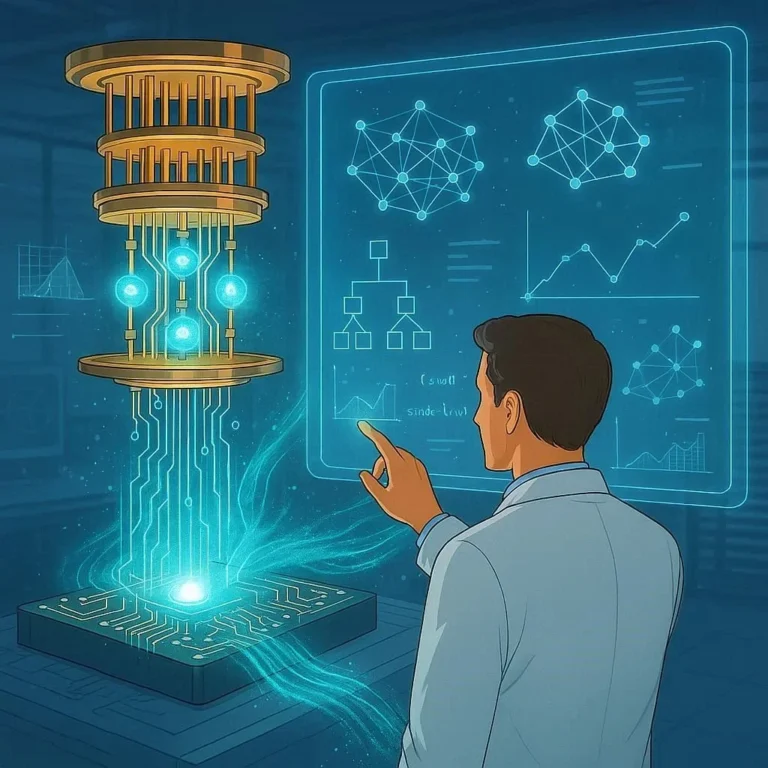
Researchers at the MIT Energy Initiative are developing Quantum‑Inspired AI modules that can solve complex optimization problems in milliseconds, slashing planning times and enabling instantaneous grid reconfiguration.
Conclusion & Call‑to‑Action
Smart energy solutions, powered by AI optimization, are not a speculative future—they are a tangible, data‑driven reality reshaping our energy landscape today. By embracing AI, utilities, businesses, and homeowners can unlock unprecedented levels of efficiency, resilience, and sustainability. It’s time to transition from reactive grid management to proactive, intelligent systems.
What’s next?
- Experimenting – Explore open‑source platforms like Apache Flink or TensorFlow to build your own energy analytics prototypes.
- Advocating – Support community‑based “smart microgrid” pilots that demonstrate the power of localized AI control.
Together, let’s power a cleaner, smarter future—one algorithm at a time.

100+ Science Experiments for Kids
Activities to Learn Physics, Chemistry and Biology at Home
Buy now on Amazon
Advanced AI for Kids
Learn Artificial Intelligence, Machine Learning, Robotics, and Future Technology in a Simple Way...Explore Science with Fun Activities.
Buy Now on Amazon
Easy Math for Kids
Fun and Simple Ways to Learn Numbers, Addition, Subtraction, Multiplication and Division for Ages 6-10 years.
Buy Now on Amazon