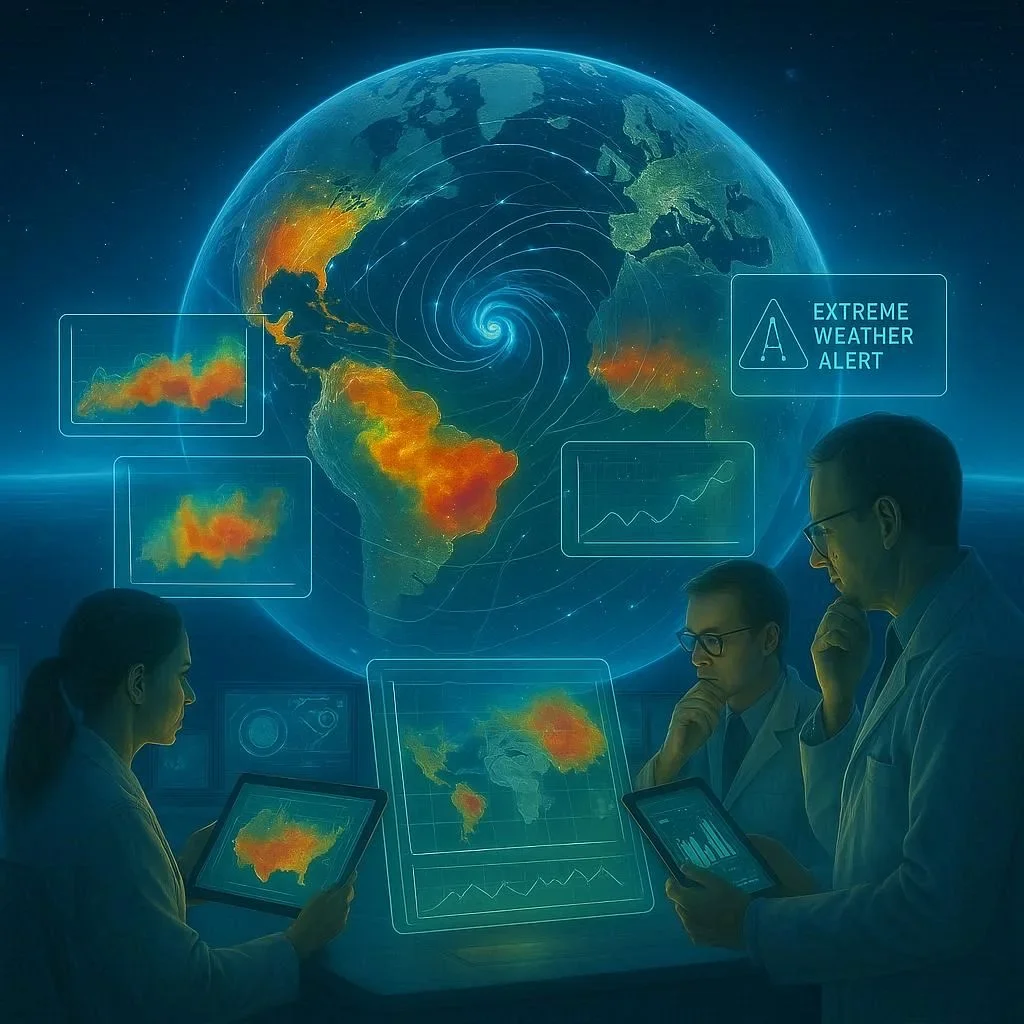
Space-Based Sensors Track Oceans
The modern era of ocean stewardship is powered by space. Space-based sensors—satellite systems that orbit Earth—provide the most comprehensive, real-time view of our planet’s largest biosphere. By measuring sea surface temperature, chlorophyll concentration, sea level, and ocean acidity, these instruments supply critical data for scientists, policymakers, and conservationists worldwide.
What Space Sensors Measure
Satellite instruments use a range of sensors—thermal radiometers, visible/near-infrared scanners, and passive microwave detectors—to capture marine variables. Sea surface temperature (SST) is derived from infrared bands that sense the heat emitted by water. Chlorophyll‑a, a pigment indicative of phytoplankton biomass, is measured by multispectral cameras sensitive to green and red wavelengths. Passive microwave sensors can gauge ocean surface roughness, which is related to wind speed—an indirect indicator of surface heat.
Satellite platforms such as NASA’s Sentinel‑3, NOAA’s POES, and ESA’s Sentinel-3 Mission host these sensors, enabling consistent, longitudinal data streams that ground stations cannot rival.
Impact on Ocean Health Research
With access to continuous, spatially extensive datasets, researchers can track subtle shifts in oceanographic patterns. The seasonal cycle of phytoplankton blooms, for example, is monitored through monthly chlorophyll maps. By correlating these blooms with temperature and wind data, scientists can predict primary productivity—a proxy for overall marine ecosystem health.
Long‑term satellite records have also revealed accelerating sea‑level rise. The Argo float network complements satellite observations by providing in‑situ temperature and salinity measurements, allowing researchers to calibrate and validate satellite algorithms. The combined dataset has confirmed that global sea levels have risen at an average of 3.3 mm per year between 1993 and 2020, a figure recorded by the International Hydrographic Organization.
Applications for Climate Policy and Management
Governments use space‑based ocean metrics to design better coastal management plans. For instance, detailed ocean heat content estimations help determine the health of coral reefs, as warmer waters predispose reefs to bleaching events. The United Nations’ United Nations Intergovernmental Panel on Climate Change (IPCC) cites satellite‑derived heat data as a key indicator in its climate reports. Additionally, fisheries managers rely on chlorophyll data to locate productive feeding grounds, ensuring sustainable harvest levels.
Below is an example of how diverse satellite data contribute to a single decision:
- Sea surface temperature anomalies signal a looming heatwave.
- Chlorophyll drop indicates reduced phytoplankton health.
- Increased sea‑level rise stresses estuary ecosystems.
- Wind speed variations forecast potential storm surge risk.
Future Horizons—Next‑Generation Ocean Sensors
Ongoing research is pushing the envelope of what space‑based sensors can detect. Ultra‑high‑resolution imaging sensors aim to map plankton distribution at cellular scales, while spectrometers with hyperspectral capability can identify dissolved organic matter sources. Small satellite constellations, such as Planet Labs’ Dove fleet, promise daily coverage, drastically reducing data lag.
Another promising avenue is the integration of artificial intelligence, which processes terabytes of raw data into actionable insights. Machine learning models trained on historic satellite imagery can flag anomalies—such as oil slicks or illegal fishing activity—within minutes, giving authorities rapid response capability.
Conclusion: Harnessing Space Sensors for Ocean Stewardship
Space-based sensors are the modern eyes that watch over our oceans. Their precise, continuous measurements underpin scientific discoveries, climate reports, and policy decisions that shape the health of marine ecosystems across the globe. By championing and investing in these technologies, we can protect fisheries, mitigate climate impacts, and preserve biodiversity for future generations.
Join the movement—support space‑based ocean monitoring initiatives today and help keep our seas thriving.
Frequently Asked Questions
Q1. How do satellites measure sea surface temperature?
Satellites use thermal infrared sensors to detect the heat emitted by ocean water. The measured radiance is converted to temperature using calibration data and atmospheric correction algorithms.
Q2. Can satellite data replace in‑situ ocean measurements?
No, satellites provide large‑scale coverage, but in‑situ instruments like Argo floats offer higher accuracy for temperature and salinity at depth. Together, they supplement each other.
Q3. Which satellite missions focus on ocean studies?
Key missions include NASA’s Sentinel‑3, NOAA’s GO‑ESM, and ESA’s Sentinel‑3 Mission.
Q4. How does space data aid in predicting harmful algal blooms?
Satellite chlorophyll maps reveal bloom onset and spread. Combined with temperature and wind data, models can forecast bloom intensity and duration.
Q5. What are the challenges of satellite ocean monitoring?
Challenges include cloud cover obstruction, sensor drift over time, and the need for sophisticated algorithms to translate raw signals into meaningful environmental metrics.
Related Articles

100+ Science Experiments for Kids
Activities to Learn Physics, Chemistry and Biology at Home
Buy now on Amazon
Advanced AI for Kids
Learn Artificial Intelligence, Machine Learning, Robotics, and Future Technology in a Simple Way...Explore Science with Fun Activities.
Buy Now on Amazon
Easy Math for Kids
Fun and Simple Ways to Learn Numbers, Addition, Subtraction, Multiplication and Division for Ages 6-10 years.
Buy Now on Amazon