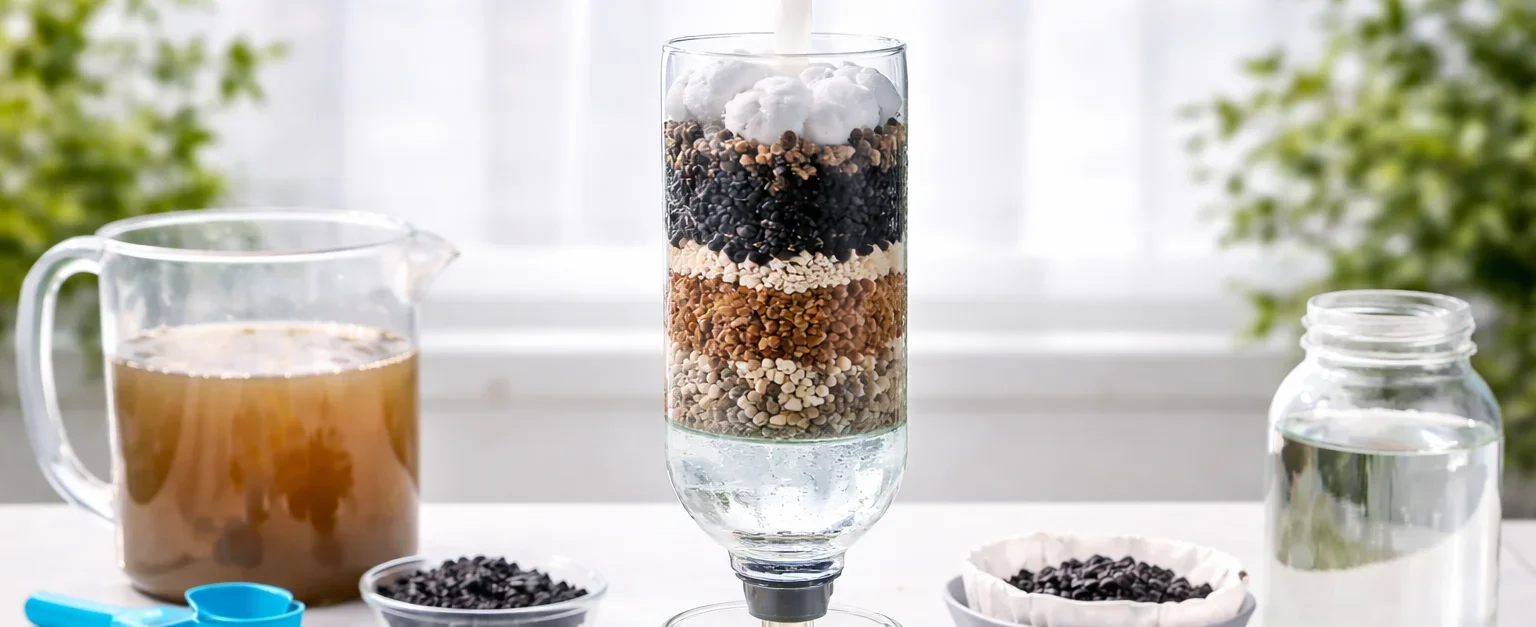
DIY Water Purification: How to Make a Simple Water Filter at Home
Access to clean water is one of the most important needs for human survival. Yet around the world, water often contains dirt, pollutants, and harmful substances that must be removed before it can be safely used. Understanding how water filtration works doesn’t require expensive equipment—you can build a basic water filter at home using natural materials like sand, charcoal, and gravel. This simple project is a great way to learn about environmental science, water purification, and essential survival skills.
Why Water Filtration Is Important
Water from natural sources such as rivers, ponds, or even household taps can carry unwanted contaminants. Filtration helps improve water quality by removing:
- Suspended dirt and sediment
- Unpleasant odors and tastes
- Certain chemicals and impurities
- Some microorganisms
While a homemade water filter does not replace professional purification or boiling, it clearly demonstrates how filtration systems clean water.
Materials Required
To build your DIY water filter, gather the following items:
- A plastic bottle (cut in half)
- Clean gravel or small stones
- Clean sand
- Activated charcoal (aquarium charcoal or chemical-free charcoal)
- Cotton, cloth, or a coffee filter
- A container to collect filtered water
Make sure all materials are rinsed before use to prevent contamination.
Step-by-Step Guide to Building a Simple Water Filter
- Prepare the bottle
Cut off the bottom of the plastic bottle and turn it upside down so the neck acts like a funnel. - Create the base layer
Place cotton or a coffee filter inside the bottle neck. This keeps the filtering materials in place. - Add activated charcoal
Pour in a layer of charcoal to help absorb chemicals, odors, and toxins. - Add sand
Add a layer of clean sand on top of the charcoal. This traps fine dirt particles. - Top with gravel
Finish with a layer of gravel or small stones to catch larger debris. - Filter the water
Slowly pour dirty water into the top and observe as clearer water drips into the container below.
How This Water Filter Works
Each layer in the filter has a specific role:
- Gravel: Blocks leaves, insects, and large particles
- Sand: Removes finer dirt and sediment
- Charcoal: Absorbs chemicals, odors, and some impurities
- Cotton or filter: Prevents materials from escaping the bottle
This layered design mimics how water naturally becomes cleaner as it passes through soil and rock underground.
Real-World Uses of Water Filtration
The same principles used in this DIY filter are applied in modern water treatment systems:
- Sand filtration beds are used in municipal water plants
- Activated charcoal is common in household and industrial filters
- Portable filtration devices rely on similar natural layers
- Emergency and disaster relief teams use compact filters to provide safe water
Understanding these basics helps explain how engineers protect public health.
Important Safety Note
Filtered water from this experiment should not be consumed directly. Always boil or disinfect water before drinking, especially if it comes from an unknown source. This project is designed for learning, not for producing drinking water.
Final Thoughts
Building a simple water filter with sand, charcoal, and gravel is a powerful way to explore environmental science and water purification. With minimal materials, you can see how natural processes remove impurities and make water clearer. It’s an excellent educational activity that also introduces valuable survival knowledge.
The next time you turn on a tap or see clear water flowing, you’ll better understand the science working behind the scenes to make it possible.

100+ Science Experiments for Kids
Activities to Learn Physics, Chemistry and Biology at Home
Buy now on Amazon
Advanced AI for Kids
Learn Artificial Intelligence, Machine Learning, Robotics, and Future Technology in a Simple Way...Explore Science with Fun Activities.
Buy Now on Amazon
Easy Math for Kids
Fun and Simple Ways to Learn Numbers, Addition, Subtraction, Multiplication and Division for Ages 6-10 years.
Buy Now on Amazon