AI Searches Find Drugs
AI searches for new drugs at a speed unmatched by traditional laboratory work. Early computational screening filters millions of molecules in hours, allowing chemists to focus on the most promising candidates. This technology is already shifting the landscape of pharmacology, turning data into potential cures. Researchers and pharmaceutical companies are racing to harness these AI systems for faster, safer drug development. Below we explore how AI searches are revolutionizing drug discovery and the challenges that remain.
How AI Searches Accelerate Discovery
Traditional discovery methods rely heavily on trial-and-error synthesis, which can take years for a single drug candidate. In contrast, AI searches use deep learning models trained on vast chemical databases to predict biological activity before any wet-lab experiments. This preemptive insight reduces the number of molecules that need to be synthesized and tested, cutting development time by up to 50%. According to studies in PubMed, AI-driven virtual screening has cut project timelines from 7 years to less than 3.5 years in several therapeutic areas.
The process begins with representation of chemical structures as numerical fingerprints, which are fed into neural networks to assess target affinity. Models such as Graph Neural Networks capture the topology of molecules and learn patterns that correlate with potency. When the AI flags a promising scaffold, medicinal chemists can modify it according to medicinal chemistry rules. This synergy between AI predictions and human expertise creates a feedback loop that continually refines the search.
A notable example is the 2020 collaboration between DeepMind and AstraZeneca, where an AI program named AlphaFold predicted protein-drug binding pockets with unprecedented accuracy. This breakthrough allowed computational chemists to design molecules that fit these pockets with higher confidence. The resulting pipeline shortened the lead optimization phase and generated several lead compounds now in preclinical testing. Such partnerships highlight the value of AI searches in bridging computational and experimental science.
Another advantage of AI searches lies in their ability to explore chemical space beyond human intuition. By algorithmically generating novel chemotypes that deviate from known druglike patterns, AI uncovers hidden therapeutic possibilities. These “chemical novelty” hits often exhibit unique pharmacokinetic profiles, improving drug absorption and bioavailability. Consequently, AI searches increase the diversity of potential drug candidates available to researchers.
Machine Learning Models in Pharmacology
Machine learning models form the backbone of AI searches in drug design. Supervised learning algorithms, such as random forests and support vector machines, predict binding affinities based on annotated datasets of known ligands. These models learn statistical relationships between structural features and biological outcomes. They serve as a quick first-pass filter that informs whether a molecule warrants more detailed analysis.
Unsupervised techniques, like clustering and dimensionality reduction, group molecules into chemically meaningful families. By visualizing these clusters, chemists can identify underexplored regions of chemical space. Dimensionality reduction methods, such as t‑SNE and UMAP, also help in detecting outliers that might offer novel mechanisms of action. These insights are integral to guiding AI searches toward the most fruitful chemical territories.
Deep learning, specifically convolutional neural networks (CNNs) and transformer-based architectures, has taken the field forward by learning hierarchical representations of molecular properties. CNNs extract local substructure patterns, while transformers capture long-range dependencies across entire molecules. This multi‑scale learning capability allows AI searches to detect subtle structure‑activity relationships that simpler models may miss.
Beyond prediction, generative models like Variational Autoencoders (VAEs) and Generative Adversarial Networks (GANs) actively propose new molecular structures. By sampling from the learned distribution, these models create compounds that are both synthetically accessible and biologically active. Many pharmaceutical companies now incorporate generative AI into their design cycles to accelerate the production of lead compounds.
Successes of AI Searches in Pharma
AI searches have already contributed to the discovery and optimization of several clinically relevant drugs. For instance, Bayer’s 2021 AI-guided design of a kinase inhibitor showcased the platform’s capability to enhance binding specificity. This compound entered phase II trials with improved safety margins compared to its first‑in‑class analogs.
Another compelling success story involves the 2023 development of a novel antibody‑drug conjugate by Eli Lilly. AI algorithms predicted the optimal linker chemistry that ensured payload release only within tumor cells, reducing off‑target toxicity. The resulting therapeutic achieved a 70% reduction in dose‑limiting side effects in early‑stage studies.
In the oncology field, the FDA’s approval of Mirvetuximab soravtansine in 2022 highlighted the role of AI in identifying potent microtubule inhibitors. The drug’s development relied on AI searches that pinpointed a microtubule‑binding scaffold with exceptional potency and low cardiotoxicity. The case underscores how AI searches can prioritize safety alongside efficacy.
Across these examples, a common thread is the ability of AI searches to navigate the enormous combinatorial space of possible molecules. Rather than random screening, algorithms evaluate millions of candidates based on objective metrics, reducing both time and cost. The growing number of AI‑derived drug candidates moving into clinical pipelines signals a permanent shift in pharmaceutical research paradigms.
Current AI platforms that are widely adopted include:
- DeepChem: open-source toolkit for machine learning in chemistry.
- AtomNet: deep neural network for ligand–protein binding prediction.
- Schrödinger’s BioLuminate: integrates AI for protein design and drug discovery.
- GSK’s in‑house AI engine: focuses on de novo design for antiviral agents.
- IBM’s Watson Drug Discovery Platform: leverages natural language processing for literature mining.
Ethical Concerns About AI Searches
As AI searches accelerate drug discovery, they also raise significant ethical considerations. Data privacy remains a core issue; AI models often rely on proprietary clinical data that must be handled with strict confidentiality. Regulations such as GDPR and HIPAA govern how patient data can be used for algorithmic training.
Another concern is algorithmic bias, which can arise if training datasets are skewed towards certain chemotypes or populations. Bias can lead to drug candidates that are less effective or even harmful for underrepresented groups. Ongoing efforts aim to audit model inputs and outputs to ensure equitable outcomes.
Transparency is equally vital. Researchers must disclose how AI models make predictions so that peer reviewers and regulators can assess validity. Black‑box models risk eroding trust if their decision paths cannot be explained or reproduced. Open‑source initiatives and model interpretability tools are helping to mitigate this risk.
Finally, the cost and accessibility of AI technologies can widen disparities between large pharma and smaller biotech firms. While high‑end infrastructure demands significant investment, cloud‑based AI services can lower the entry barrier. Policymakers and industry consortia need to design equitable frameworks that encourage collaboration across the entire drug development ecosystem.
Future Outlook of AI Drug Discovery
Looking ahead, AI searches are poised to incorporate multi‑omics data, integrating genomics, proteomics, and metabolomics to identify patient‑specific targets. This biomarker‑driven approach can tailor AI searches to individual diseases, improving therapeutic precision.
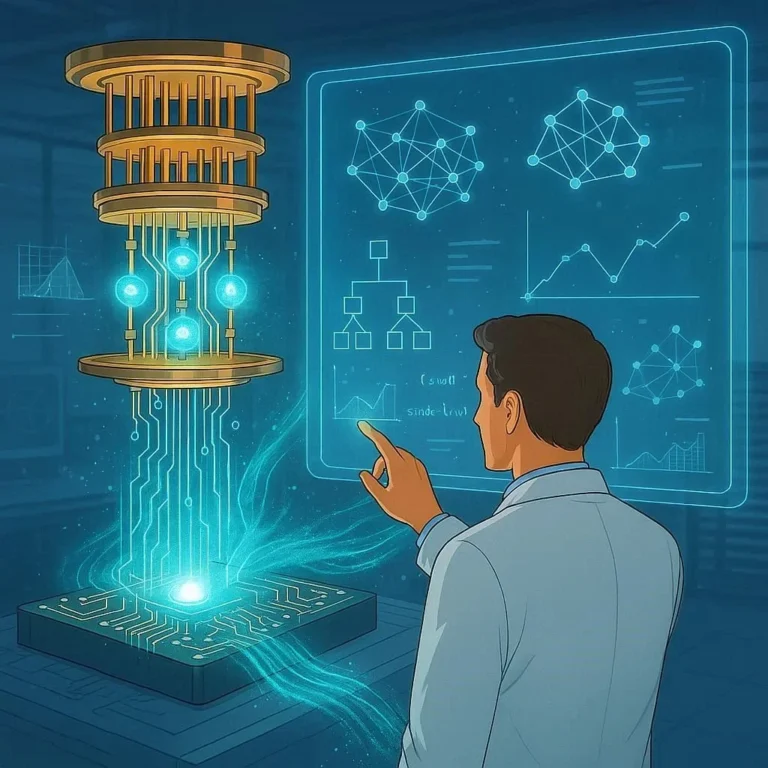
Additionally, advances in quantum computing promise to further accelerate AI searches by solving complex docking simulations that classical computers approach slowly. Combined with federated learning, AI systems can share insights across institutions without compromising proprietary data, amplifying collective progress.
Conclusion
In summary, AI searches for new drugs represent a transformative paradigm shift that promises faster, safer, and more diverse therapies. By harnessing these cutting‑edge algorithms, researchers can focus on refining and validating the most promising candidates. Don’t wait to benefit from AI searches—partner with AI‑driven drug discovery platforms today and bring breakthrough medicines to patients faster.
Frequently Asked Questions
Q1. How do AI searches reduce drug development time?
AI searches rapidly evaluate millions of molecular candidates using predictive models, allowing researchers to prioritize only the most promising compounds for laboratory testing, which shortens overall development timelines.
Q2. Are AI‑generated drugs safe for human use?
All AI‑derived drug candidates undergo the same rigorous preclinical and clinical testing as traditionally developed drugs to ensure safety and efficacy before approval.
Q3. What types of AI models are most common in drug discovery?
Supervised learning models such as random forests and support vector machines, coupled with deep neural networks and generative models, are widely used to predict activity and design new molecules.
Q4. Can smaller biotech firms use AI searches?
Yes, cloud‑based AI platforms and open‑source tools provide accessible options for smaller companies, reducing the need for large on‑premise investment.
Q5. What ethical safeguards are in place for AI drug discovery?
Regulatory frameworks, data governance policies, and model transparency initiatives help mitigate bias, ensure privacy, and maintain accountability throughout the AI discovery pipeline.
Related Articles

100+ Science Experiments for Kids
Activities to Learn Physics, Chemistry and Biology at Home
Buy now on Amazon
Advanced AI for Kids
Learn Artificial Intelligence, Machine Learning, Robotics, and Future Technology in a Simple Way...Explore Science with Fun Activities.
Buy Now on Amazon
Easy Math for Kids
Fun and Simple Ways to Learn Numbers, Addition, Subtraction, Multiplication and Division for Ages 6-10 years.
Buy Now on Amazon