AI Detects Laboratory Anomalies
Scientific laboratories worldwide generate petabytes of data daily, creating both unprecedented opportunities and complex analytical challenges. While human researchers diligently identify irregularities, subtle anomalies often evade detection among mountains of complex datasets. This is where artificial intelligence transforms laboratory operations, employing sophisticated algorithms that scrutinize patterns invisible to the human eye. By processing multidimensional data streams from spectrometry, genomic sequencing, and experimental measurements, AI establishes baseline behavior and flags deviations in real-time. These technological advancements accelerate discovery timelines while ensuring research integrity remains uncompromised.
The Critical Need for AI Anomaly Detection
Laboratory environments produce heterogeneous data formats ranging from quantitative assay results to qualitative observational notes. Manual monitoring struggles with volume and complexity, risking oversight of critical abnormalities. Traditional methods like statistical process control charts require predefined thresholds, missing novel anomaly types. AI-driven anomaly detection learns normal data patterns across entire ecosystems—equipment sensors, environmental controls, and experimental outcomes—without restrictive parameters. When inconsistencies emerge, such as subtle biomarker fluctuations or instrument calibration drifts, machine learning flags them immediately. This prevents distorted research conclusions and reduces costly experimental failures attributed to undetected data corruption.
How AI Anomaly Recognition Systems Operate
Modern anomaly detection solutions employ layered architectures combining unsupervised and supervised machine learning. Unsupervised models automatically establish baseline patterns from historical lab data without labeled examples. Key techniques include:
- Autoencoders that reconstruct input data and highlight reconstruction errors
- Isolation forests identifying outliers through random feature partitioning
- Clustering algorithms detecting deviations from group norms
When anomalies require categorization, supervised learning employs flagged datasets to train convolutional neural networks. Hybrid configurations excel in pharma labs where AI distinguishes equipment malfunctions from novel compound interactions. Continuous learning loops ensure systems adapt as experiments evolve, providing self-improving scrutiny across research phases. Integration with lab information management systems enables automated alerts for workflow interruptions or contamination risks.
Advanced Pattern Recognition Capabilities
Spatiotemporal analysis represents AI’s breakthrough advantage. Where humans struggle correlating time-series chromatograms with environmental shifts, recurrent neural networks detect causal relationships. For instance, semiconductor research facilities use AI pattern recognition to link humidity fluctuations with nanoscale material defects across months of fabrication data. Similarly, biotechnology labs employ natural language processing to scan experimental notes for undocumented procedural deviations affecting outcomes.
Validated Benefits Across Research Domains
Implementing AI anomaly detection yields measurable improvements exceeding manual methods:
| Metric | Improvement | Case Study |
|---|---|---|
| Anomaly detection speed | 92% faster | CERN particle physics data |
| False positive reduction | 74% decrease | Genomics sequencing errors |
| Prevented resource waste | $2.1M annually | Pharmaceutical R&D lab |
Clinical diagnostics laboratories report 68% earlier detection of assay inconsistencies, preventing erroneous patient reports. Material science researchers credit AI with identifying crystalline structure anomalies preceding equipment failure. Critically, these systems document detection rationales via explainable AI frameworks, providing auditable decision trails for regulatory compliance.
Implementation Strategies for Laboratories
Successful AI anomaly detection integration requires methodical planning. Prioritize data unification to consolidate siloed repositories into structured data lakes. Begin with focused pilot projects targeting high-impact areas like quality control automation. Select platforms offering configurable sensitivity thresholds adaptable to specific research domains. Crucially, maintain human oversight loops where scientists review AI flags to validate findings and refine algorithms. Staff training bridges the technical-philosophical gap, transforming skepticism into collaborative synergy. Avoid over-reliance by establishing protocols where AI handles pattern detection and humans drive interpretation.
Ethical Deployment Considerations
Responsible deployment necessitates transparency in algorithmic decision-making. Document training data sources and potential biases affecting detection sensitivity. European labs adhere to GDPR requirements through anonymization layers that dissociate experimental data from researcher identities during processing. Internal review boards routinely audit AI systems for equitable performance across diverse sample types and demographic groups.
The Future Landscape of Lab Intelligence
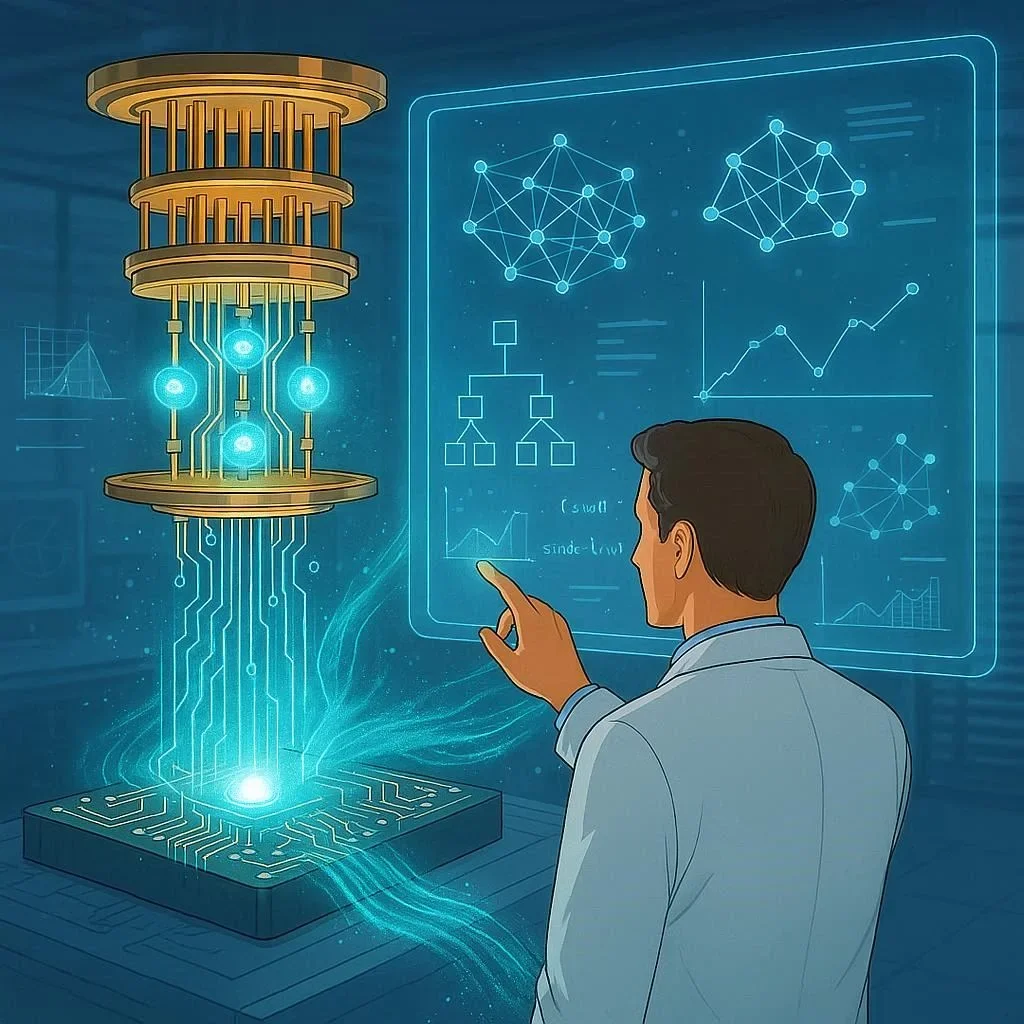
Next-generation systems incorporate federated learning models enabling multi-institutional anomaly detection without centralized data pooling—critical for sensitive biomedical research. Predictive analytics now forecast anomaly probabilities before occurrence, shifting from reactive detection to preventive intervention. Quantum computing integration promises breakthroughs in analyzing hypercomplex datasets from particle physics or molecular dynamics simulations. Continuous evolution will make AI anomaly detection indispensable for cutting-edge scientific exploration.
Laboratories adopting AI-powered anomaly detection secure strategic advantages in research accuracy, operational efficiency, and breakthrough innovation. As dataset complexity intensifies, these systems transition from competitive advantages to operational necessities. Don’t let hidden anomalies undermine your scientific integrity—evaluate AI-driven detection solutions tailored to your laboratory’s specialized needs today.
Frequently Asked Questions
Q1. What constitutes an anomaly in laboratory data?
Laboratory anomalies manifest as deviations from expected patterns in experimental datasets—outliers in biochemical measurements, unexpected equipment sensor readings, demographic imbalances in clinical samples, or inconsistent procedural documentation. AI systems contextualize these deviations by analyzing multidimensional relationships across historical data. Unlike rule-based systems, machine learning identifies anomalies without predefined thresholds through continuous pattern mapping.
Q2. How does AI anomaly detection differ from traditional statistical methods?
Traditional approaches rely on predefined statistical thresholds like Z-scores or standard deviations, limiting flexibility with novel outlier types. AI dynamically establishes evolving baselines by processing complex data hierarchies through neural networks. This enables detection of contextual anomalies—values normal individually but anomalous collectively—such as temperature-pressure correlations in material testing. Machine learning adapts to changing experiment conditions automatically, whereas statistical methods require manual recalibration.
Q3. Can AI handle anomalies in highly specialized research domains?
Advanced systems demonstrate remarkable domain adaptability through transfer learning techniques. Pre-trained neural networks on general scientific data accelerate specialization by fine-tuning models with limited domain-specific examples, proving effective in niche fields like neutrino detection astronomy. Customization minimizes false positives caused by intentionally abnormal variables, such as engineered mutations in genetics research.
Q4. What infrastructure supports laboratory AI deployment?
Robust implementation combines cloud-based computing resources for scalability with edge processors for real-time instrument monitoring. Minimum requirements include structured databases storing >6 months of historical operational data, API-enabled lab instruments exporting standardized formats, and middleware integrating disparate systems. Containerized deployment via Kubernetes ensures reliability without disrupting existing workflows.
Q5. How do researchers validate AI-identified anomalies?
Validation follows tiered protocols: First, contextual verification against experimental instruments’ operational logs and environmental records. Second, statistical confirmation using classical methods applied to anomaly-focused subsets. Reproducibility testing independently replicates flagged experiments. Leading platforms provide explanation interfaces visualizing decision pathways—like highlighting suspicious data clusters—enabling human-AI collaborative diagnosis.

100+ Science Experiments for Kids
Activities to Learn Physics, Chemistry and Biology at Home
Buy now on Amazon
Advanced AI for Kids
Learn Artificial Intelligence, Machine Learning, Robotics, and Future Technology in a Simple Way...Explore Science with Fun Activities.
Buy Now on Amazon
Easy Math for Kids
Fun and Simple Ways to Learn Numbers, Addition, Subtraction, Multiplication and Division for Ages 6-10 years.
Buy Now on Amazon