AI Helps Track Pandemics
In the age of rapid global connectivity, the emergence of novel pathogens can spread faster than ever before. AI Helps Track Pandemics by providing early warnings, real‑time data aggregation, and predictive modeling that traditional surveillance systems alone cannot deliver. This article explores how artificial intelligence is reshaping public health responses, illustrating the technology’s impact through real‑world examples and outlining future directions for pandemic preparedness.
How AI Helps Track Pandemics in Real‑Time
AI’s capacity to sift through massive volumes of heterogeneous data—social media, electronic health records, travel itineraries, and even satellite imagery—creates a comprehensive, dynamic picture of disease spread. Machine‑learning algorithms can identify subtle patterns that signal an outbreak before it is formally reported. For example, during the COVID‑19 pandemic, models trained on Google search queries and airline booking data helped governments detect early spikes in respiratory illness, enabling a quicker lockdown response. This real‑time surveillance can reduce the time between symptom onset and intervention, potentially saving countless lives.
Key Data Sources Captured by AI Systems
- Electronic health records from hospitals and clinics across continents.
- Public transportation and flight data to trace international movement.
- Social media chatter and search engine trends for early symptom detection.
- Genomic sequences from pathogen samples to monitor mutations.
- Environmental sensors and satellite imaging for climate‑related outbreak factors.
Machine Learning Amplifies Epidemiological Insight
Traditional epidemiology thrives on rigorous statistical methods, yet it can be time‑consuming, especially during fast‑moving outbreaks. Machine learning introduces parallel processing of vast data sets, uncovering correlations that would otherwise remain hidden. By appraising millions of data points in seconds, AI models pinpoint hotspots, predict wave peaks, and evaluate the effectiveness of intervention measures such as mask mandates or vaccination drives. According to a Nature study, integrating genomic sequencing data with machine‑learning-based geographic mapping significantly improves outbreak prediction accuracy for SARS‑CoV‑2 variants.
Proactive Decision‑Making Powered by AI
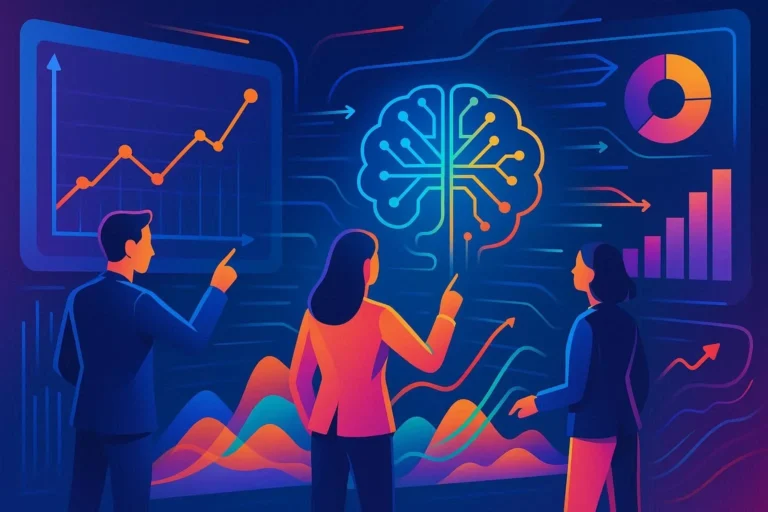
Public health agencies increasingly rely on AI‑driven dashboards that update daily, offering policymakers a clear snapshot of transmission dynamics. These tools also support scenario analysis—simulating outcomes for different public health strategies. For instance, the World Health Organization’s WHO partnered with tech companies to build AI platforms that forecast case surges under varying vaccination rates. In contrast, the Centers for Disease Control and Prevention’s CDC has adopted AI algorithms to monitor influenza activity and recommend seasonal vaccine composition.
From Detection to Intervention: AI’s End‑to‑End Role
AI’s contributions extend beyond detection. Once an outbreak is identified, artificial intelligence assists in resource allocation, such as predicting which hospitals will need additional ventilators or personal protective equipment. AI-driven contact tracing algorithms can automatically notify individuals who have been exposed, a task too labor‑intensive for manual tracing alone. Moreover, AI can aid in vaccine distribution by modeling cold‑chain logistics and identifying communities with the greatest vaccine hesitancy. In these ways, AI provides a comprehensive framework that supports the full life cycle of pandemic response.
Ethical Considerations and Data Privacy
While AI’s predictive power is undeniable, its deployment raises critical questions about privacy, transparency, and equity. The National Academies of Sciences, Engineering, and Medicine (NASEM) recommend anonymizing health data and establishing clear ethical guidelines for algorithmic interventions. It is essential to balance the public good of swift outbreak containment with individuals’ rights to confidentiality. Governments and organizations must foster transparency in how AI models are trained and used, ensuring that public trust is maintained.
Future Directions: AI and Global Health Security
Looking ahead, the integration of AI into global health security infrastructure promises even greater resilience. Developing AI models that can detect novel pathogens early by analyzing sewage samples or environmental swabs is a burgeoning area. Similarly, coupling AI with rapid diagnostic platforms—such as CRISPR‑based tests—could shorten the interval between sample collection and actionable results. International collaboration will be vital, as infectious diseases do not respect borders, and shared AI expertise can elevate collective preparedness.
Building a Sustainable AI‑Health Ecosystem
Ensuring sustainability involves investing in training for data scientists in public health settings, securing funding for open‑source AI tools, and creating standard protocols for data sharing. Public–private partnerships can accelerate innovation while maintaining public accountability. Finally, continuous evaluation of AI models against real‑world outcomes will refine their reliability, reducing algorithmic bias and improving equity in pandemic responses.
Conclusion: Embrace AI for Safer Futures
In summary, AI Helps Track Pandemics by delivering faster, more precise situational awareness, guiding timely interventions, and supporting resource allocation. The technology’s already proven impact during COVID‑19, combined with its potential for future threats, underscores the importance of investing in AI solutions for global health. By fostering ethical practices, ensuring data privacy, and encouraging international collaboration, we can build a resilient framework that safeguards populations worldwide.

100+ Science Experiments for Kids
Activities to Learn Physics, Chemistry and Biology at Home
Buy now on Amazon
Advanced AI for Kids
Learn Artificial Intelligence, Machine Learning, Robotics, and Future Technology in a Simple Way...Explore Science with Fun Activities.
Buy Now on Amazon
Easy Math for Kids
Fun and Simple Ways to Learn Numbers, Addition, Subtraction, Multiplication and Division for Ages 6-10 years.
Buy Now on Amazon