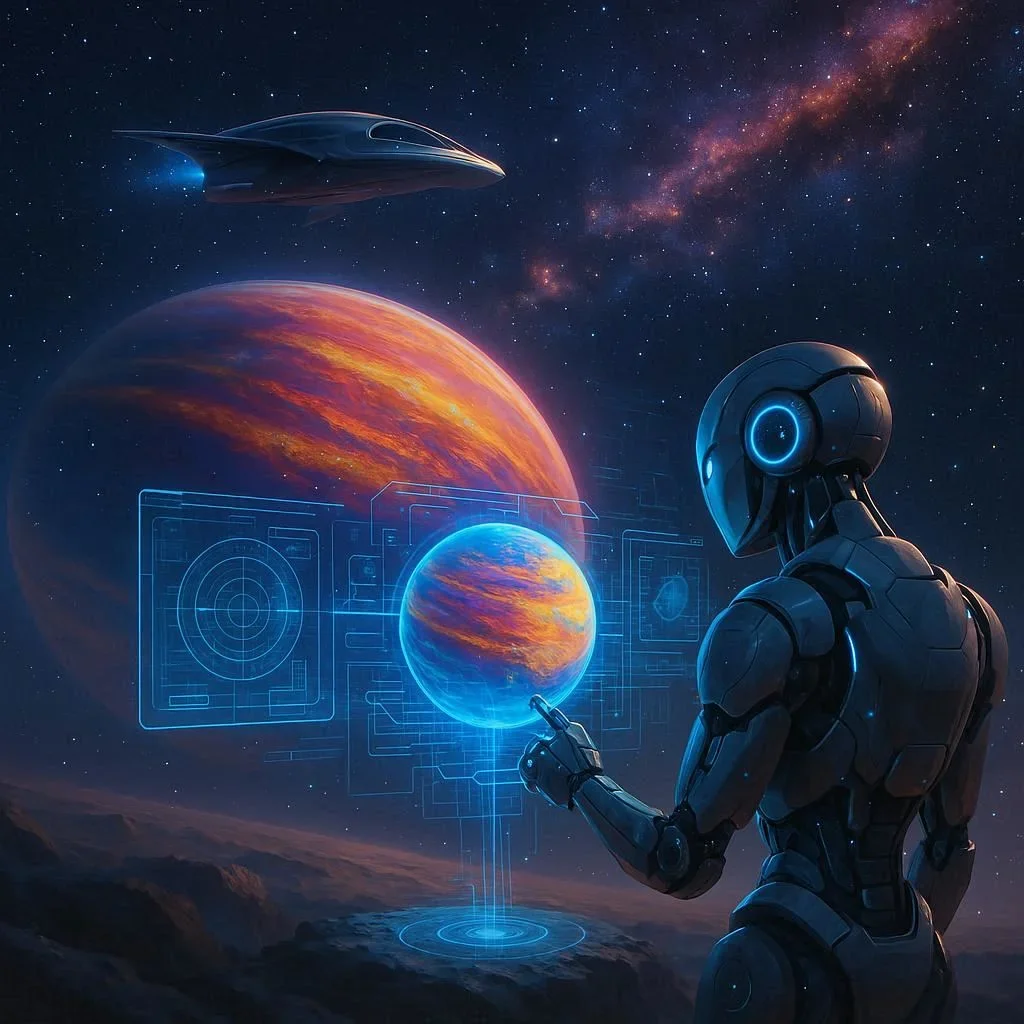
Can AI Predict Breakthroughs
Artificial intelligence has already begun to reshape the way we approach scientific discovery, raising a pivotal question: can AI predict the next major breakthrough? From drug design to climate modeling, machine learning models sift through massive datasets, uncovering patterns that elude human intuition. As researchers and technology enthusiasts eagerly explore this frontier, it’s essential to examine the current landscape, highlight successes and limitations, and consider the ethical dimensions of AI-driven foresight. In this article, we’ll delve into how AI is poised to anticipate scientific breakthroughs, evidence from real-world applications, and what the future may hold for both scientists and society.
The Promise of Predictive AI in Science
The core idea behind AI prediction is not merely to automate routine tasks but to act as a *navigator* through the complex terrain of hypotheses, experiments, and data. While early AI systems performed classification or simple regression, modern deep learning techniques can now model high-dimensional interactions and generate probabilistic forecasts on where the next influential insight might emerge. This promise is underlined by the vast ecosystem of AI tools, from reinforcement learning frameworks that optimize experimental design to generative models that produce novel molecular structures.
- Pattern recognition at scales unattainable to humans
- Dynamic hypothesis generation based on emerging data
- Accelerated decision‑making for high‑throughput screening
- Continuous learning through real‑time data streams
Because of these capabilities, many believe machine learning will become an indispensable collaborator in science. Yet the question remains: does predictive AI truly *anticipate* breakthroughs, or does it merely highlight incremental advancements?
Current Tools and Their Limitations
Despite its potential, AI faces several challenges when applied to forecasting major scientific leaps. Algorithms require extensive, high‑quality training data, which is often scarce for cutting‑edge research that is itself rare by definition. Moreover, the *human element*—intuition, creativity, and interdisciplinary insight—cannot yet be fully codified in a neural network. Algorithms also risk reinforcing existing biases in the data, potentially overlooking novel directions that lie outside well‑explored domains.
Another critical limitation involves *explainability*. Unpacking why a model recommends a particular line of inquiry is essential for scientists to trust and validate AI suggestions. While methods like SHAP values or saliency maps offer some insight, the interpretability of deep learning remains a work in progress.
In short, AI’s predictive power is tied directly to the quality of input data and the clarity of its decision‑making process. When dealing with *scientific breakthroughs*, which often involve paradigm shifts rather than incremental improvements, the predictive margin narrows further.
Case Studies Where AI Anticipated Breakthroughs
Several high‑profile examples illustrate AI’s capacity to anticipate breakthroughs. In 2021, researchers at Artificial intelligence labs employed a language‑model‑based system that identified novel catalytic pathways for carbon‑dioxide conversion—an effort that led to a Nature paper proposing a new class of materials for sustainable fuels. The algorithm combed through millions of experimental reports to predict which combinations of rare‑earth metals would yield the highest efficiency, thereby narrowing the experimental search space by 70%.
In genomics, AI models trained on large‑scale sequencing data have successfully predicted gene‑disease associations that were later validated through laboratory studies. A notable instance is the use of graph‑based convolutional networks to predict pathogenicity of missense mutations; the predictions accelerated the identification of therapeutic targets for rare genetic disorders, culminating in a new drug candidate in pre‑clinical trials.
Climate research also exemplifies AI‑guided discovery. By feeding weather simulation outputs into a recurrent neural network, researchers at the Science.gov portal identified early indicators of increasing frequency of micro‑climate extremes. Those predictions helped inform policy‑making and directed funding toward developing resilient agricultural techniques.
While these successes are encouraging, they tend to represent auspicious *probabilities*—not guarantees of breakthrough discovery. The predictive models provided *cues* that guided human expertise, but the ultimate leap required domain specialists to interpret, experiment, and validate.
Ethical and Societal Considerations
As we edge closer to AI‑enhanced scientific forecasting, we must confront several ethical questions. First, who owns the insights produced by these models? Current collaborations between universities, industry, and government—such as the National Science Foundation ( NSF ) initiatives—often stipulate open‑access data sharing, but IP disputes could flare if a model pinpoints a commercially valuable breakthrough.
Second, there is the issue of *equity*. If AI tools are housed in high‑resource laboratories, the benefits of predictive insights may accrue unevenly across academia and geopolitics. Initiatives like MIT’s CSAIL (MIT CSAIL) emphasize open tools, but ensuring global access remains a challenge.
Third, overreliance on AI could stifle human creativity. Historian introspection shows that many 20th‑century breakthroughs arose from serendipitous discoveries that defied algorithmic path‑finding. Striking a balance between data‑driven guidance and exploratory research must be a priority.
Future Outlook: A Symbiotic Future
Looking ahead, the most realistic scenario is a *symbiosis* between human curiosity and AI foresight. While AI may not outright determine the next paradigm shift, it will increasingly serve as an early‑warning system, flagging high‑impact avenues that merit deeper investigation. Advances in *explainable AI* (XAI), continual learning, and hybrid human‑machine workflows promise to reduce current limitations.
Emerging research, such as AI‑driven hypothesis generation in artificial life simulations, suggests that next‑generation models will move beyond data‑driven predictions to *norm‑driven* explorations, where assumptions about causality and mechanisms are explicitly encoded. This shift could increase confidence in AI recommendations and widen their applicability across disciplines.
In sum, AI can indeed *predict* trends and suggest potential pathways to breakthrough findings, but the leap from prediction to discovery remains a collaborative act. By marrying predictive analytics with rigorous experimentation, scientists pave the way for faster, more efficient breakthroughs while keeping humanity at the helm of innovation.
Conclusion – Let AI Be Your Guiding Light
AI’s predictive prowess is already influencing the scientific method. While challenges remain, it is evident that AI will continue to sharpen the focus of research teams worldwide. As you plan your next project, consider integrating AI forecasting tools into your workflow: they can identify hidden correlations, accelerate hypothesis testing, and, when combined with human expertise, push the boundaries of what we think is possible.
Ready to harness AI’s predictive power? Explore the top AI platforms for scientific research, connect with interdisciplinary teams, and transform your approach to discovery. Let the data guide your next breakthrough.
Frequently Asked Questions
Q1. What does it mean for AI to predict breakthroughs?
AI predicts breakthroughs when it analyzes vast data sets and identifies patterns or hypotheses that are unlikely to be noticed by humans. It does this by training on historical experiments, simulations, and literature, then suggesting high‑impact research directions that could lead to new discoveries. The predictions are probabilistic and serve as guides rather than guarantees.
Q2. What are the main limitations of AI in forecasting scientific advances?
AI’s effectiveness hinges on the quality and breadth of training data; rare or novel phenomena may be underrepresented. Models can also inherit existing biases, reinforcing conventional research paths. Additionally, explaining why a model recommends a particular breakthrough remains challenging, which can limit the trust scientists place in AI output.
Q3. Can AI replace human scientists in discovering new knowledge?
No, AI is a tool that augments human creativity. It can surface promising avenues and rapidly process data, but the interpretation, experimentation, and synthesis of new knowledge still require human expertise and judgment. The most successful collaborations combine AI insights with domain knowledge.
Q4. How does AI uncover patterns that humans miss?
AI can process millions of data points across multiple dimensions simultaneously, detecting subtle correlations and nonlinear relationships that are too complex for manual analysis. By leveraging deep learning architectures and reinforcement learning, it can propose hypotheses that challenge established paradigms.
Q5. What ethical concerns arise when AI identifies potential breakthroughs?
Ownership of AI‑generated insights can lead to IP disputes, especially if a predicted breakthrough has commercial value. There is also a risk of unequal access to powerful AI tools, potentially widening global research disparities. Finally, overreliance on AI might stifle serendipitous discovery, emphasizing the need for a balanced approach.
Related Articles

100+ Science Experiments for Kids
Activities to Learn Physics, Chemistry and Biology at Home
Buy now on Amazon
Advanced AI for Kids
Learn Artificial Intelligence, Machine Learning, Robotics, and Future Technology in a Simple Way...Explore Science with Fun Activities.
Buy Now on Amazon
Easy Math for Kids
Fun and Simple Ways to Learn Numbers, Addition, Subtraction, Multiplication and Division for Ages 6-10 years.
Buy Now on Amazon