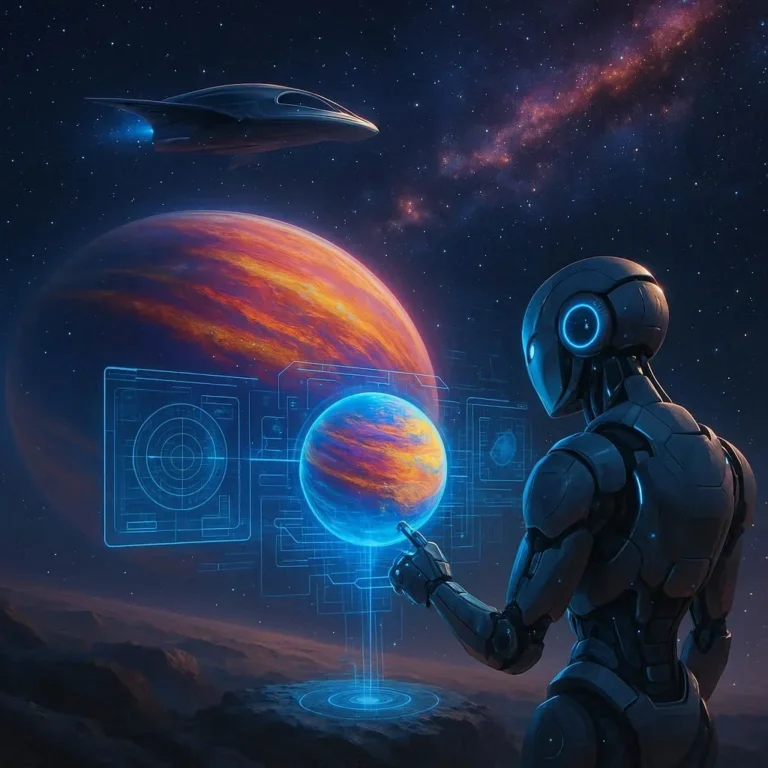
AI-Assisted Space Radiation Monitoring
Space missions, whether they traverse the International Space Station or plan ambitious journeys to Mars, are constantly under threat from high‑energy particles that permeate the cosmos. NASA’s NASA and ESA’s ESA missions have underscored the critical need for real‑time radiation awareness. AI‑Assisted Space Radiation Monitoring has emerged as a transformative field, marrying cutting‑edge artificial intelligence with traditional detector data to deliver rapid, actionable insights for astronauts and automation systems alike.
Why Space Radiation Matters
Space radiation is a complex cocktail of galactic cosmic rays (GCRs), solar particle events (SPEs), and high‑energy protons and heavy ions from the Sun. While Earth’s magnetic field provides a protective shield for our planet, spacecraft crisscross regions of open space where this protective bubble weakens or disappears. The Space Radiation effects on human health include increased cancer risk, central nervous system damage, and acute radiation sickness for prolonged exposure. For equipment, high‑energy particles can degrade semiconductors, corrupt memory, and shorten electronics lifetime. Accurate monitoring and forecasting are therefore non‑negotiable for mission safety and expense mitigation.
AI Tools Transforming Monitoring
Historically, radiation monitoring relied heavily on onboard passive detectors and post‑mission data analysis. With the advent of machine learning and cloud analytics, these detectors can now be augmented with AI models that process raw telemetry in near real time.
- Neural networks trained on labeled event catalogs identify subtle patterns in detector triggers, distinguishing between solar flares, background noise, and high‑energy particle showers.
- Reinforcement learning supports adaptive shielding rigs that can reconfigure active magnetic fields based on predicted particle flux.
- Anomaly detection algorithms flag deviations in detector output that may indicate component failure or emergent radiation phenomena.
- Ensemble forecasting models aggregate predictions from multiple data streams, including solar wind indicators from the NOAA space weather monitoring network.
These AI systems are now integrated into platforms such as NASA’s Radiation Assessment Detector (RAD) telemetry stream, vastly improving latency from hours to seconds. The benefits are multi‑faceted: higher prediction accuracy reduces unnecessary protective actions, and real‑time alerts empower crew to adjust experimental schedules or EVA timing.
Key AI Techniques and Models
1. Convolutional Neural Networks (CNNs) are employed to classify particle energy deposition patterns across detector arrays, providing distinctions between ion species that traditional algorithms cannot resolve in less than a minute. 2. Long Short‑Term Memory (LSTM) networks forecast solar burst likelihood by ingesting satellite‑borne magnetometer data coupled with solar imaging. 3. Generative Adversarial Networks (GANs) create synthetic training datasets to overcome the scarcity of labeled high‑energy event data, enhancing model robustness. 4. Bayesian inference frameworks quantify confidence levels of radiation risk assessments, informing decision makers about potential protective measures with quantified uncertainties.
Open‑source collaborations—such as the MIT Space Radiation Modelling Project—have made these algorithms available to the scientific community, fostering peer validation and iterative improvement. The merging of AI with domain expertise from radiation physicists ensures that model outputs remain grounded in solid physical principles while delivering the speed required for operational contexts.
Future Outlook and Collaboration
The upcoming commercial crewed missions and lunar exploration programmatic plans are demanding higher autonomy in space habitats. AI‑Assisted Space Radiation Monitoring will play a pivotal role, promoting resilient, self‑healing systems that can maintain radiation shielding thresholds without manual intervention. Continued collaboration between space agencies, academia, and industry will push the boundaries of sensor technologies, such as polymer‑based dosimeters and nanoscale sensor arrays, which feed increasingly granular data into AI pipelines.
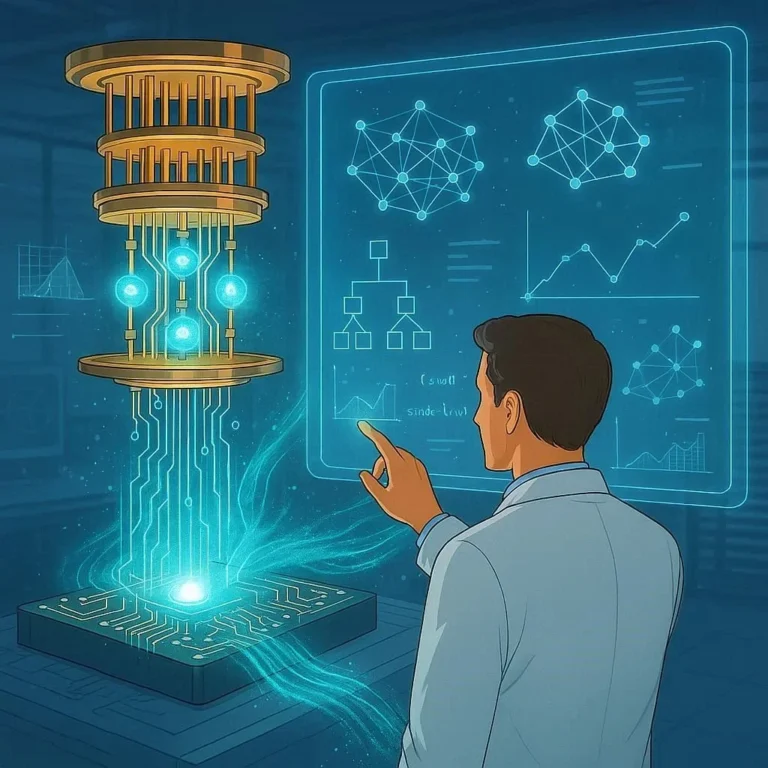
Integration of quantum computing approaches for high‑dimensional space weather simulations is on the horizon. While still in preliminary stages, quantum algorithms could vastly accelerate predictive modeling, potentially offering next‑generation accuracy for radiation forecasting and risk mitigation.
Conclusion and Call to Action
AI‑Assisted Space Radiation Monitoring exemplifies how intelligent algorithms can transform a once reactive safety net into a proactive shield for both humans and technology. By fusing native detector data with AI-driven analytics, future missions can navigate the high‑energy environment of space with confidence, reducing risk, lower operational costs, and extending mission lifetime. The synergy between space agencies like NASA, Europe’s ESA, and academic innovators heralds a new era of autonomous hazard management in orbit.
Frequently Asked Questions
Q1. What is AI‑Assisted Space Radiation Monitoring?
AI‑Assisted Space Radiation Monitoring combines onboard particle detectors with machine‑learning models to provide instant, data‑driven assessments of space‑weather conditions. It transforms static telemetry into actionable intelligence that can be fed directly into habitat control systems or used by astronauts to plan safe activities. By analyzing detector patterns with neural networks, the system differentiates between harmless background noise and dangerous solar events. This proactive approach dramatically reduces the risk of radiation exposure for both crew and equipment.
Q2. How does AI improve real‑time radiation detection?
Traditional monitoring relies on slow post‑processing of detector counts, often leaving crews hours to react. AI algorithms, especially CNNs and LSTMs, process raw telemetry streams in milliseconds, spotting subtle signatures of solar flares or cosmic ray showers. Reinforcement‑learning controllers can also adjust active shielding or visor angles on the fly based on these predictions. The result is a near‑real‑time safeguard that keeps environmental threats in check before they become hazardous.
Q3. Which AI techniques are most common in this field?
Convolutional Neural Networks classify energy deposition patterns across detector arrays, while LSTMs forecast solar burst probabilities from time‑series data. Generative Adversarial Networks extend training sets by synthesizing realistic particle events, addressing data scarcity. Bayesian inference layers quantify uncertainty, giving risk scores to decision makers. Ensemble models blend outputs from multiple detectors and space‑weather feeds for greater robustness.
Q4. What benefits do these systems bring to crew and mission operations?
By reducing false alarms, astronauts can schedule EVAs and scientific experiments with confidence, saving valuable time. Real‑time alerts allow habitat systems to activate shielding or adjust power loads automatically, extending mission longevity. Crew health monitoring gains higher precision, minimizing long‑term cancer risks. Operational costs decline as unnecessary protective measures are curtailed, and mission budgets benefit from increased resilience.
Q5. How can stakeholders get involved?
Space agencies can partner with universities to validate new AI models on live telemetry. Technology firms may contribute sensor innovations and edge‑compute hardware. Funding bodies can support joint consortia that open source data and algorithms, accelerating iterative improvement. Contact experts at spaceAI.com to explore tailored integration for your next mission.
Related Articles

100+ Science Experiments for Kids
Activities to Learn Physics, Chemistry and Biology at Home
Buy now on Amazon
Advanced AI for Kids
Learn Artificial Intelligence, Machine Learning, Robotics, and Future Technology in a Simple Way...Explore Science with Fun Activities.
Buy Now on Amazon
Easy Math for Kids
Fun and Simple Ways to Learn Numbers, Addition, Subtraction, Multiplication and Division for Ages 6-10 years.
Buy Now on Amazon