Big Bang Simulation Explained
Our quest to understand the cosmos has pushed scientists to recreate the universe’s earliest moments—an event commonly known as the Big Bang. By simulating this primordial fireball, researchers can test theories, sift through vast data, and glimpse the genesis of space, time, and matter. This article explores the methods, tools, and discoveries that bring the Big Bang into the laboratory, while highlighting how simulations help us piece together the universe’s complex tapestry. The simulations not only confirm existing models but also propose new physics that may reshape our view of reality.
How Scientists Recreate the Primordial Fireball
In the laboratory, simulating the Big Bang involves recreating conditions of extreme temperature and density that existed microseconds after the universe’s birth. This is achieved by colliding heavy ions, such as gold or lead nuclei, at near‑light speed inside powerful cyclotrons or the Large Hadron Collider (LHC). The collision generates tiny pockets of quark‑gluon plasma, a state of matter the universe likely held for a fleeting instant. Researchers monitor the plasma’s evolution with sophisticated detectors, interpreting the particle flow to back‑track the universe’s early state. By observing how particles emerge and interact, scientists can verify the predictions of quantum chromodynamics and relativistic hydrodynamics.
The Physics Behind Big Bang Simulations
Two fundamental principles underpin Big Bang simulations: thermodynamics and the Standard Model of particle physics. Thermodynamics ensures that energy and entropy govern the evolution of the expanding system, while the Standard Model explains the interactions among quarks, leptons, bosons, and the Higgs field. Together, these frameworks allow computational physicists to predict how the universe’s temperature dropped from above 1012 Kelvin to the more familiar 300 K as it expanded. Theoretical models include the Friedmann equations, which connect cosmic expansion to energy density. Advanced hydrodynamic codes, such as VISHNU and MUSIC, solve these equations numerically, enabling simulations that match experimental data with remarkable precision.
Key Technologies: Particle Accelerators and Quantum Computers
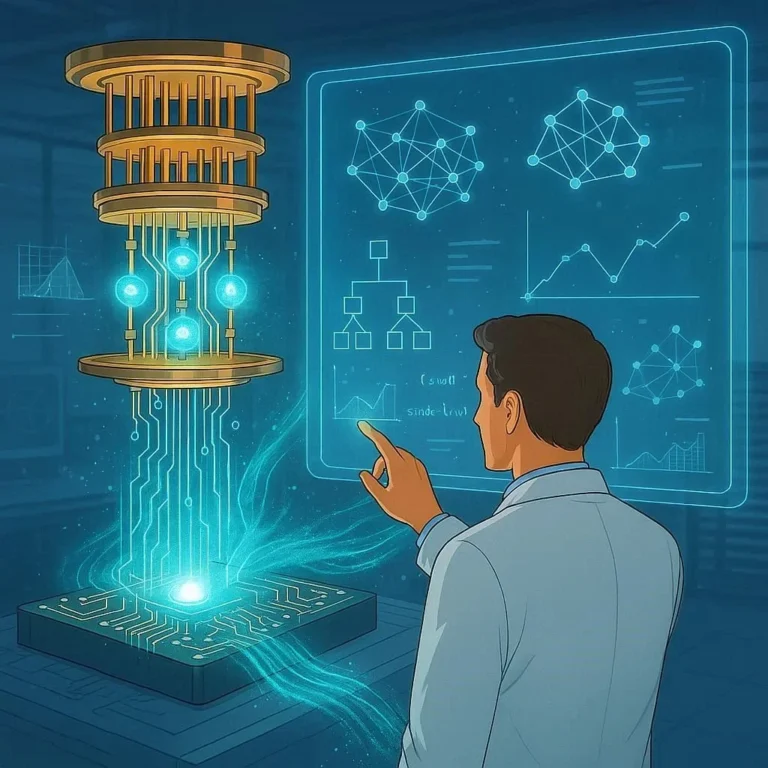
Simulation fidelity depends on both experimental hardware and computational capability. Particle accelerators like the LHC provide the extreme energy needed to produce quark‑gluon plasma. Meanwhile, quantum computers promise to tackle the complex many‑body problem with exponential efficiency. These machines can simulate lattice gauge theories that were previously infeasible with classical computing. For example, researchers at the University of Oxford and the Los Alamos National Laboratory collaborate on quantum algorithms that model the early universe’s evolution. The convergence of accelerator physics and quantum computing heralds a new era, where theoretical predictions and empirical data intertwine more tightly than ever before.
Interpreting Simulation Results: From Pixels to Reality
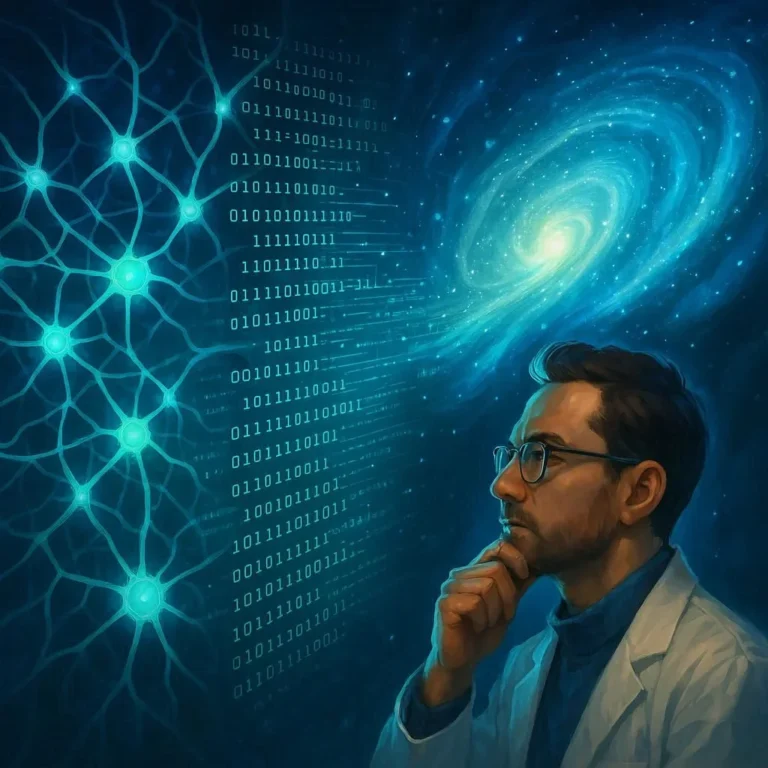
Data from collider experiments arrive as thousands of binary digits, reflecting particle tracks, energy deposits, and time stamps. Scientists use statistical tools to reconstruct the event history, forming visual “images” of the fleeting quark‑gluon plasma. These images reveal flow patterns that mirror fluid dynamics at microscopic scales. By comparing these patterns with simulation outputs, researchers refine their models. For instance, the elliptic flow coefficient v2 serves as a sensitive probe of the viscous properties of the plasma—a key parameter that helps constrain the shear‑to‑entropy ratio. Such comparisons ensure that the simulation accurately captures the essential physics of the early universe.
Conclusion: Harnessing Simulations to Navigate Cosmic Mysteries
The field of Big Bang simulation is a testament to human curiosity and ingenuity. By bridging vast scales—from quarks to galaxies—researchers can test the very foundation of modern cosmology. As computational power increases and new collider experiments come online, simulations will sharpen our picture of the universe’s birth. Engage with our community, explore the latest simulation results, and help us keep the quest for cosmic truth alive.
Frequently Asked Questions
Q1. How does a particle collision mimic the Big Bang?
In high‑energy collisions, such as those at the LHC, heavy ions are accelerated to speeds near the speed of light, causing them to smash together and create a fireball of quark‑gluon plasma. This minute system briefly exhibits conditions of extreme temperature and density, mirroring the universe a few microseconds after the Big Bang.
Q2. What role do quantum computers play in these simulations?
Quantum computers can handle complex many‑body interactions that classical computers struggle with. By simulating lattice gauge theories and quantum chromodynamics on quantum hardware, scientists can explore early‑universe physics with higher precision and reduced computational cost.
Q3. Why is the shear‑to‑entropy ratio important?
This ratio measures how “perfect” the quark‑gluon plasma behaves as a fluid. A lower ratio indicates a fluid that flows with minimal resistance, providing insights into fundamental hydrodynamic properties that shaped the early cosmos.
Q4. How do researchers validate their simulation models?
They compare simulated observables—such as particle spectra, flow coefficients, and jet quenching—to experimental measurements taken by detectors like ALICE and CMS. Consistency across multiple benchmarks signals a reliable model.
Q5. Where can I learn more about the experiments mentioned?
Visit the official CERN website or consult academic publications in journals like Physical Review Letters and Nature Physics. These resources provide in‑depth descriptions of the experimental setups and results.
Related Articles

100+ Science Experiments for Kids
Activities to Learn Physics, Chemistry and Biology at Home
Buy now on Amazon
Advanced AI for Kids
Learn Artificial Intelligence, Machine Learning, Robotics, and Future Technology in a Simple Way...Explore Science with Fun Activities.
Buy Now on Amazon
Easy Math for Kids
Fun and Simple Ways to Learn Numbers, Addition, Subtraction, Multiplication and Division for Ages 6-10 years.
Buy Now on Amazon