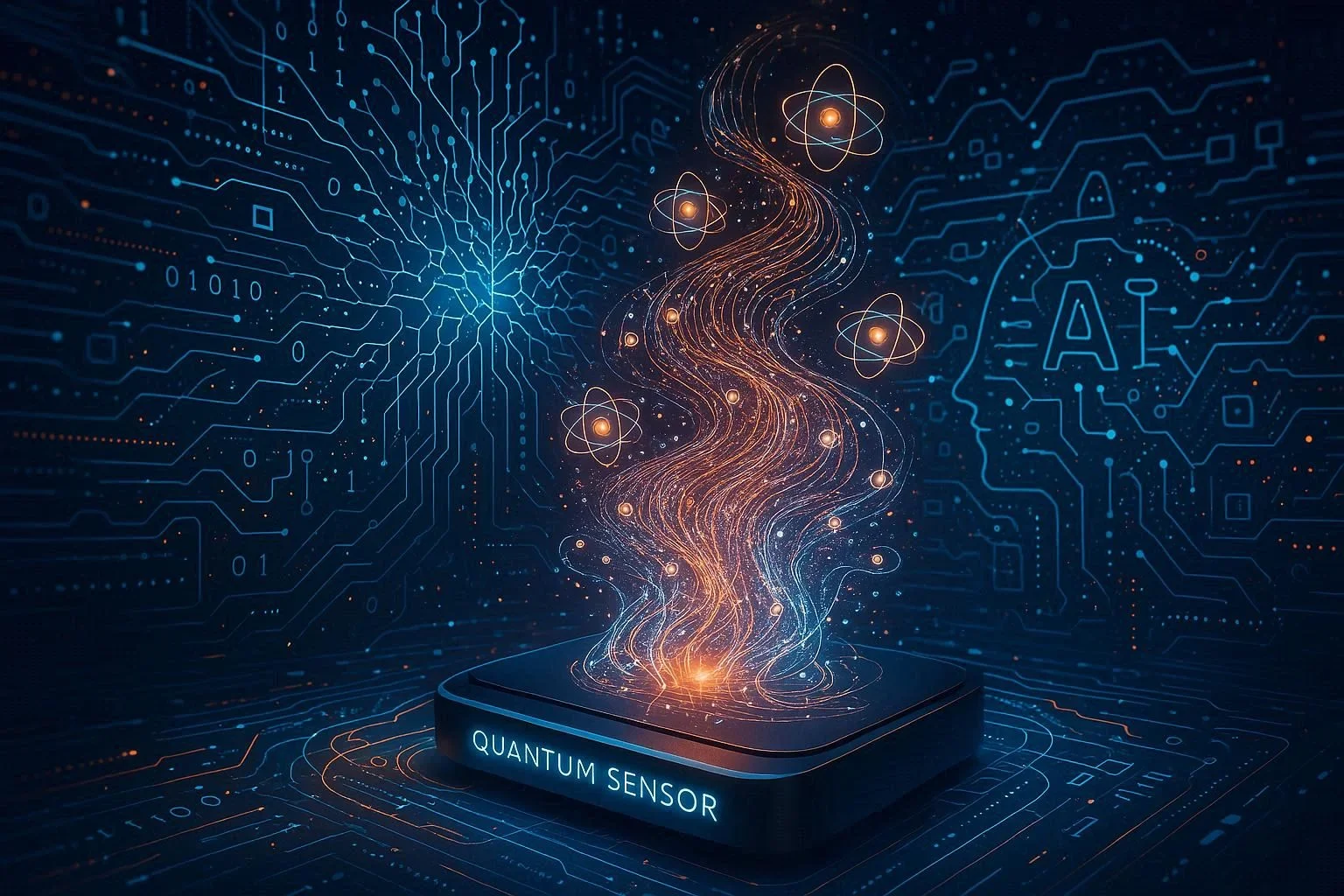
Quantum Key Distribution Enhances Space
Quantum Key Distribution (QKD) is reshaping the way we secure communications across the vacuum of space. Unlike classical methods that rely on mathematical complexity, QKD leverages the fundamental principles of quantum mechanics to guarantee that any attempt to intercept a key will be instantly detected. In the context of orbiting satellites and deep‑space probes, the technology offers an unprecedented level of defense against eavesdropping and cyber‑theft. As nations expand their fleet of space‑based assets, the technology is emerging as a cornerstone of resilient, nation‑grade security infrastructure.
Quantum Key Distribution in Satellite Links
The first demonstration of QKD between a satellite and Earth occurred in 2016 with China’s Micius spacecraft, a milestone that proved the feasibility of entanglement‑based key exchange over thousands of kilometers. NASA’s upcoming Spaceborne QKD experiment follows this trail, promising a joint international effort to test multi‑node photon distribution. The core idea is simple: two parties exchange single photons that encode quantum bits (qubits); any measurement by an eavesdropper collapses the wave function and leaves a detectable error signature. The result is a shared secret key that can be used to encrypt SATCOM transmissions in real time.
Leveraging Photonic Technologies for Space
Space QKD relies on highly efficient, low‑background photon sources such as quantum‑dot LEDs and laser diodes, combined with adaptive optics for beam steering. The recent optical‑relay study shows that quantum beams can be multiplexed with classical data over the same fibre, enabling long‑haul secure links from ground stations to satellites. Photonic detectors on orbit, especially superconducting nanowire single‑photon detectors (SNSPDs), have high detection efficiency and low dark count rates even in the harsh radiation environment. Together, these advances allow global continuous coverage, a feature that traditional encryption struggles to match.
Strengthening Military and Diplomatic Ties through Quantum Security
High‑value military communication networks—such as those used by the U.S. Army’s Secure Internet Protocol Suite—already employ asymmetric cryptography. Adding QKD provides an information‑theoretic layer, guaranteeing that intercepted keys cannot be reconstructed even with unlimited computing power. For diplomatic missions, quantum‑secured links mitigate the risk of data leaks that could destabilize fragile negotiations. According to the latest IEEE report, integrated QKD can reduce the cyber‑threat lifecycle for space‑borne assets by up to 70 %.
Challenges for Deployment Beyond Low Earth Orbit
- Signal attenuation grows exponentially with distance, limiting current QKD to Low Earth Orbit (LEO) and near‑space platforms.
- Constellation geometry requires precise timing; orbital perturbations can introduce jitter that disrupts qubit alignment.
- Photon loss from atmospheric turbulence necessitates higher power budgets and robust error‑correction protocols.
- Regulatory frameworks for quantum‑secure links across national borders remain under development.
Overcoming these obstacles demands a combination of hardware miniaturization, improved error‑correction codes (e.g., low‑density parity‑check), and international policy coordination. Research institutions such as MIT’s Quantum Research Observatory for All are testing space‑qualified entanglement sources that could enable deep‑space QKD within the next decade.
Future Directions: Quantum‑Secure Space‑Based Networks
Once orbital QKD’s hurdles are addressed, the vision is a global, inter‑satellite quantum network that anchors terrestrial, maritime, and aerial communications. In such a network, keys generated on one satellite can be transmitted via quantum links to any node, enabling real‑time encryption for vehicle fleets, shipping lanes, and emergency response units. The modularity of satellite infrastructures also makes it feasible to integrate QKD payloads into existing commercial constellations, offering a cost‑effective pathway to widespread adoption.
Industry players are already partnering with space agencies to prototype “plug‑and‑play” QKD modules. A joint announcement by ESA and a leading photonics company in 2024 outlined a prototype satellite capable of modeling quantum keys for more than 500 ground terminals daily. Such milestones could transform the perceived threat model for adversaries—shifting focus from software exploits to fundamental physics.
Conclusion: Quantum Key Distribution as the New Frontier in Space Security
Quantum Key Distribution is no longer a laboratory curiosity; it has become an essential asset for safeguarding the next generation of satellite and space‑borne systems. By marrying the immutable laws of quantum mechanics with cutting‑edge photonic engineering, QKD delivers a level of assurance that classical encryption simply cannot match. For governments, defense organizations, and commercial space operators, integrating QKD into satellite constellations now is both an opportunity and a strategic imperative.
Take Action: If your organization operates or plans to operate space‑based assets, explore quantum‑secure solutions today. Contact our experts to evaluate your current satellite communications portfolio and design a roadmap for QKD deployment. Together, we can build a future where data transmitted across the sky remains truly unbreakable.
Frequently Asked Questions
Q1. What is Quantum Key Distribution?
Quantum Key Distribution (QKD) uses the principles of quantum mechanics to share encryption keys between two parties. By transmitting single photons that encode qubits, any attempt to observe the exchange disturbs the system, revealing eavesdropping. The resulting key is established directly on the quantum channel and is guaranteed to be secure against powerful future computers. This physical layer of security complements conventional cryptographic protocols. QKD therefore provides an information‑theoretic basis for encryption.
Q2. How does QKD enhance satellite security?
In satellite links, QKD can generate fresh encryption keys in real time as photons travel between orbit and ground. The key exchange is immune to interception because any measurement alters the photon state, producing a detectable error signature. This capability mitigates the risk of data leaks from compromised software or side‑channel attacks common in spaceborne systems. Additionally, QKD can be integrated with existing satellite communication protocols without major redesign, enabling seamless secure links for military, diplomatic, and commercial missions. Thus, QKD strengthens the overall security posture of space assets.
Q3. What are the main challenges for QKD beyond Low Earth Orbit?
Signal attenuation increases exponentially with distance, limiting current QKD to LEO and near‑space platforms. Precise timing and orbital dynamics cause jitter that can destabilize qubit alignment, requiring advanced synchronization techniques. Atmospheric turbulence introduces photon loss, demanding higher power budgets and multiplexed error‑correction codes such as LDPC. Furthermore, regulatory frameworks are still under development, making cross‑border quantum links legally complex. Addressing these issues requires hardware miniaturization, robust detectors, and international policy coordination.
Q4. Can QKD be integrated into existing commercial satellite constellations?
Yes, modular QKD payloads can be added to current constellations with minimal mass and power impact. Telecommunication satellites can host quantum transmitters or receivers that share keys with ground stations or other satellites. Recent prototypes demonstrate that such modules can be “plug‑and‑play,” reducing development time and cost. Integration also leverages existing radiocommunication infrastructure for classical data, allowing hybrid quantum‑classical channels. As a result, commercial operators can adopt safe, scalable quantum security without overhauling flight hardware.
Q5. Who are the leading players in space QKD today?
China’s Micius satellite pioneered the first successful satellite QKD, followed by NASA’s Spaceborne QKD experiment. ESA has launched initiatives to explore inter‑satellite quantum links. Quantum industry leaders include Quantinuum, Microsoft, and companies like ID Quantique offer field‑deployed QKD kits. Academic collaborations, such as MIT’s Quantum Research Observatory, build next‑generation entanglement sources. These organizations collectively drive the technological, commercial, and policy aspects of space QKD.
Related Articles

100+ Science Experiments for Kids
Activities to Learn Physics, Chemistry and Biology at Home
Buy now on Amazon
Advanced AI for Kids
Learn Artificial Intelligence, Machine Learning, Robotics, and Future Technology in a Simple Way...Explore Science with Fun Activities.
Buy Now on Amazon
Easy Math for Kids
Fun and Simple Ways to Learn Numbers, Addition, Subtraction, Multiplication and Division for Ages 6-10 years.
Buy Now on Amazon