Race to Quantum Computers
The race to build quantum computers has become a defining narrative of the 21st‑century technological revolution. From government‑backed laboratories in Washington to corporate innovation hubs in Silicon Valley, every player is racing to harness the strange powers of quantum mechanics—superposition, entanglement, and tunneling—to transcend classical computing limits. The promise of quantum advantage—solving certain problems exponentially faster than today’s best supercomputers—has spurred a global surge in research, investment, and collaboration. Yet the road to fully functional, error‑corrected quantum machines is fraught with engineering obstacles that demand ingenuity, interdisciplinary teamwork, and a sharp financial pulse. Understanding where the industry stands today and where it might head next is essential for businesses, policymakers, and curious minds alike.
Hardware Foundations: Superconducting Qubits and Trapped Ions
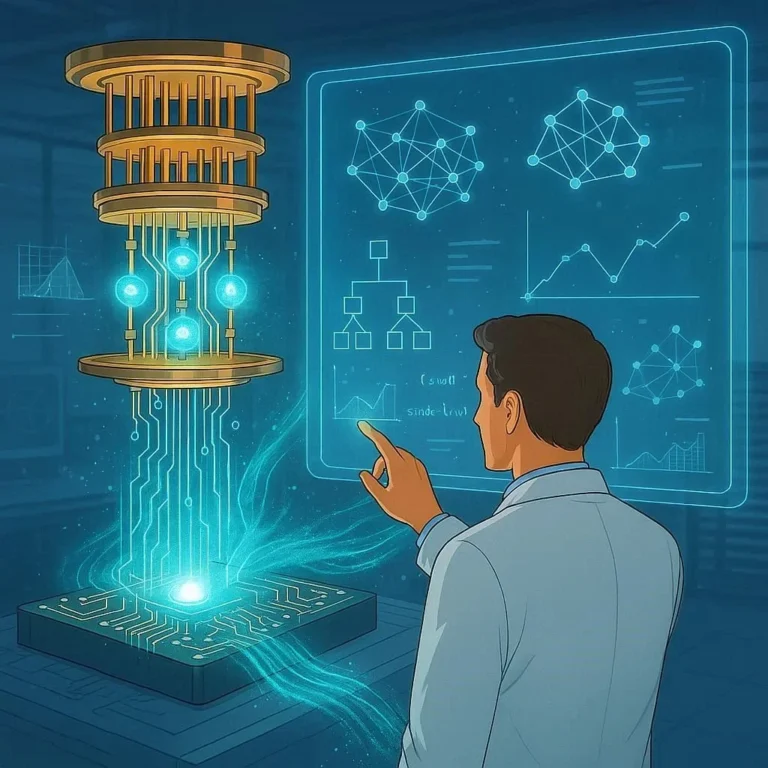
Two dominant architectures are currently vying for supremacy in the hardware arena: superconducting qubits, pioneered by IBM, Google, and Rigetti, and trapped‑ion systems, championed by IonQ, Honeywell, and academic groups worldwide.
Superconducting qubits benefit from rapid fabrication techniques drawn from semiconductor production, offering scalability to the thousands‑qubit regime. However, they are highly sensitive to thermal and electromagnetic noise, necessitating dilution refrigerators operating at millikelvin temperatures. In contrast, trapped ions employ individual atoms captured in electromagnetic fields, delivering exceptional coherence times and high‑fidelity gate operations. The chief challenge for ions lies in scaling the optical control infrastructure while maintaining precise laser alignment across hundreds of particles.
Industry releases suggest that a 300‑qubit superconducting machine could be commercially available by 2027, whereas a comparable ion‑based system might lag behind due to its complex optical architecture but keep its edge in fault tolerance. Ultimately, hybrid designs may marry the density of superconductors with the coherence of ions, pushing the frontier faster.
Roadmap to Quantum Advantage
Achieving quantum advantage—the point at which quantum processors outperform classical counterparts for a real‐world task—requires a clear, stepwise development cycle. The following milestones outline the path most teams are pursuing:
- Noise‑free gate operations: Achieve single‑qubit error rates below 0.1% and two‑qubit errors under 1%.
- Surface code implementation: Deploy quantum error‑correcting codes to protect logical qubits from environmental noise.
- Algorithmic mapping: Translate advanced quantum algorithms such as Shor’s factoring or variational quantum eigensolvers into hardware‑efficient circuits.
- Benchmarking on industrial workloads: Demonstrate cost advantage on cryptography, logistics, or drug discovery cases.
Major news from 2020–2024 shows progress on each stage: Google’s 53‑qubit Sycamore chip, IBM’s 127‑qubit Eagle, and QuantumScape’s superconducting qubit prototype—all sorting toward the first two benchmarks. The final steps involve scaling logical qubits while mitigating cross‑talk—a challenge still approaching full solution.
Global Competitive Landscape
Countries invest heavily in the quantum race, recognizing its implications for national security, industry, and scientific discovery. The U.S., China, the European Union, and Japan have each announced strategic plans.
- U.S. Department of Energy’s National Quantum Initiative (NQI) budgeted $50 million for foundational research in 2021.
- China’s “Quantum Century” policy earmarked $9 billion for quantum platforms by 2030.
- The EU’s Quantum Flagship aims to produce a 1,000‑qubit system within eight years.
- Japan’s Quantum Technology Initiative focuses on quantum‐secure communications networks.
Industry partnerships such as the Quantum Information Science and Technology (QIST) alliance in Europe—composed of companies like Airbus and Schneider Electric—illustrate how business ecosystems can accelerate the commercial roadmap. These collaborations provide shared infrastructure, data‑sharing protocols, and joint funding models that mitigate individual risk.
Future Horizons: Quantum‑Safe Cryptography and AI Synergy
Beyond raw computing power, quantum devices are reshaping adjacent fields. Quantum‑secure cryptography offers unbreakable encryption protocols that outpace classical brute‑force attacks, essential for protecting sensitive financial, governmental, and personal data. The National Institute of Standards and Technology (NIST) is currently standardizing Post‑Quantum Cryptography (PQC) to support the transition for the next generation of digital infrastructure.
Artificial intelligence (AI) is also poised to spill over into the quantum domain. Quantum machine learning (QML) leverages qubit superpositions to perform linear algebra operations—core to many AI pipelines—faster than conventional processors. Early demonstrations, such as variational classifiers optimized on quantum hardware, hint at breakthroughs in real‑time image recognition and natural language processing once the hardware reaches scale.
Scientific modeling stands to benefit dramatically; quantum simulations can directly emulate molecular systems, informing drug design and materials science. For instance, the IBM Quantum team’s “Hydrogen‑Molecule Computation” reduced the energetic error ceiling from 0.03 kJ/mol to 0.004 kJ/mol—an unprecedented leap for pharmaceutical chemistry.
Strong Conclusion and Call to Action
As quantum computers emerge from nascent prototype status to industrial relevance, the stakes for economic, national, and scientific dominance are higher than ever. Stakeholders—from corporate CTOs to policy makers—must remain informed about the evolving hardware, software, and ecosystem capabilities. Investing in quantum literacy, building cross‑disciplinary talent pipelines, and supporting open‑source frameworks will secure a competitive edge in the imminent quantum economy.
For deeper dives, see the authoritative resources: Wikipedia: Quantum Computing, NASA Quantum Exploration, NIST Quantum Information Science, IBM Quantum, and Google Quantum Supremacy Paper.
Frequently Asked Questions
Q1. What is a quantum computer?
A quantum computer uses quantum bits (qubits) that can exist in multiple states simultaneously, enabling it to solve certain problems faster than classical computers. The fundamental principles are superposition, entanglement, and quantum tunneling. By leveraging these effects, quantum processors can perform parallel computations that would be infeasible for classical machines.
Q2. How close are we to quantum advantage?
Current milestones show that Google’s Sycamore and IBM’s Eagle are approaching the first two benchmarks needed for quantum advantage. Yet fully error‑corrected, large‑scale machines are still a few years away. Researchers aim to reach this milestone within the next decade while addressing the challenges of noise, error correction, and scaling.
Q3. Which technology leads in scaling qubits?
Superconducting qubits are the most advanced in scaling to thousands of qubits thanks to mature fabrication techniques. Trapped‑ion systems, while offering longer coherence times, face challenges in optical control scalability. Hybrid designs are under investigation to merge the benefits of both.
Q4. What are the main applications of quantum computing?
Key areas include drug discovery, materials science, cryptography, logistics optimization, and artificial intelligence. Quantum‑safe cryptography will protect data once quantum‑based attacks become feasible. Quantum machine learning may accelerate AI operations by performing linear algebra faster than classical hardware.
Q5. How can businesses start preparing for a quantum future?
Start by building quantum literacy programs, investing in interdisciplinary talent, and participating in open‑source quantum software. Engaging with cloud quantum services provides early access to real processors and helps laboratories develop quantum algorithms. Remaining informed on the roadmap ensures a strategic advantage when commercially relevant machines launch.
Related Articles

100+ Science Experiments for Kids
Activities to Learn Physics, Chemistry and Biology at Home
Buy now on Amazon
Advanced AI for Kids
Learn Artificial Intelligence, Machine Learning, Robotics, and Future Technology in a Simple Way...Explore Science with Fun Activities.
Buy Now on Amazon
Easy Math for Kids
Fun and Simple Ways to Learn Numbers, Addition, Subtraction, Multiplication and Division for Ages 6-10 years.
Buy Now on Amazon