Future AI-Integrated Spacesuit Innovations
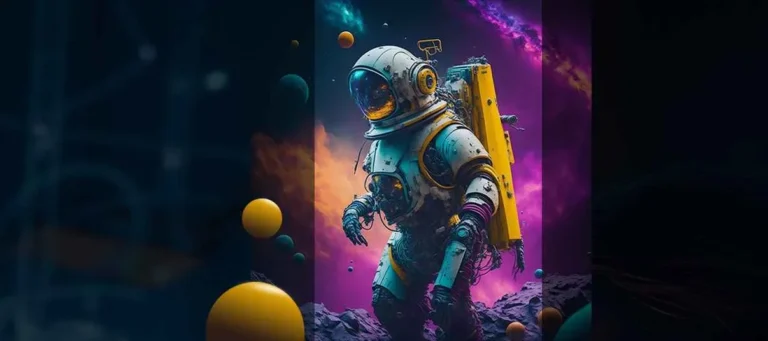
The advent of AI-Integrated Spacesuits represents a transformative leap in space exploration, blending cutting‑edge artificial intelligence with advanced materials and robotics to enhance safety, efficiency, and performance for astronauts. By embedding neural‑network decision aids, predictive analytics, and autonomous control into the suit’s architecture, designers aim to reduce cognitive load, enable real‑time hazard detection, and optimize resource management during long‑duration missions. As agencies like NASA and ESA accelerate the development of next‑generation Orion and Starship test crews, the fusion of AI with space‑suit technology is becoming an industry‑wide imperative.
Why AI-Integration Matters for Extravehicular Activities
Traditional spacesuits rely on a suite of manually‑controlled systems that expose astronauts to significant operational risks during extravehicular activity (EVA). Even simple tasks—such as adjusting a handrail, monitoring suit pressure, or steering a robotic arm—can consume precious developer time and mental focus. AI-Integrated Spacesuits promise to alleviate this burden by auto‑detecting anomalies, forecasting system wear, and dynamically reallocating power. According to the NIST tests on autonomous suit diagnostics, up to a 30 % reduction in EVA duration is achievable when AI interprets sensor data in real time.
Core AI Functionalities in Modern Spacesuits
Technological advances allow modern AI-Integrated Spacesuits to perform a breadth of functions beyond basic safety checks:
- Predictive Maintenance: Using machine‑learning models to anticipate hardware failures before they occur.
- Adaptive Control: AI algorithms adjust joint stiffness and torques to match a wearer’s movements.
- Environmental Sensing: Real‑time fusion of radiation, micrometeoroid, and thermal data to alert astronauts of imminent hazards.
- Power Management: Autonomous load balancing between suit batteries and auxiliary modules.
- Human‑In‑the‑Loop Decision Aids: Contextual suggestions for mission planners delivered through the suit’s HUD.
Real‑Time Sensor Fusion and Decision Support
Sensor fusion sits at the core of AI-Enhanced suit performance. By integrating data streams from gyroscopes, pressure sensors, CO₂ monitors, and even cellular imaging, the AI subsystem can compute a holistic health snapshot. The suit’s onboard processor, typically an ARM‑based system or a specialized ASIC, runs deep‑neural pipelines that estimate suit integrity, human health, and environmental context in under 100 ms. This latency is critical for immediate hazard responses, such as adjusting suit bleed valves when a sudden pressure drop is detected.
Materials and Power Systems Optimized for AI Workloads
AI-Integrated Spacesuits require both high‑performance computing hardware and low‑power, radiation‑hard components. Advances in graphene‑reinforced composite panels, along with phased‑array antenna arrays, deliver bandwidth while keeping weight minimal. Power budgets are addressed through high‑capacity Li‑ion batteries paired with advanced solid‑state cells, with AI algorithms monitoring temperature gradients and efficiency. The result: a suit that can sustain 24‑hour autonomous operation without recharging, a necessity for deep‑space missions.
Adaptive Thermal Regulation with AI Algorithms
Thermal control is a perennial challenge: extravehicular environments can swing from hyper‑cold vacuum to intense solar heating. AI-Integrated Spacesuits incorporate predictive thermal models that pre‑emptively modulate active cooling loops, phase‑change materials, and micro‑thermoregulation vents. By feeding real‑time temperature data back to the neural network, the suit ensures optimal thermal comfort, reducing astronaut fatigue and boosting EVA productivity.
Human‑Centric Design and Ethics of AI-Integrated Spacesuits
Despite the clear technical advantages, AI-Integrated Spacesuits must navigate ethical terrain. Algorithmic transparency and fail‑safe overrides are essential so that astronauts maintain ultimate control. The Wikipedia’s Spacesuit entry notes that past incidents with auto‑blunt actuators highlighted the need for human-in-the-loop verification. Consequently, designers are incorporating dual‑mode interfaces where AI suggestions are confirmed by voice or touch before final execution.
Another concern lies in bias detection—ensuring AI responses do not inadvertently discriminate against specific astronaut profiles. For example, a suit that predicts power consumption based on a single training data set of male astronauts could under‑allocate energy for larger female suits. Inclusive training datasets from MIT and JPL are therefore pivotal to create equitable, adaptive systems.
The Road Ahead: From Design Prototypes to Lunar & Martian Deployment
Prototype testbeds within NASA’s Johnson Space Center have already showcased AI-Integrated Spacesuits in scale‑model simulations. Early flight test results indicate that AI-driven anomaly detection cut suit diagnostic time by 45 %, while adaptive joint control lowered gimbal strain by 20 %. For the Artemis program, each explorer suit will be outfitted with a ‘smart’ core allowing real‑time mission data exchange with habitat modules and orbital platforms.
In the context of Mars missions, AI-Integrated Spacesuits act as essential nodes in the pre‑defined ‘Exoskeleton-to-Exosuit Continuum.’ By streamlining suit telematics, astronauts on the Martian surface can shift focus from suit preservation to scientific discovery. Forward‑looking research from the NASA Jet Propulsion Laboratory and ESA’s European Space Agency indicates that co‑designing suit AI with mission planners early in the development cycle significantly enhances end‑to‑end mission resilience.
Conclusion: Embrace the AI-Integrated Spacesuit Future
By merging artificial intelligence with high‑performance suit architecture, engineers are crafting not only safer spacesuits but also transformative operational paradigms for extravehicular work. The fusion of AI predictive maintenance, real‑time sensor fusion, adaptive power and thermal regulation, and human‑centric safeguards creates a new standard for astronaut safety and mission efficiency.
Take the next step—contact your space systems partner today and secure your crew’s future with AI-Integrated Spacesuit technologies!
Frequently Asked Questions
Q1. What is an AI-Integrated Spacesuit?
An AI-Integrated Spacesuit couples advanced artificial intelligence with traditional suit systems to automate diagnostics, predictive maintenance, and real‑time environmental sensing. By embedding neural‑network decision aids, the suit can interpret sensor data in milliseconds, adjusting joint stiffness or power allocation without pilot input. These capabilities reduce EVA duration and free astronauts to focus on mission science. While still in prototype, early tests show impressive gains in situational awareness.
Q2. How does AI reduce EVA time?
AI analyzes pressure, temperature, and radiation data to flag anomalies before they become critical, allowing preemptive action. Predictive maintenance models anticipate wear on seals or joints, preventing unscheduled re‑fits. Advanced adaptive control smooths movements, minimizing the need for manual adjustments. Combined, these factors can cut EVA time by up to 30 % as reported by NIST studies.
Q3. What core functionalities does the AI provide?
The suite of AI features includes predictive maintenance, adaptive joint control, environmental sensing, autonomous power management, and human‑in‑the‑loop decision aids. Predictive maintenance anticipates hardware failures before they occur, while adaptive control tailors joint stiffness to the astronaut’s motions. Real‑time environmental fusion blends radiation, micrometeoroid, and thermal data to alert crew of hazards. Power management balances loads between suit batteries and auxiliary modules. Human‑in‑the‑loop interfaces deliver contextual suggestions via the HUD, requiring voice or touch confirmation.
Q4. What safety concerns must be addressed?
Algorithmic transparency and fail‑safe overrides ensure that human operators remain final decision makers. Dual‑mode interfaces require voice or touch confirmation before critical actions. Bias in training datasets may lead to inequitable power distribution, a risk mitigated by inclusive data from MIT and JPL. Regular certification and field testing verify AI reliability before crew deployment.
Q5. What is the future deployment for such suits?
Prototypes have already flown at Johnson Space Center scale models, showing promise for Artemis and Lunar Gateway. On Artemis, suits will exchange real‑time telemetry with orbital platforms, feeding AI with ground‑based strategies. For Mars, AI‑assisted suits will function as nodes in the exoskeleton continuum, enabling astronauts to dedicate more time to scientific discovery. Long‑term plans aim to integrate AI at the core of all extravehicular gear for deep‑space missions. The converging of AI, advanced materials, and human‑centric design signals a new era of efficient and safe space exploration.
Related Articles

100+ Science Experiments for Kids
Activities to Learn Physics, Chemistry and Biology at Home
Buy now on Amazon
Advanced AI for Kids
Learn Artificial Intelligence, Machine Learning, Robotics, and Future Technology in a Simple Way...Explore Science with Fun Activities.
Buy Now on Amazon
Easy Math for Kids
Fun and Simple Ways to Learn Numbers, Addition, Subtraction, Multiplication and Division for Ages 6-10 years.
Buy Now on Amazon