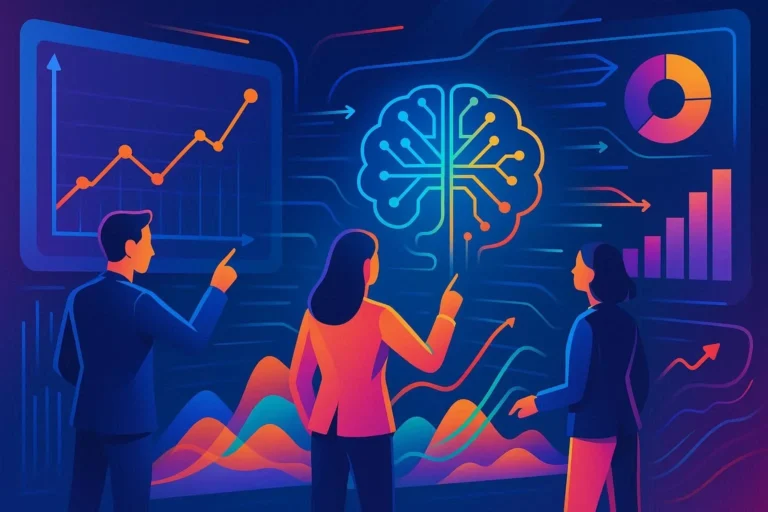
Advanced Computational Models for Drugs
Advanced Computational Models have reshaped the landscape of drug discovery and precision medicine, especially when it comes to predicting drug interactions that can lead to adverse effects or therapeutic failures. By integrating heterogeneous datasets—chemical structures, genomic profiles, and real‑world evidence—these models offer a predictive lens that traditional in‑vitro or animal studies cannot match. As personalized medicine gains traction, the reliance on sophisticated computational frameworks will only grow, promising safer, more effective pharmacotherapies for millions across the globe.
Foundational Data Integration Techniques
One of the key enablers of modern interaction prediction is robust data integration. Unlike classic pharmacokinetic modelling, which averages population‑level parameters, advanced computational frameworks fuse electronic health records, genomic surveillance, and in‑silico pathway reconstructions. Techniques such as knowledge graph construction allow disparate data types—drug-binding assays, metabolic enzyme activity, and clinical outcome registries—to coalesce into a unified structure. These enriched graphs provide the context needed for downstream machine learning algorithms to recognize subtle pharmacodynamic patterns.
Machine Learning Architectures Driving Predictions
Machine learning has become the engine behind many interaction forecasts. Convolutional neural networks capture sub‑structure motifs within chemical SMILES strings, while recurrent architectures model time‑series changes in plasma concentrations. More recent transformer‑based models, pre‑trained on millions of drug‑target interaction pairs, can extrapolate to novel compounds by learning latent embedding spaces. Additionally, ensemble techniques that combine random forests, gradient boosting, and neural nets help mitigate overfitting, ensuring predictions remain robust across varied patient demographics.
Graph-Based Pharmacogenomic Models
Pharmacogenomics—understanding how genetic differences affect drug response—is now routinely layered over interaction models. Graph neural networks (GNNs) propagate influence across nodes representing genes, proteins, and metabolites, uncovering pathways that amplify or dampen drug synergy. By representing patient‑specific allelic variants as node attributes, GNNs can predict unique interaction profiles, such as the heightened risk of QT‑c prolongation in individuals with a particular CYP2C9 variant.
Multi‑Scale Simulation Platforms
Beyond static predictions, the latest computational packages model multi‑scale interactions, merging cellular signalling with whole‑organ PK/PD dynamics. These platforms integrate molecular docking scores, cell‑type‑specific uptake rates, and organ‑level blood flow to simulate how a drug cocktail propagates through the human body. Coupled with stochastic modeling of phase‑I and phase‑II metabolism, researchers can now quantify the probability of toxicants forming under various dosing regimens, including real‑world polypharmacy scenarios.
Key Model Types at a Glance
- Synergy‑prediction networks that forecast additive, synergistic, or antagonistic outcomes.
- Pharmacokinetic/pharmacodynamic simulation frameworks for route‑specific exposure.
- Pharmacogenomic risk atlases mapping genetic predisposition to interaction severity.
- Environmental exposure models that adjust predictions for diet, smoking, and comorbidities.
These model families often overlap in practice; a single platform may begin with a graph‑based genotype layer, feed data into a transformer network, and output a simulated time‑course. The resulting risk maps are invaluable for clinicians deciding whether a new therapeutic is safe to add to an existing protocol.
Practical Guidance for Clinicians and Researchers
1. Use curated databases: DrugBank offers high‑quality interaction annotations.
2. Verify model assumptions: Understand whether a model uses a linear PK assumption or a more realistic Michaelis‑Menten enzyme kinetics found in FDA guidance.
3. Validate against prospective data: Even the best in‑silico predictions need retrospective verification using clinical interaction registries.
4. Incorporate pharmacogenomic filters: Engage tools like the PharmGKB database to flag high‑risk genotypes before prescribing polypharmacy.
Conclusion: Empowering Safer Therapeutics
Advanced computational models are no longer a niche academic pursuit; they are pivotal to the next generation of safe, individualized therapeutics. By marrying deep learning, graph theory, and systems pharmacology, these frameworks illuminate hidden interaction pathways that could otherwise endanger patients or compromise efficacy. Institutions such as the American Cancer Society and WHO have already adopted computational triage for oncology drug development.
Take the next step—integrate advanced computational models into your pharmacy workflow today. Reach out for a tailored demo and start safeguarding patients against harmful drug interactions.
Frequently Asked Questions
Q1. What are advanced computational models in drug discovery?
Advanced computational models leverage machine learning, graph theory, and systems pharmacology to predict drug interactions and assess therapeutic potential. They integrate heterogeneous data such as chemical structures, genomic profiles, and real‑world evidence, providing a predictive lens beyond traditional in‑vitro studies. These models uncover hidden interaction pathways that could lead to adverse effects or therapeutic failures. By offering a more nuanced understanding, they support precision medicine initiatives worldwide.
Q2. How do they differ from traditional pharmacokinetic modelling?
Traditional PK models average population‑level parameters and often rely on simplified assumptions like linear clearance. In contrast, advanced computational frameworks incorporate detailed kinetic mechanisms, such as Michaelis–Menten enzyme kinetics, and use cell‑type‑specific uptake rates. They can simulate multi‑scale dynamics, from molecular docking to organ‑level blood flow, providing a richer context for drug behavior. This allows for more accurate predictions across diverse patient demographics.
Q3. What types of data are typically integrated?
The most comprehensive models fuse data from electronic health records, genomic surveillance, drug‑binding assays, metabolic enzyme activity, and clinical outcome registries. Knowledge graph construction organizes these disparate types into a unified structure, enabling machine learning algorithms to recognize subtle pharmacodynamic patterns. Additionally, time‑series data on plasma concentrations and environmental exposure variables such as diet and smoking are often incorporated.
Q4. How can clinicians validate model predictions?
Clinicians can cross‑reference model outputs against curated databases like DrugBank and PharmGKB. Prospective validation involves comparing predictions against real‑world interaction registries and retrospective clinical data. It’s also important to verify the underlying assumptions—whether a model uses linear kinetics or a more realistic Michaelis–Menten framework. Engaging in collaborative research can further refine validation protocols.
Q5. What are the main limitations of these computational models?
Despite their power, models may suffer from data quality issues, including missing genomic variants or incomplete clinical records. Overreliance on proprietary datasets may introduce biases that limit generalizability. Complex network models can be computationally intensive, potentially restricting real‑time clinical decision support. Ongoing effort is needed to improve transparency, interpretability, and external validation.
Related Articles

100+ Science Experiments for Kids
Activities to Learn Physics, Chemistry and Biology at Home
Buy now on Amazon
Advanced AI for Kids
Learn Artificial Intelligence, Machine Learning, Robotics, and Future Technology in a Simple Way...Explore Science with Fun Activities.
Buy Now on Amazon
Easy Math for Kids
Fun and Simple Ways to Learn Numbers, Addition, Subtraction, Multiplication and Division for Ages 6-10 years.
Buy Now on Amazon