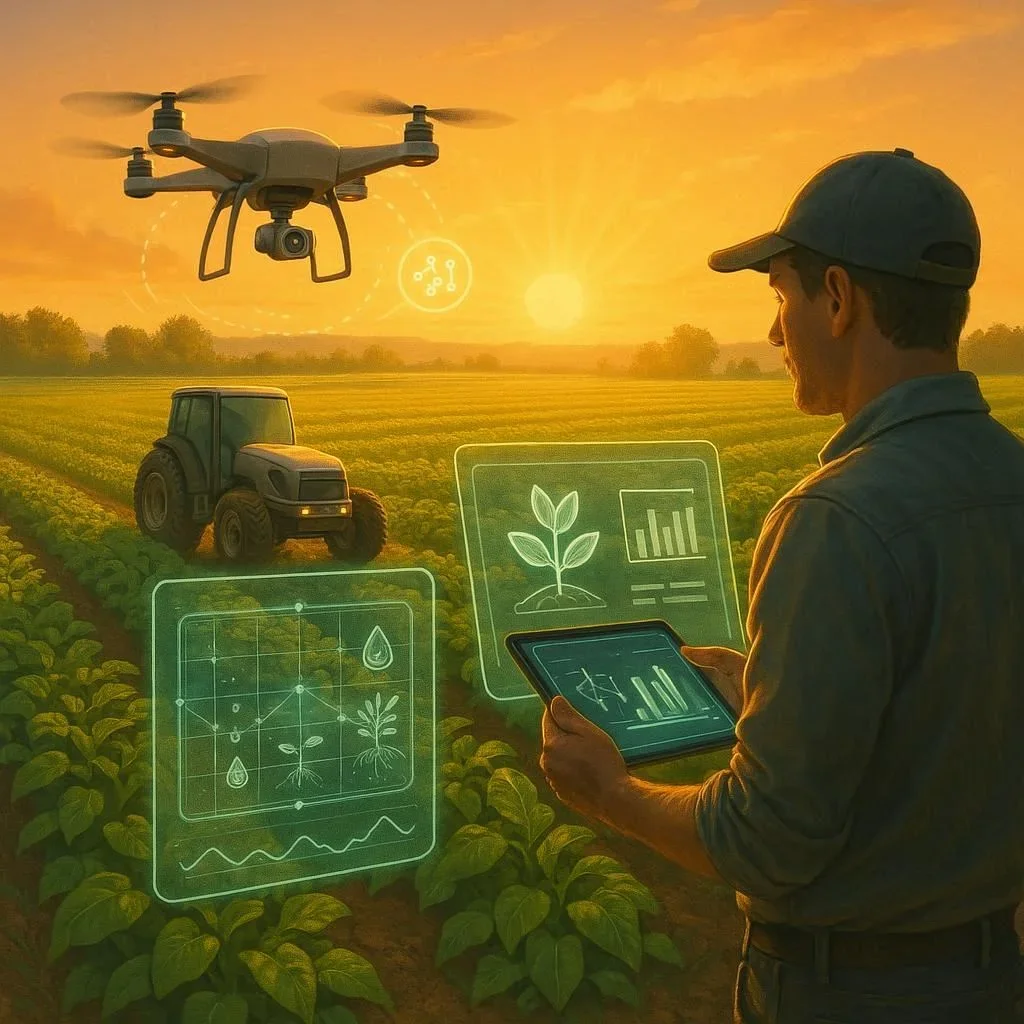
AI Crop Resistance Innovation
In the face of escalating climate stressors—drought, heatwaves, and unpredictable precipitation—agricultural resilience has never been more urgent. AI crop resistance offers a transformative pathway to fortify crops against these threats. Leveraging machine learning models and vast data streams, scientists can pinpoint resilient traits, anticipate disease outbreaks, and guide breeding programs with unprecedented precision. This article explores the cutting‑edge ways artificial intelligence is being harnessed to improve crop resistance to climate stress, from gene editing to real‑time field monitoring and beyond.
The Climate Challenge to Modern Agriculture
Global warming is pushing temperature limits and altering rainfall patterns, directly impacting key staples such as wheat, rice, and maize. According to the Intergovernmental Panel on Climate Change (IPCC), average temperatures could rise by 2.7‑3.2 °C by 2100, intensifying stresses on both yield and quality.
Farmers are now gasping for solutions that support adaptive, durable crop variants. Currently, only a fraction of varieties incorporate traits like deep root systems or osmotic balance—features that can be accelerated through AI‑guided selection. By analyzing genomic databases, climate models, and phenotypic observations, AI can identify subtle genetic markers linked to resistance. This synergy dramatically shortens breeding timelines from decades to mere years.
Data‑Driven Gene Editing: AI’s Game Changer
CRISPR‑Cas9 technology, supported by predictive AI algorithms, is reshaping how we edit crop genomes. Machine learning models sift through terabytes of sequencing data to flag nucleotide variations that correlate with resilience traits. Scientists can then apply targeted edits, producing varieties that maintain yield under heat or drought.
For instance, researchers at the University of California, Davis, used AI to identify a gene regulator responsible for stomatal control—a crucial factor in water use efficiency. By editing this gene, they engineered tomato plants that reduced water loss by 30% during prolonged dry spells.
Such breakthroughs illustrate the potential of AI crop resistance not merely to adapt existing varieties but to create novel, climate‑prepared species.
Enhancing Field Phenotyping with AI Sensors
Phenotyping—measuring plant traits across large populations—has historically been labor‑intensive. Modern AI solutions deploy drones, hyperspectral cameras, and satellite imagery to capture high‑resolution data points across acres in seconds. Deep learning models interpret these datasets to detect stress signs invisible to the human eye.
- Heat‑stress detection via infrared imaging
- Nutrient deficiency mapping through reflectance indices
- Early disease warning using convolutional neural networks (CNNs)
Notably, the USDA’s National Agricultural Statistics Service (NASS) now collaborates with AI firms to convert satellite feeds into actionable advisories for growers, logging real‑time crop health metrics that align with weather forecasts.
Integrating AI into Precision Farming Workflows
Beyond lab and field, AI crop resistance converges with precision agriculture. Automated decision support systems merge soil sensors, weather models, and crop genetics to recommend variable-rate fertilization, irrigation schedules, and disease‑control measures. The result: optimized input use and reduced exposure to climate threats.
Large‑scale platforms, such as those offered by Microsoft Azure FarmBeats and Trimble Earth, integrate these AI components with existing farm management software, enabling growers to visualize risk profiles across their entire operation. Such integration ensures that AI recommendations are grounded in on‑the‑ground realities and not just theoretical models.
Farmers who adopt AI actuated precision practices report yield improvements ranging from 5% to 12% while cutting fertilizer use by up to 20%—a critical balance in low‑margin environments.
Key Steps for Farmers to Deploy AI in Crop Resistance
- Assess Data Infrastructure: Ensure reliable internet connectivity and data storage solutions.
- Partner with Extension Services: Leverage state or university programs for training.
- Start with Pilot Crops: Test AI tools on a small portion of your acreage before scaling.
- Monitor Outcomes: Record yield, input use, and environmental variables.
- Iterate and Scale: Refine AI models with new data, expanding coverage across the farm.
These steps demystify AI adoption and align it with traditional farm management principles, easing the transition for agribusiness owners.
Future Horizons and Global Impact
While the progress is encouraging, a few hurdles remain: data privacy, model interpretability, and equitable access to AI resources. Addressing these through robust regulatory frameworks and open‑source initiatives will be crucial for widespread benefits.
Globally, initiatives such as the Food and Agriculture Organization’s (FAO) Climate Smart Agriculture Program and the International Plant Genome Consortium (IPGC) are already promoting AI for crop resilience. These collaborations aim to democratize technology and ensure smallholder farmers gain the same access as large agribusinesses.
Conclusion: Embrace the AI Crop Resistance Wave
Climate change demands swift, science‑based transformation. AI crop resistance not only accelerates breeding cycles but also provides actionable insights at the field level, turning data into decisive actions for growers worldwide.
To stay ahead, consider integrating AI tools into your crop management today—start with one predictive platform, monitor results, and scale. Partner with trusted agencies, and invest in continuous learning, because the future of food security depends on the resilience we build now.
Ready to transform your harvest? Explore USDA AI Solutions. Learn about Climate Projections. Access FAO’s Climate‑Smart Resources.
Frequently Asked Questions
Q1. How does AI crop resistance improve yield under climate stress?
AI crop resistance uses predictive models that sift through genomic, phenotypic, and meteorological data to identify genes and traits that confer drought, heat, and disease tolerance. When these markers are selected during breeding, the resulting varieties can maintain or even increase grain output when temperatures rise or rainfall patterns shift. The speed of discovery—months instead of years—allows farmers to crop more reliably in harsh conditions. This integrated approach strengthens food security across vulnerable regions.
Q2. What types of data does AI use for crop resistance?
AI combines high‑throughput genomic sequences, satellite and drone imagery, soil sensor feeds, and weather forecasts. Machine learning algorithms correlate these inputs with measured plant performance, uncovering subtle patterns that humans might miss. The fusion of remote sensing and ground truth data provides a holistic view of crop health over time. Continuous data streams enable dynamic updates to predictive models, keeping insights current.
Q3. Can smallholder farms benefit from AI crop resistance?
Yes, smallholders can access cloud‑based AI platforms that require minimal upfront investment. Many programs partner with NGOs to deliver affordable data collection tools, such as low‑cost hyperspectral cameras. Pilot projects have shown yield gains of 5–10% with reduced fertilizer use. The key is to start with a single high‑value crop and scale as confidence grows.
Q4. What are the main hurdles to implementing AI crop resistance?
Challenges include limited internet connectivity in remote areas, data privacy concerns, and a shortage of trained agronomists familiar with AI tools. Model interpretability remains a concern for growers who need clear explanations for recommendations. Furthermore, ensuring equitable access for small farmers and preventing tech monopolies are critical. Overcoming these hurdles requires supportive policy, open‑source initiatives, and community training programs.
Q5. Where can farmers access AI tools for crop resilience?
Farmers can explore commercial platforms like Microsoft Azure FarmBeats, Trimble Earth, or Precision Agriculture Solutions. Public institutions such as the USDA’s National Agricultural Statistics Service offer data portals and advisory services. Open‑source repositories on GitHub host algorithms for gene‑editing prioritization and phenotyping. Additionally, university extension offices often provide workshops and pilot projects to introduce AI to local growers.
Related Articles

100+ Science Experiments for Kids
Activities to Learn Physics, Chemistry and Biology at Home
Buy now on Amazon
Advanced AI for Kids
Learn Artificial Intelligence, Machine Learning, Robotics, and Future Technology in a Simple Way...Explore Science with Fun Activities.
Buy Now on Amazon
Easy Math for Kids
Fun and Simple Ways to Learn Numbers, Addition, Subtraction, Multiplication and Division for Ages 6-10 years.
Buy Now on Amazon