AI in Smart City Infrastructure
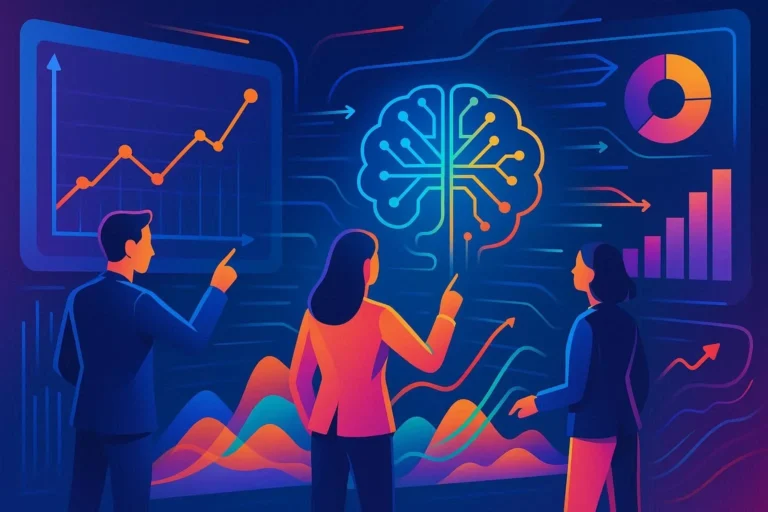
As urban centers grapple with increasing populations, traffic congestion, and energy demands, Artificial Intelligence—commonly known as AI—emerges as a transformative tool for modern city planning. AI-driven analytics, predictive modeling, and autonomous systems are redefining how municipalities design zoning, manage utilities, and deliver public services. By embedding machine‑learning algorithms in real‑time traffic signals, sensor networks, and municipal data platforms, AI turns disparate data streams into actionable insights that improve safety, sustainability, and citizen engagement. This article explores the evolving role of AI within the foundational layers of smart city infrastructure, showcasing concrete use cases, regulatory considerations, and the steps needed to scale AI responsibly across urban landscapes.
Revolutionizing Traffic Management with AI
One of the most visible impacts of AI in cities is the optimization of traffic flow. Leveraging traffic‑sensor data, AI models predict congestion patterns, adjust signal timings dynamically, and suggest alternative routes before bottlenecks form. In cities such as Singapore, Singapore Mobility has deployed AI‑driven traffic management systems that reduce travel time by up to 20 % during peak hours, according to the Singapore government’s data portal (Data.gov.sg). The same technology is being trialed in New York City through NYC’s Office of New York City Plans, where adaptive signal control enhances traffic efficiency while lowering emissions.
Smart Energy & Utilities Driven by Machine Learning
AI’s predictive capabilities extend to energy grids and water distribution systems. Neural networks trained on consumption patterns forecast peak demand, enabling utilities to pre‑emptively balance load and integrate renewable sources. Chicago’s microgrid pilot, supported by the National Renewable Energy Laboratory, uses AI to manage battery storage and solar output, cutting grid costs and allowing more sustainable energy management (NREL). Additionally, AI-powered leak detection algorithms in municipal water networks reduce water loss by identifying anomalies in pressure data, a strategy adopted by the City of Los Angeles to protect valuable water resources.
Enhancing Public Safety Through Intelligent Analytics
Public safety agencies are increasingly integrating AI to analyze surveillance feeds, predict crime hotspots, and allocate resources more efficiently. The New Zealand Police use AI to sift through CCTV footage, flagging unusual activity and reducing response times (see Police New Zealand). Likewise, Boston’s Office of Reform, Policing & Technology employs machine‑learning models to forecast traffic accidents and deploy emergency services strategically. These applications not only improve response efficacy but also foster community trust by ensuring that interventions are evidence‑based rather than reactive.
Urban Planning & Data-Driven Decision Making
At the heart of smart city initiatives lies a robust data ecosystem. AI facilitates the synthesis of heterogeneous data—from satellite imagery to citizen feedback—into coherent urban models. The European project Smart City EU showcases how AI can simulate the impact of zoning decisions on traffic, air quality, and economic development. Additionally, MIT’s Smart Cities Laboratory explores AI frameworks that enable real‑time monitoring of urban infrastructure resilience, giving planners actionable insights into how changes propagate through the city’s networks.
- AI‑powered traffic optimization
- Predictive energy load balancing
- Leak detection and water conservation
- Crime prediction and resource allocation
- Urban simulation and scenario planning
While AI offers transformative potential, responsible deployment requires robust governance. Data privacy, transparency in algorithmic decisions, and safeguarding against bias are critical. National and international guidelines are emerging, such as the EU’s Artificial Intelligence White Paper, which outlines best practices for ethically grounded AI use in public sectors.
Conclusion: Embrace AI for a Smarter, Safer Future
From light‑year‑fast traffic signals to predictive grid management, AI is rapidly becoming the backbone of resilient, people‑centric smart cities. The convergence of advanced analytics, sensor networks, and real‑time data streams is unlocking efficiencies that were once the domain of science fiction. However, the promise of AI can only be realized when paired with clear policy frameworks, citizen participation, and continuous evaluation.
Ready to transform your city? Contact us for a free AI infrastructure assessment and learn how to unlock the full potential of smart city technology today.
Frequently Asked Questions
Q1. What role does AI play in modern smart city planning?
AI serves as the analytical backbone of contemporary smart cities, turning vast data streams—from satellite imagery to citizen feedback—into actionable insights. By predicting traffic flows, energy demand, and environmental impacts, AI informs zoning decisions, infrastructure investments, and policy drafting. It also enables continuous monitoring, allowing planners to simulate scenarios and assess resilience before implementation.
Q2. How does AI improve traffic management in cities?
AI optimizes traffic signal timings in real-time by analyzing sensor data, reducing congestion and travel times. Predictive models forecast bottlenecks, while adaptive routing suggestions keep traffic moving efficiently. These systems can also lower emissions by smoothing vehicle flow and reducing idle times.
Q3. In what ways is AI used for energy and utilities management?
Utility companies deploy AI to forecast peak loads, balancing grid demand with renewable inputs. Machine‑learning algorithms detect leaks in water networks, cutting loss and saving resources. AI also manages storage systems in microgrids, improving reliability and cost‑efficiency.
Q4. How does AI enhance public safety and emergency response?
AI analyses surveillance footage to flag suspicious activities, enabling faster police response. Predictive policing models identify crime hotspots, allowing for proactive resource allocation. By simulating emergency scenarios, AI helps optimize deployment of first responders, ultimately increasing community trust.
Q5. What governance frameworks guide ethical AI use in smart cities?
Governments and international bodies publish guidelines emphasizing data privacy, algorithmic transparency, and bias mitigation. The EU’s Artificial Intelligence White Paper outlines best practices for public sector AI deployment. Stakeholder engagement and continuous impact assessment are also critical for responsible scaling.
Related Articles

100+ Science Experiments for Kids
Activities to Learn Physics, Chemistry and Biology at Home
Buy now on Amazon
Advanced AI for Kids
Learn Artificial Intelligence, Machine Learning, Robotics, and Future Technology in a Simple Way...Explore Science with Fun Activities.
Buy Now on Amazon
Easy Math for Kids
Fun and Simple Ways to Learn Numbers, Addition, Subtraction, Multiplication and Division for Ages 6-10 years.
Buy Now on Amazon