IoT & AI in Water Management
IoT & AI in Water Management is reshaping how municipalities, industries, and households approach the stewardship of our most vital resource. By embedding smart sensors, real-time monitoring, and predictive analytics into water systems, we can detect leaks, optimize irrigation, and ensure equitable distribution—all while reducing waste and emissions. The integration of Internet of Things (IoT) devices and artificial intelligence (AI) algorithms is not just a technological upgrade; it is a pathway toward sustainable resource management, cost savings, and resilience against climate variability.
Smart Sensor Networks
The backbone of IoT in water applications is a distributed network of sensors that continuously collect data on pressure, flow, temperature, and quality parameters. These devices—often low‑power, wireless, and capable of mesh networking—enable granular visibility across entire supply chains, from reservoirs to consumer taps. In a recent case study published by the United Nations, authorities in Bangalore installed over 15,000 soil moisture, transmission, and flow sensors, which cut irrigation water usage by 30% within a year. UN Water highlights how such sensor deployments support the SDG 6 on clean water and sanitation.
- Pressure sensors detect deviations caused by leaks.
- Water level loggers monitor reservoir dynamics.
- Quality probes track pH, turbidity, and contaminant levels.
- Soil‑moisture sensors guide precision agriculture.
- Smart meters deliver real‑time consumption data to consumers.
Predictive Analytics for Leakage Detection
Traditional water loss measurement relies on manual audits that are time‑consuming and often uncover problems only after significant loss has occurred. AI, however, analyzes historical pressure‑flow data, weather patterns, and pipe age to forecast where leaks are most likely to emerge. Machine learning algorithms decrease false‑positive alerts by up to 40%, allowing utilities to deploy inspection crews more efficiently. A 2022 report by the U.S. Environmental Protection Agency (EPA) showed that cities leveraging AI‑driven leak detection cut non‑revenue water—from leaks, illegal connections, and metering errors—by 15% on average.
By combining edge computing on local gateways with cloud‑based analytics, authorities can receive real‑time alerts and, if integration is deep enough, trigger automatic valve operations that isolate problematic sections, preventing widespread failure. This proactive approach is essential for aging infrastructure in both historic urban cores and expanding peri‑urban areas.
Optimizing Irrigation with Smart AI
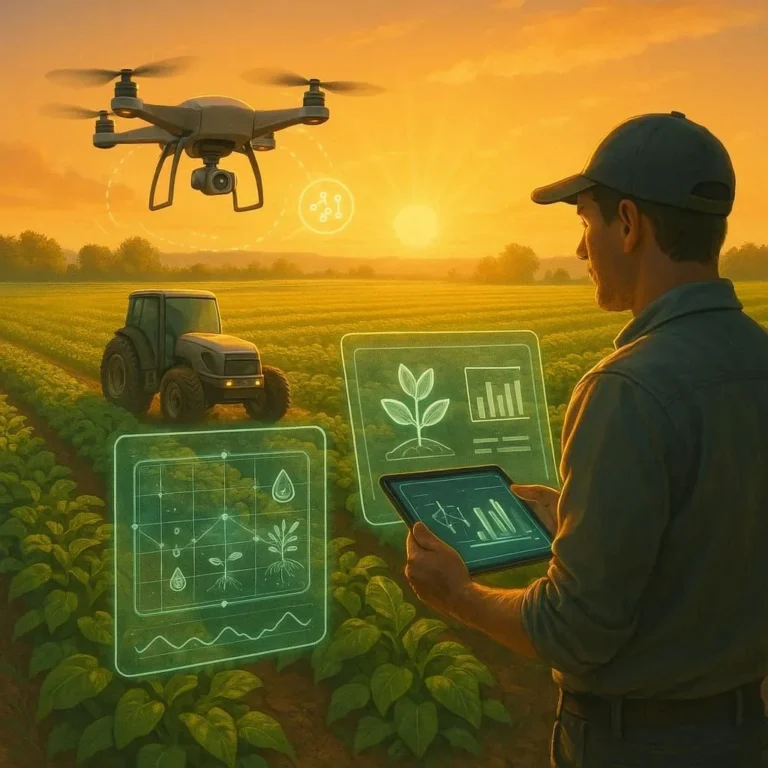
Agriculture consumes roughly 70% of global freshwater. AI‑enhanced irrigation systems—termed precision agriculture—adjust water delivery based on crop type, soil condition, weather forecasts, and evapotranspiration rates. Dynamically‑controlled sprinklers and drip lines reduce over‑watering, ensuring that every drop supports plant growth rather than leaches into groundwater or soils. As reported by the World Resources Institute, precision irrigation technologies can achieve reductions of 25–50% in irrigation water usage in arid regions.
These systems rely on satellite imagery, drone‑based multispectral sensing, and IoT sensor arrays to harvest data that feed AI models. The resulting decision trees inform geofencing protocols that automatically shut off irrigation zones during forecasted rainfall. By aligning water resource use with crop needs, farmers enhance yield stability, especially as climate change intensifies weather extremes.
Data Governance, Privacy, and Sustainability
Adoption of IoT & AI in Water Management brings primary privacy concerns—particularly when smart meters capture detailed usage patterns. Robust data governance frameworks, such as those outlined by EU data protection regulations, ensure that consumers’ personal information remains secure, while anonymized datasets support research and policy analysis. Additionally, proper data handling sustains public trust, a prerequisite for widespread deployment of water‑smart technologies.
From a sustainability standpoint, the reduction of water losses translates to decreased energy consumption for pumping and treatment, lowering greenhouse gas emissions. A life‑cycle assessment conducted by MIT (Massachusetts Institute of Technology) found that integrating AI-driven leak detection can reduce a city’s water‑energy nexus by up to 18% over a decade.
Future Outlook: Edge AI and Blockchain
Edge AI processing—running machine learning inference directly on IoT devices—reduces latency and bandwidth costs, enabling more timely responses to anomalies. Coupled with blockchain ledger systems, water utilities can transparently record water usage, transaction histories, and compliance checks, fostering shared accountability among stakeholders.
These advances, together with the evolution of 5G connectivity, position IoT & AI to unlock a scalable, resilient water infrastructure. Governments worldwide are already drafting regulatory sandboxes that encourage experimentation, while public‑private partnerships accelerate technology rollouts. The adoption curve is becoming clearer: cities that delay embracing these tools may face escalating maintenance costs, regulatory penalties, and grid strain in a water‑scarce world.
Take Action Now: Partner with Experts Who Make IoT & AI in Water Management a Reality!
Whether you oversee municipal water services, manage agricultural operations, or run commercial buildings, integrating IoT and AI can deliver measurable water savings and operational efficiencies. Reach out to certified solutions providers, participate in pilot programs, or consult the EPA’s guidance on smart water infrastructure. The time to act is now—secure your resource, protect your bottom line, and contribute to global sustainability.
Frequently Asked Questions
Q1. What is IoT & AI in Water Management?
IoT & AI in Water Management combine sensors, data analytics, and machine learning to monitor and optimize water systems, reducing waste, leaks, and improving service delivery.
Q2. How do smart sensors improve water loss detection?
Smart sensors continuously measure pressure, flow, and quality, allowing algorithms to spot abnormal patterns that indicate leaks. The early alerts enable rapid repairs before large losses occur.
Q3. Can AI help farmers use water more efficiently?
Yes. AI analyzes soil moisture, crop type, weather forecasts, and evapotranspiration to deliver irrigation only where and when needed, cutting water usage by up to 50% in some regions.
Q4. What privacy concerns arise from smart water meters?
Smart meters capture detailed consumption data that could reveal lifestyle patterns. Robust data governance, anonymization, and compliance with regulations protect user privacy while still allowing utility operators to optimize services.
Q5. What future technologies will further advance water sector?
Edge AI, blockchain, and 5G connectivity will enhance real‑time decision making, transparent accountability, and low‑latency monitoring, enabling fully automated, resilient water infrastructures.
Related Articles

100+ Science Experiments for Kids
Activities to Learn Physics, Chemistry and Biology at Home
Buy now on Amazon
Advanced AI for Kids
Learn Artificial Intelligence, Machine Learning, Robotics, and Future Technology in a Simple Way...Explore Science with Fun Activities.
Buy Now on Amazon
Easy Math for Kids
Fun and Simple Ways to Learn Numbers, Addition, Subtraction, Multiplication and Division for Ages 6-10 years.
Buy Now on Amazon