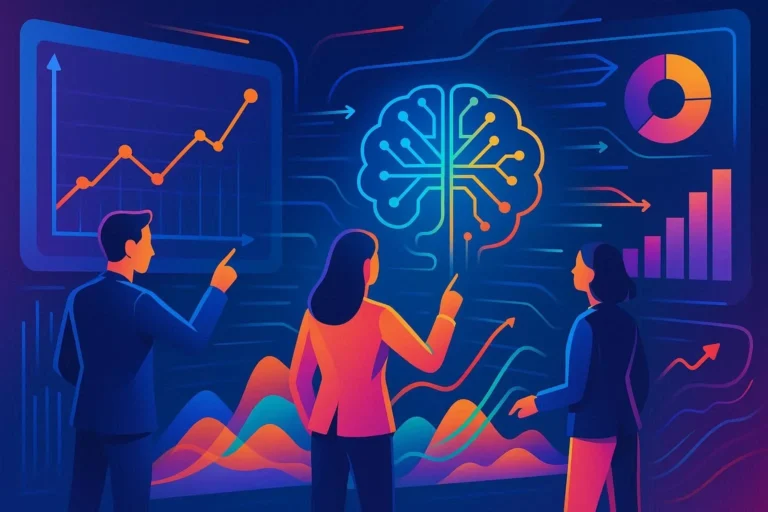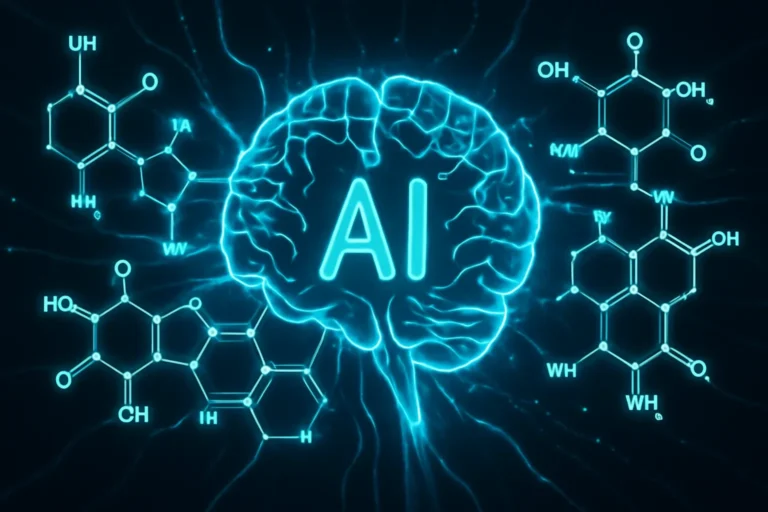
AI-Powered Genomic Data Analysis
AI‑Powered Genomic Data Analysis is transforming the field of genetics, turning massive datasets into actionable insights in a fraction of the time it used to take. By applying sophisticated machine‑learning algorithms to raw sequencing reads, researchers can confidently identify structural variants, predict pathogenic mutations, and even forecast drug responses with unprecedented accuracy. As the cost of sequencing continues to fall, organizations worldwide are scrambling to adopt these tools to accelerate discovery, personalize treatment plans, and unlock industrial opportunities in agriculture and biotechnology.
Harnessing Machine Learning for Variant Detection
Traditionally, variant calling relied on statistical models that parse read depth, base quality, and mapping information. Today, deep neural networks learn directly from millions of labeled genomic examples, outpacing conventional methods in sensitivity and precision. For instance, DeepVariant, developed by Google, converts raw sequencing data into a waveform that a convolutional network processes, producing variant calls that rival expert hand‑curated catalogs. Likewise, tools such as ONT’s NanoVar harness long‑read data to identify large structural changes that were previously invisible to short‑read pipelines.
Integrated Bioinformatics Pipelines
AI‑Powered Genomic Data Analysis is rarely a single‑step operation. It’s an end‑to‑end pipeline that blends data ingestion, quality control, alignment, variant calling, functional annotation, and interpretation. Modern platforms, like the Broad Institute’s Genomics Platform, integrate these stages with automated scaling on cloud infrastructure, enabling researchers to process terabytes in hours. Importantly, pipelines leverage reproducible containerization (Docker or Singularity) to maintain consistency and shareability across institutions.
The typical workflow may include the following elements:
- Raw read quality assessment with tools like FastQC.
- Hybrid error‑corrected alignment using minimap2.
- Deep learning‑based variant calling (e.g., DeepVariant or Strelka2).
- Functional annotation via ANNOVAR or ClinVar.
- Pathogenicity prediction with models such as SIFT and PolyPhen, now augmented by transformer‑based embeddings.
- Pre‑clinical integration into electronic health records for real‑time decision support.
Applications in Precision Medicine
In clinical oncology, AI‑Powered Genomic Data Analysis helps mapping tumor mutational signatures that guide targeted therapy. For example, a patient with metastatic colorectal cancer might harbor a rare KRAS G12D mutation detectable only through deep variant calling, directing them to a specific inhibitor that has high efficacy in that context. Similarly, genomic profiling of cardiovascular diseases has revealed loss‑of‑function variants in LDLR, prompting personalized statin regimens, as highlighted by the National Comprehensive Cancer Network guidelines.
In pharmacogenomics, AI models predict drug metabolizer phenotypes by integrating multiple genomic markers. By doing so, clinicians can avoid toxic side effects, tailor dosing, and reduce healthcare costs. The pharmaceutical sector also uses AI‑driven genomic insights to rank drug targets, streamline pre‑clinical trials, and design therapeutic molecules that fit the patient’s unique genomic architecture.
Challenges and Ethical Considerations
While the promise is immense, several hurdles must be addressed for widespread adoption:
- Data Privacy and Governance—Sensitive genomic information can reveal familial links or predispositions. Robust de‑identification methods and compliance with frameworks such as HIPAA and GDPR are non‑negotiable.
- Algorithmic Bias—Many training datasets are skewed toward European ancestries, potentially compromising performance in under‑represented populations. Initiatives like the VIALE consortium aim to diversify genomic benchmarks.
- Interpretability—Deep learning models can act as “black boxes.” Explainable AI is critical, especially when informing clinical decisions.
- Computational Resources—Processing whole‑genome data with AI demands significant GPU power, often necessitating cloud partnerships, such as Amazon Web Services or Microsoft Azure.
Future Horizons
Next‑generation AI‑Powered Genomic Data Analysis envisions seamless integration of multi‑omics layers—transcriptomics, epigenomics, proteomics—into unified predictive models. Research institutions are building federated learning frameworks that allow institutions to train on shared models without moving raw data, striking a balance between collaboration and privacy. Moreover, the proliferation of quantum‑inspired algorithms promises to further accelerate sequence alignment and variant calling, potentially turning a multi‑hour run into milliseconds.
Industry adoption is already evident. Biotechnology companies are now offering AI‑driven genomic analytics as a service, while healthcare providers are embedding genomic insights into standard care pathways. The convergence of high‑throughput sequencing, cloud computing, and AI is creating an ecosystem where analysis is not only faster but also smarter and more patient‑centric.
Conclusion & Call to Action
AI‑Powered Genomic Data Analysis is no longer a futuristic concept; it’s a practical tool reshaping research, diagnostics, and therapeutics today. Whether you are a research scientist, clinician, or biotech entrepreneur, adopting these solutions can unlock deeper biological insights, improve patient outcomes, and sustain a competitive edge.
Frequently Asked Questions
Q1. What is AI‑Powered Genomic Data Analysis?
It is the application of machine‑learning and deep‑learning models to raw sequencing data, enabling rapid and accurate detection of genetic variants, structural changes, and functional annotations. Unlike traditional statistical callers, AI models learn patterns directly from millions of labeled examples, improving sensitivity and precision. The result is a streamlined, end‑to‑end pipeline that accelerates research and clinical decision‑making.
Q2. How does AI improve variant calling versus classic methods?
AI models, such as DeepVariant, convert reads into image‑like representations and use convolutional neural networks to interpret signal nuances. They outperform rule‑based algorithms by capturing complex error patterns, especially in challenging regions like homopolymers and repetitive sequences. Consequently, false positives drop while the true‑positive rate rises.
Q3. Are there ethical concerns with using AI on genomic data?
Yes. Privacy and governance are paramount because genomes reveal sensitive personal info. Robust de‑identification, compliance with HIPAA/GDPR, and transparent data‑sharing policies mitigate risks. Additionally, AI models must be audited for ancestry‑related bias to ensure equitable performance.
Q4. What infrastructure is needed for large‑scale AI genomics?
High‑throughput sequencing generates terabyte‑scale data; efficient AI pipelines require GPU clusters, cloud services (AWS, Azure, GCP), and containerization (Docker/Singularity). Federated learning frameworks allow institutions to collaborate without moving raw data, preserving privacy while scaling model performance.
Q5. How can a biotech company adopt AI‑driven genomics?
Start by selecting a validated platform (e.g., Broad’s Genomics Suite, DeepVariant, NanoVar) and integrate it with existing bioinformatics workflows. Partner with cloud providers for scalable compute, and invest in training staff on AI interpretability and data governance. Finally, pilot projects on key use‑cases—target discovery, biomarker validation, or drug resistance profiling—will demonstrate ROI.
Related Articles

100+ Science Experiments for Kids
Activities to Learn Physics, Chemistry and Biology at Home
Buy now on Amazon
Advanced AI for Kids
Learn Artificial Intelligence, Machine Learning, Robotics, and Future Technology in a Simple Way...Explore Science with Fun Activities.
Buy Now on Amazon
Easy Math for Kids
Fun and Simple Ways to Learn Numbers, Addition, Subtraction, Multiplication and Division for Ages 6-10 years.
Buy Now on Amazon