Artificial Enzymes Powered by AI
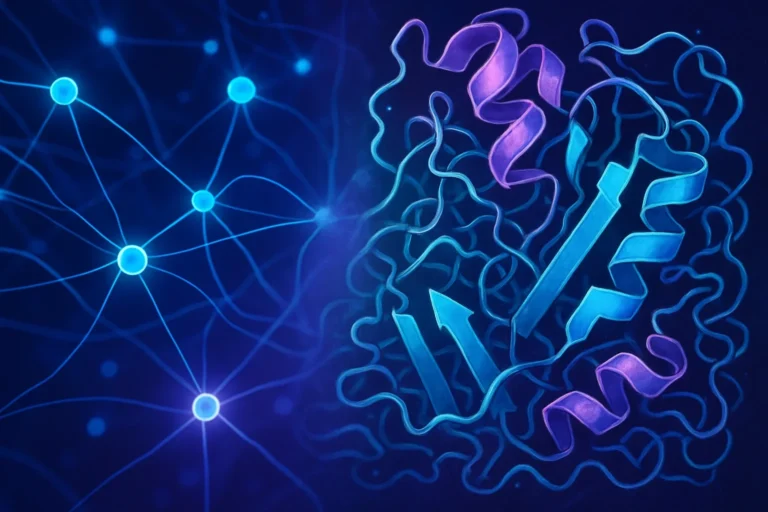
Artificial Enzymes Powered by AI is rapidly reshaping the landscape of biocatalysis, offering unprecedented speed and precision in designing catalysts tailored to specific industrial and therapeutic needs. By leveraging advanced machine learning models, researchers can now generate novel protein folds, predict active‑site geometry, and assess biochemical properties before synthesizing molecules in the lab. This convergence of computational power and enzyme biology—often referred to as AI‑driven enzyme design—holds the promise of unlocking new pathways in sustainable chemistry, drug discovery, and synthetic biology.
Understanding the Role of Enzymes in Biochemistry
Enzymes are catalytic proteins that accelerate biochemical reactions with remarkable specificity. Their active sites, formed by a precise arrangement of amino acids, enable substrate binding and transition‑state stabilization. Traditional enzyme engineering—through directed evolution or rational design—remains time‑consuming and limited by our understanding of protein folding. AI offers a complementary approach by predicting how mutations influence structure and function, thereby reducing experimental trial and error.
Machine Learning Foundations for Enzyme Design
At the core of AI‑enzyme development lie two classes of algorithms: supervised learning models trained on vast protein datasets, and generative models that produce de novo sequences. Large‐scale protein databases such as the UniProt repository, coupled with advanced neural networks like AlphaFold, enable researchers to map the relationship between sequence, structure, and catalytic activity.
Key machine‑learning techniques applied to enzyme design include:
- Convolutional Neural Networks (CNNs) that parse three‑dimensional protein features.
- Transformer architectures that capture long‑range residue interactions.
- Generative Adversarial Networks (GANs) for synthesizing novel sequences.
- Reinforcement learning to optimize catalytic efficiency under defined constraints.
These models convert high‑dimensional biochemical data into actionable blueprints, guiding synthetic chemists toward promising candidates.
Deep Generative Models Creating Synthetic Active Sites
Deep learning has produced generative models such as RoseTTAFold and GPT‑like protein generators that simulate evolutionary pressures. By sampling from probability distributions shaped by millions of known enzymatic folds, these systems can propose sequences with unprecedented active‑site diversity. Researchers have successfully used these tools to generate enzymes capable of converting non‑natural substrates—for example, a designed ketoreductase that catalyzes the reduction of a plastic‑derived monomer into an eco‑friendly polymer precursor. Wikipedia on Enzymes explains why such tailored reactions are critical for green chemistry.
To evaluate these synthetic enzymes, computational physicists employ molecular dynamics and quantum‑mechanical calculations to estimate reaction barriers. Successful candidates then proceed to expression in microbial hosts such as E. coli or yeast, where high‑throughput screening measures activity under industrially relevant conditions.
Key Success Stories
• Nature’s 2020 breakthrough: Artificial enzyme design that achieves an oxidation reaction four times faster than any natural counterpart.
• DeepMind’s AlphaFold enabled accurate structure prediction, a prerequisite for reliable active‑site modeling.
• NLM review highlights how machine‑learning predictions streamline variant selection for directed evolution.
Experimental Validation and Iterative Feedback Loops
Computational predictions, however sophisticated, must be validated experimentally. The workflow typically follows an iterative cycle of design, build, test, and learn:
- Design: AI proposes novel sequences with predicted kinetic parameters.
- Build: Synthetic genes are cloned into expression vectors; proteins are produced and purified.
- Test: Enzymatic assays measure turnover numbers (k_cat), specificity constants (k_cat/K_M), and stability under process conditions.
- Learn: Experimental outcomes update the training dataset, refining model biases and improving future predictions.
Such closed‑loop systems have shortened the typical 12–18‑month development cycle for industrial enzymes to less than 3 months in some cases, as reported by European Bioinformatics Institute analyses.
Ethical and Economic Considerations
While AI‑designed enzymes promise immense economic benefits—reducing carbon footprints, lowering production costs, and enabling new pharmaceuticals—there are emerging concerns around intellectual property, biosecurity, and data privacy. Regulatory frameworks must keep pace with technological advances, ensuring that artificial enzymes are used responsibly and their benefits are broadly distributed.
Emerging Policy Initiatives
The OECD and WHO have begun drafting guidelines for synthetic biology innovations, including AI-driven enzyme design. Transparent data sharing and standardized reporting protocols will facilitate global collaboration and responsible stewardship.
Future Outlook: Custom Biocatalysts at Scale
Looking ahead, AI is poised to transform the very definition of “enzyme”. Integration with cell‑free protein synthesis platforms, microfluidic high‑throughput screening, and real‑time metabolomic monitoring will allow de novo biocatalysts to be customized for specific substrates on demand. Researchers anticipate a future where any chemical transformation can be accelerated by a tailor‑made enzyme, engineered in days rather than years.
Conclusion: Embrace AI for the Next Generation of Enzymes
Artificial Enzymes Powered by AI represent a paradigm shift—one that blends deep computational insights with experimental rigor to create catalysts that meet the most demanding challenges of modern chemistry. Whether you’re a synthetic chemist, a bioengineer, or a startup founder, now is the moment to incorporate AI-enabled enzyme design into your pipeline. Engage with the rapidly evolving ecosystem, tap into open data, and share experimental outcomes to accelerate collective progress.
Frequently Asked Questions
Q1. What are artificial enzymes powered by AI?
Artificial enzymes powered by AI are computationally designed protein catalysts that harness machine learning models to craft novel sequences with tailored catalytic properties. These enzymes are generated before any wet‑lab work, allowing researchers to screen hundreds of candidates virtually. They combine the specificity of natural enzymes with the flexibility of in‑silico design, opening new avenues for industrial and therapeutic applications.
Q2. How does AI accelerate enzyme design compared to traditional methods?
Traditional enzyme engineering relies on directed evolution or rational design, often requiring extensive trial and error. AI models can predict the effects of mutations on structure and function, narrowing down viable sequences dramatically. This reduces the design-to‑test cycle from months or years to weeks or days, enabling rapid iteration and optimization.
Q3. What machine learning techniques are most common in AI enzyme design?
The field employs convolutional neural networks, transformer architectures, generative adversarial networks, and reinforcement learning. These models learn from massive protein databases and can generate de‑novo sequences, refine active‑site geometry, and evaluate catalytic efficiency. Recent successes include AlphaFold for structure prediction and RoseTTAFold for sequence generation.
Q4. How are AI‑designed enzymes validated experimentally?
After computational design, genes encoding the predicted enzymes are synthesized and cloned into expression systems such as E. coli or yeast. The proteins are purified and subjected to kinetic assays measuring kcat, KM, and thermal stability. Results feed back into the AI models, ensuring continual improvement of prediction accuracy.
Q5. What ethical considerations arise with AI enzyme design?
AI‑driven enzymes raise concerns about intellectual property, potential misuse for harmful biochemicals, and data privacy. Regulatory bodies like the OECD and WHO are developing guidelines to govern responsible innovation. Transparency in data sharing and standardized reporting helps balance progress with safety.
Related Articles

100+ Science Experiments for Kids
Activities to Learn Physics, Chemistry and Biology at Home
Buy now on Amazon
Advanced AI for Kids
Learn Artificial Intelligence, Machine Learning, Robotics, and Future Technology in a Simple Way...Explore Science with Fun Activities.
Buy Now on Amazon
Easy Math for Kids
Fun and Simple Ways to Learn Numbers, Addition, Subtraction, Multiplication and Division for Ages 6-10 years.
Buy Now on Amazon