AI Decodes Complex Biological Networks
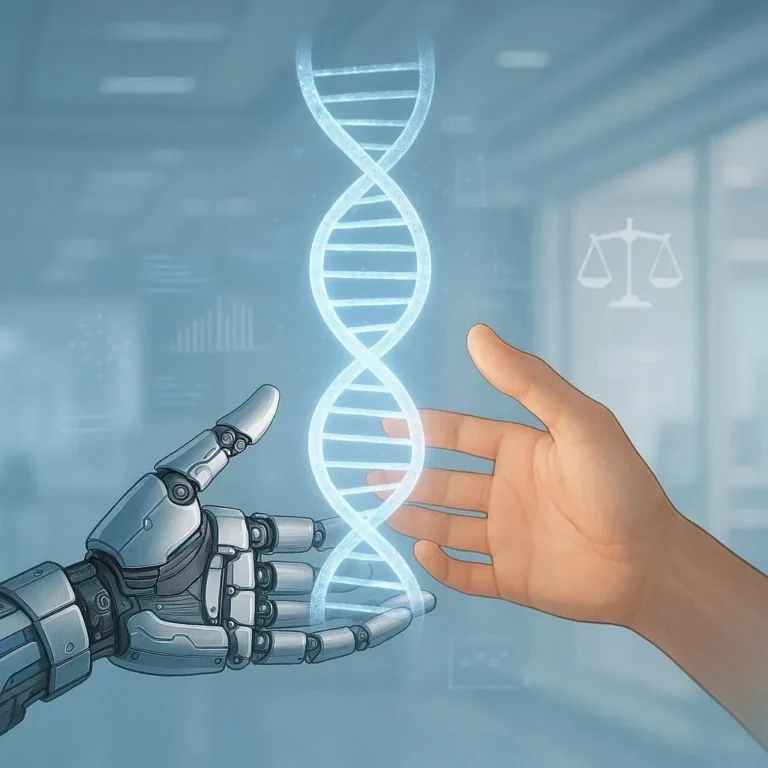
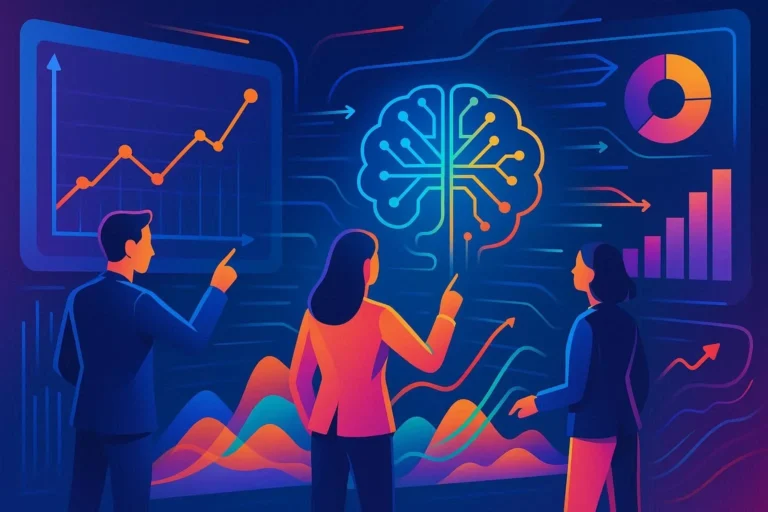
Deciphering the intricate web of interactions that govern cellular behavior remains one of the most formidable challenges in modern biology. Traditional statistical models and manual curation can only scratch the surface of the vast, dynamic relationships that comprise biological networks. Enter Artificial Intelligence—specifically, the machine‑learning techniques that can parse high‑throughput data, uncover hidden patterns, and generate testable hypotheses at a scale previously unimaginable. In this article we explore how AI is unraveling complex biological networks, the technologies that power this revolution, and what it means for researchers and clinicians alike. AI is the string that pulls together genomics, proteomics, metabolomics, and phenomics into a coherent, actionable map, revealing both the big picture and fine‑grained details that drive disease and health.
Why Traditional Methods Fall Short
Conventional network reconstruction relies heavily on curated pathways, correlation analyses, and manual literature mining. While valuable, these approaches struggle with the sheer volume and heterogeneity of modern omics data. High‑dimensional datasets—such as single‑cell RNA‑seq with millions of cells or multiplexed proteomics assays—generate relational information that grows exponentially, outpacing human capacity for analysis. Moreover, static models fail to capture the temporal evolution of networks during disease progression, treatment response, or developmental stages. AI, by contrast, is designed to learn from data, discern non‑linear dependencies, and update models as new experimental evidence arrives.
AI Techniques Driving Network Discovery
Several AI strategies have emerged as particularly effective for decoding biological networks:
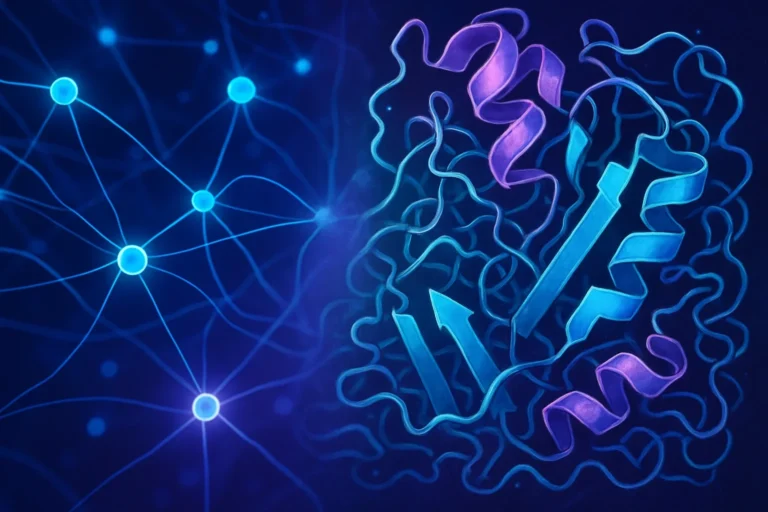
- Graph Neural Networks (GNNs) treat molecular entities (genes, proteins, metabolites) as nodes and their interactions as edges, enabling the network to learn embeddings that encode both local and global structure. This is especially powerful for modeling protein‑protein interaction (PPI) networks where spatial context matters.
- Deep Learning Autoencoders reduce high‑dimensional omics data into compact latent representations, revealing clusters of co‑expressed genes that often correspond to functional modules such as transcriptional programs.
- Explainable AI (XAI) methods, such as SHAP values, attribute importance scores to individual features, allowing researchers to interrogate which genes or proteins drive specific network behaviors—a key requirement for biological interpretability.
- incorporates prior knowledge from curated databases (NIH Systems Biology) and updates probability distributions based on observational data, providing a probabilistic view of potential regulatory pathways.
For example, the “Graph Convolutional Network” framework has successfully predicted novel transcription factors in the zebrafish developmental gene regulatory network, as published in a recent issue of Nature Communications. By leveraging 3-D chromatin interaction data, the model could suggest regulatory relationships that were previously unrecognized.
Case Studies: From Genomics to Proteomics
One landmark study combined single‑cell transcriptomics with spatial transcriptomics to map cell‑cell communication in tumor microenvironments. By applying a GNN model, researchers identified key ligand‑receptor pairs that mediate immune evasion, guiding the design of targeted checkpoint inhibitors.
In proteomics, deep learning frameworks such as DeepPep were used to predict peptide‑protein binding affinities from mass‑spectrometry data. The resulting interaction network highlighted potential drug targets for neurodegenerative diseases, illustrating how AI can bridge the data‑to‑therapy pipeline.
These examples showcase AI’s ability to integrate diverse data modalities—genomics, transcriptomics, proteomics, and spatial information—into a unified, dynamic network model. The integration is crucial because biological systems are inherently multi‑scale; a single omic layer rarely captures the full causal story.
Future Directions and Ethical Considerations
Looking ahead, AI will increasingly employ reinforcement learning to design synthetic biology constructs that rewire gene networks for desired phenotypes. Coupled with CRISPR screening, such approaches can rapidly iterate between computational predictions and wet‑lab validation.
However, as with any technology that processes large datasets of human subjects, privacy, consent, and data governance become paramount. Researchers must adhere to frameworks like the Common Rule and FAIR data principles to ensure ethical stewardship of biological information.
Moreover, transparency in model selection and validation is essential to avoid misleading conclusions. Combining AI predictions with expert biological insight ensures that discoveries are both rigorous and biologically meaningful.
Conclusion—Harness AI to Accelerate Biological Insight
Artificial Intelligence is no longer a speculative tool; it is an indispensable partner in unlocking the mysteries of biological networks. From enhancing our understanding of gene regulation to accelerating drug discovery, AI-driven network analysis offers unprecedented speed, depth, and breadth. By integrating AI with established experimental pipelines, researchers can transform raw data into actionable biological knowledge, opening new therapeutic avenues and refining our grasp of life at the molecular level.
Frequently Asked Questions
Q1. How does AI improve network reconstruction compared to traditional methods?
AI can analyze massive high‑throughput datasets, uncover non‑linear relationships, and update models in real time. It handles data heterogeneity that overwhelms manual curation and captures temporal dynamics of disease progression. The result is a more accurate, data‑driven map of regulatory interactions that is continuously refined as new evidence arrives.
Q2. What AI techniques are most useful for studying biological networks?
Graph Neural Networks learn embeddings of genes, proteins, and metabolites, modeling interactions as weighted edges. Deep learning autoencoders distill high‑dimensional omics data into latent clusters that often correspond to functional modules. Explainable AI (XAI) assigns importance scores to features, enabling researchers to trace causal drivers of network behavior. Bayesian inference incorporates prior knowledge and updates probabilities in light of observational data.
Q3. How does AI handle multi‑omic integration in network analysis?
AI platforms fuse genomics, transcriptomics, proteomics, and spatial data into unified graph models. By projecting each modality onto the same network graph, AI captures cross‑layer interactions that a single omic layer would miss. This integrated view reveals regulatory circuits that span DNA, RNA, proteins, and metabolites.
Q4. Are there real‑world examples where AI-guided networks accelerated drug discovery?
Yes. A study using DeepPep predicted peptide‑protein binding affinities from mass‑spec data, highlighting drug targets for neurodegenerative diseases. Another example combined single‑cell and spatial transcriptomics with GNNs to identify ligand‑receptor pairs driving immune evasion in tumors, informing checkpoint inhibitor design. In both cases, AI accelerated hypothesis generation and experimental validation.
Q5. What ethical considerations should guide AI application in biological research?
Practitioners must protect participant privacy, obtain informed consent, and comply with the Common Rule and FAIR data principles. Transparency in model selection, validation, and interpretability is essential to avoid misleading conclusions. Finally, coupling AI predictions with expert biological insight ensures rigor and biological relevance.
Related Articles

100+ Science Experiments for Kids
Activities to Learn Physics, Chemistry and Biology at Home
Buy now on Amazon
Advanced AI for Kids
Learn Artificial Intelligence, Machine Learning, Robotics, and Future Technology in a Simple Way...Explore Science with Fun Activities.
Buy Now on Amazon
Easy Math for Kids
Fun and Simple Ways to Learn Numbers, Addition, Subtraction, Multiplication and Division for Ages 6-10 years.
Buy Now on Amazon